






If your credit score isn't where you want it to be, applying for a traditional loan or credit card can feel like a dead end before you've even started.
Cash advance apps solve this problem by skipping the credit check entirely. Instead of looking at your credit history, these apps evaluate your income and bank account activity to determine whether you're eligible.
Let's jump in.
Best cash advance apps with no credit check
1. Grant Cash Advance
Grant Cash Advance is effectively a cash advance app designed to help people cover essential expenses. Eligible and qualifying users can access advances ranging from $25 to $350 with no interest, no late fees, and 0% APR.
2. Dave
Dave doesn't require a hard credit check to sign up. Eligible users can access advances generally up to $500, with eligibility determined by your bank account history and income patterns.
3. Earnin
Earnin lets you access wages you've already earned before your official payday, and it doesn't require a credit check during sign-up.
4. Brigit
Brigit requires no credit check to access its Instant Cash feature. Eligible users can access advances up to $250 with no interest and no late fees.
5. MoneyLion
MoneyLion includes a no-credit-check cash advance feature called Instacash. Eligible users can access advances up to $500 with no interest and no mandatory fees. See also: best alternatives to payday loans and best cash advance apps.
What does "no credit check" actually mean?
When a cash advance app says it doesn't require a credit check, it's specifically referring to a hard inquiry. A hard inquiry is the type of credit check that happens when you apply for a credit card, personal loan, or mortgage.
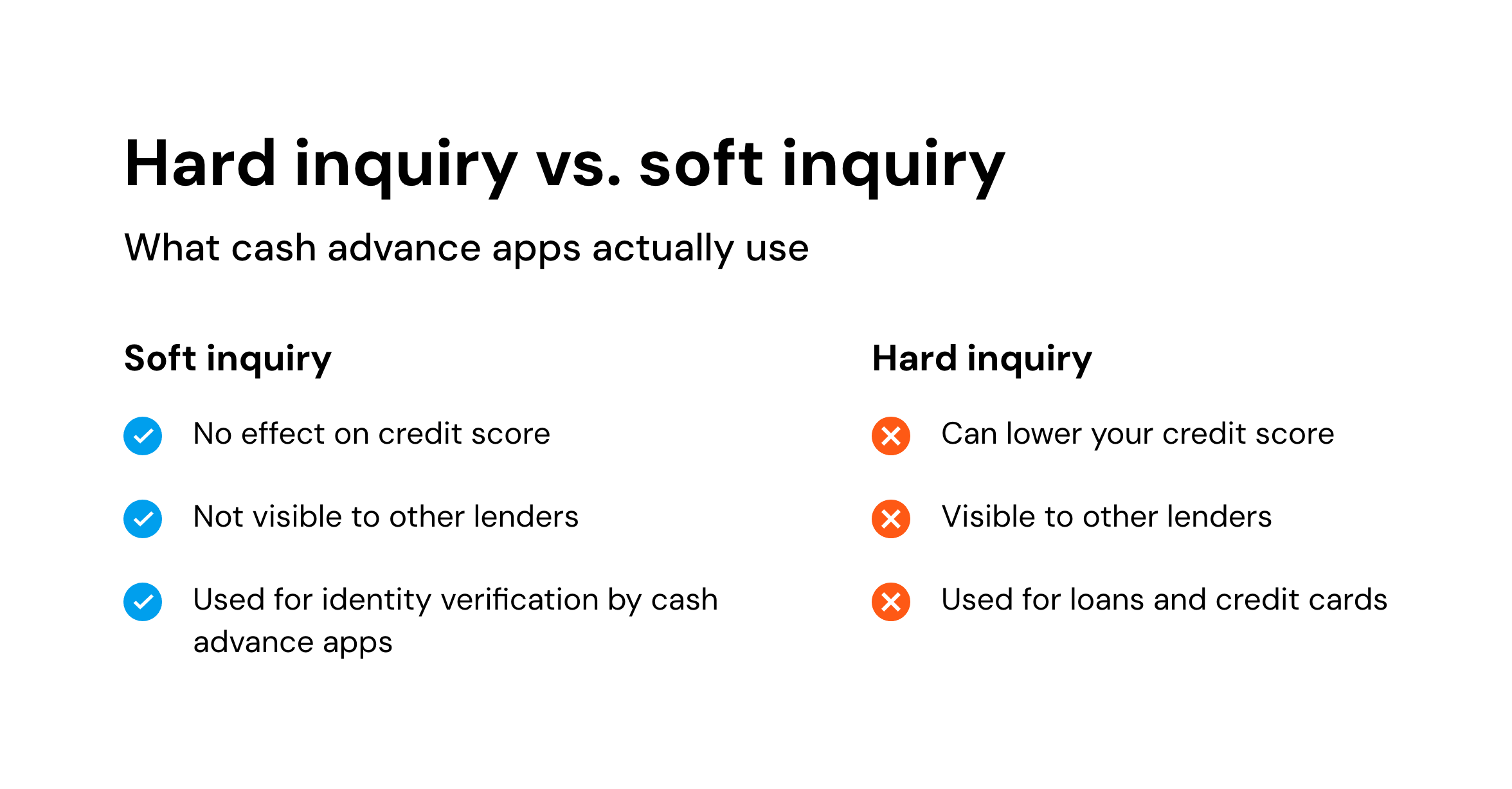
Cash advance apps don't need to perform a hard inquiry because they're not extending traditional credit. Some apps may perform a soft inquiry as part of identity verification, but soft inquiries don't affect your credit score and aren't visible to other lenders.
Do cash advance apps affect your credit score?
Using a cash advance app generally doesn't affect your credit score in either direction.
If building credit alongside managing short-term cash flow is a priority for you, pairing a cash advance app with a credit-building product like Kikoff is a no-brainer combination. Kikoff reports payments to all three credit bureaus each month, which means every on-time payment is working toward a stronger credit profile. Build credit with Kikoff as your foundation.
Conclusion
Having imperfect credit doesn't have to be a barrier to getting short-term financial help.
Every individual on the apps listed here can access funds based on their income and account activity, not their credit score.
And if you're ready to start building the credit that opens up better financial options long-term, Kikoff can help you get there starting at $5 a month.
Frequently Asked Questions
About the editor

Disclaimer: The information provided in this blog post is meant for informational purposes only and does not constitute financial advice.