






Spotting an unfamiliar entry on your credit report can be unsettling, especially when it's something as cryptic-looking as "THD/CBNA."
The good news is that this entry is almost always straightforward to explain. In most cases, it traces back to a store credit card you either applied for or already have open, and knowing that context makes all the difference.
Let's jump in.
What is THD/CBNA on your credit report?
THD/CBNA is a credit report entry that refers to The Home Depot credit card, issued through Citibank, N.A. (CBNA).
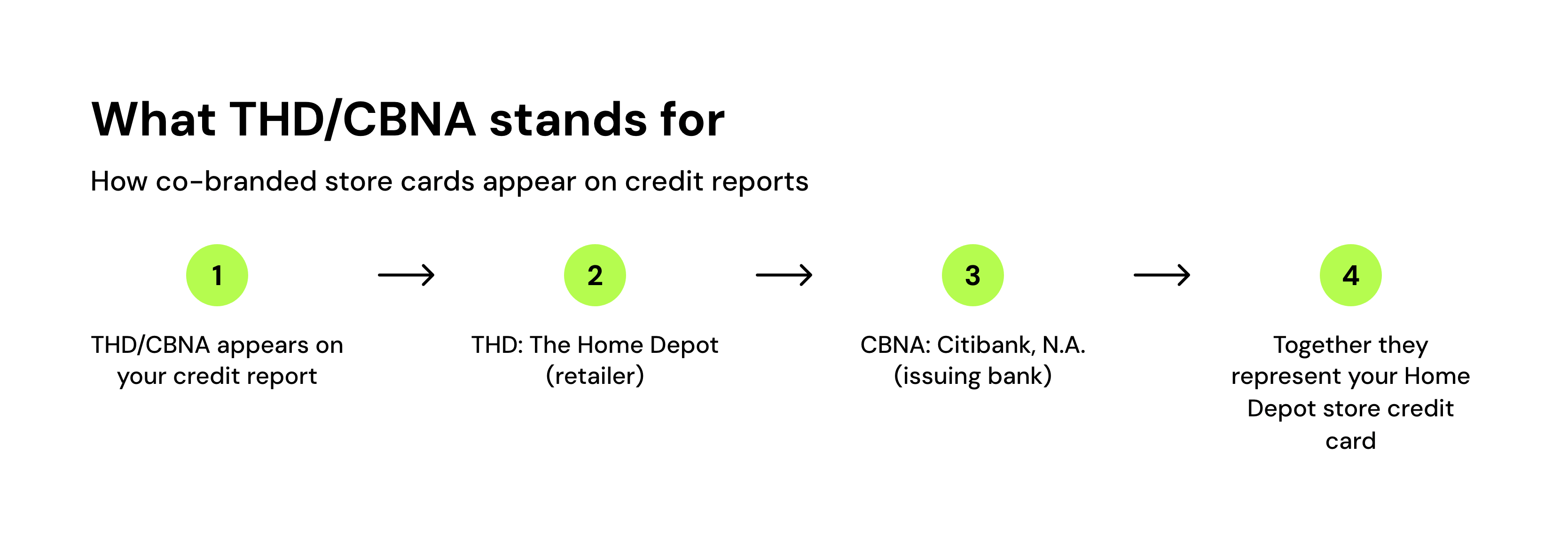
"THD" stands for The Home Depot, and "CBNA" stands for Citibank, N.A., which is the financial institution that underwrites and issues the card on Home Depot's behalf. This means that whenever you apply for or use a Home Depot credit card, Citibank is effectively the bank behind the scenes doing the lending.
You'll generally see this appear on your credit report in one of two forms: as a hard inquiry from when you applied for the card, or as an open account if you were approved and the account is still active. Both of these are completely normal entries that any individual who has interacted with the Home Depot credit card program would expect to see.
It's worth noting that this labeling format, where a store name and the issuing bank are combined, is super common in the credit card industry. Lots of major retailers partner with large banks to offer co-branded cards, and the bank's name is what gets reported to the credit bureaus.
Why does THD/CBNA appear on your report?
There are mainly two reasons you'd see THD/CBNA show up on your credit report.
The first is a hard inquiry, which is recorded when you submit a formal application for a Home Depot credit card and Citibank pulls your credit to evaluate your eligibility. Hard inquiries are basically the credit bureau's way of logging that a lender reviewed your file with the intent to extend credit.
The second reason is an open or closed account entry, which appears when you were approved for the card and Citibank began reporting your account activity to the credit bureaus. This type of entry includes details like your credit limit, balance, payment history, and account status, all of which factor into your credit profile.
Every individual who has applied for a Home Depot credit card, whether approved or not, will typically see at least the hard inquiry listed. If you were approved and have used the card, you'll also have the account tradeline showing up alongside it.
If you genuinely have no memory of applying for a Home Depot credit card and the entry looks unfamiliar, that is when it's worth investigating further. This said, it's also easy to forget a card application from months or even years ago, so checking your own records first is usually a good starting point before taking any action.
Does THD/CBNA affect your credit score?
Whether THD/CBNA affects your credit score depends on what type of entry it is.
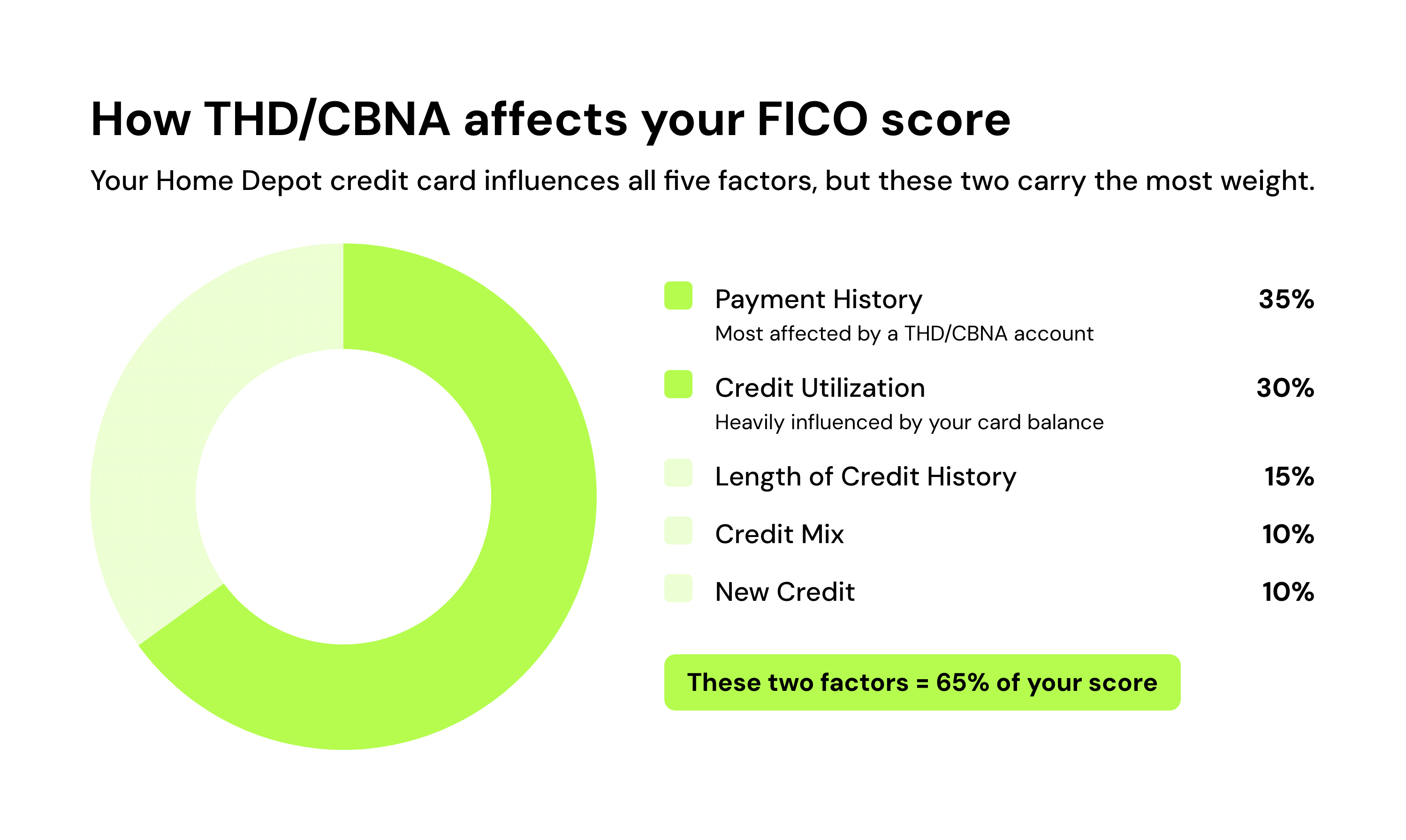
A hard inquiry, which is primarily what you'd see right after applying, can cause a small, temporary dip in your score. Hard inquiries generally lower your score by around five points or fewer, and their impact fades over time, disappearing from your report entirely after two years.
An active account entry, on the other hand, can actually be a positive force on your credit profile. Payment history is the single most important factor in your credit score, making up 35% of the FICO calculation, so consistently paying your Home Depot card on time contributes meaningfully to a healthy score. Your credit utilization on the card, which is effectively the ratio of your balance to your credit limit, also plays a role and counts toward the 30% utilization factor in your score.
Luckily, if the account is in good standing, it's generally doing more good than harm for your credit over the long run.
What if you don't recognize the THD/CBNA entry?
If you see THD/CBNA and are confident you never applied for a Home Depot credit card, it's important to take that seriously.
An unrecognized hard inquiry or account could be a sign of identity theft or unauthorized credit activity. Someone may have used your personal information to apply for credit without your knowledge, which is a situation you'll want to address quickly to prevent further damage to your credit profile.
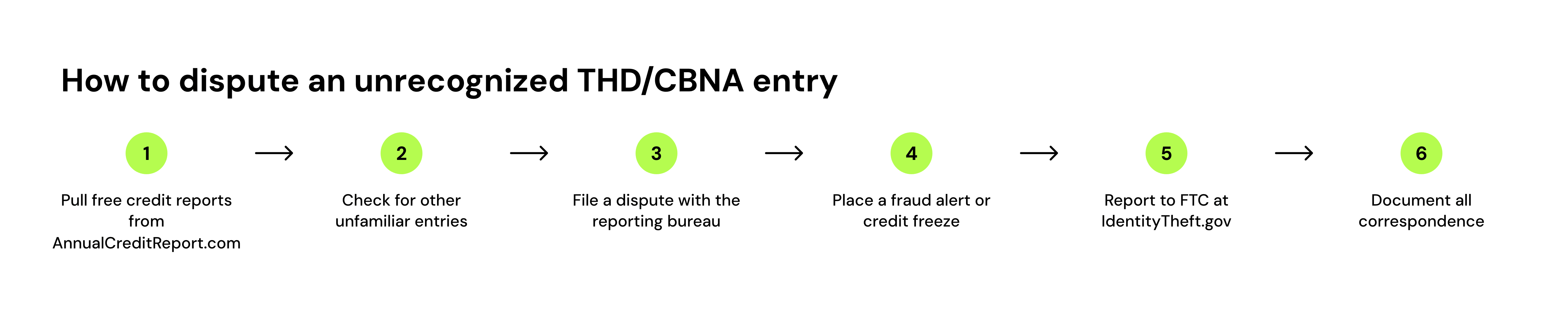
The first step is to request your full credit reports from all three major bureaus, which you can do for free at AnnualCreditReport.com. Once you have them in hand, look for any other unfamiliar entries that might indicate a broader pattern of fraudulent activity.
If you determine the entry is genuinely unauthorized, you have the right to file a dispute with the credit bureau reporting it. You can also place a fraud alert or credit freeze on your file to prevent new accounts from being opened in your name. Every individual who suspects identity theft should also consider reporting it to the Federal Trade Commission at IdentityTheft.gov.
Just make sure you document everything throughout the process, as records of your dispute correspondence will be useful if you need to escalate the issue.
How to dispute a THD/CBNA entry
Disputing an entry on your credit report is a formal process that the major credit bureaus are required to address, usually within 30 days.
To start a dispute, you'll need to contact the bureau reporting the entry, be it Equifax, Experian, or TransUnion, and submit your claim along with any supporting documentation. This documentation might include proof that you never opened the account, a copy of your ID, or a police report if fraud is involved.
You can also contact Citibank directly to dispute the entry at the source, which is sometimes called a direct dispute. If the creditor finds the information to be inaccurate, they are required to update the reporting accordingly.
You might also consider using a 609 dispute letter, which is a formal written request under Section 609 of the Fair Credit Reporting Act requiring the bureau to verify the information on file.
Kikoff offers free dispute tooling that can help simplify this process for you, giving you a clear and straightforward way to manage disputes without the paperwork headache. If you're working on building or protecting your credit profile, Kikoff is a great starting point.
How long does THD/CBNA stay on your credit report?
The length of time an entry stays on your report depends on the type of entry it is.
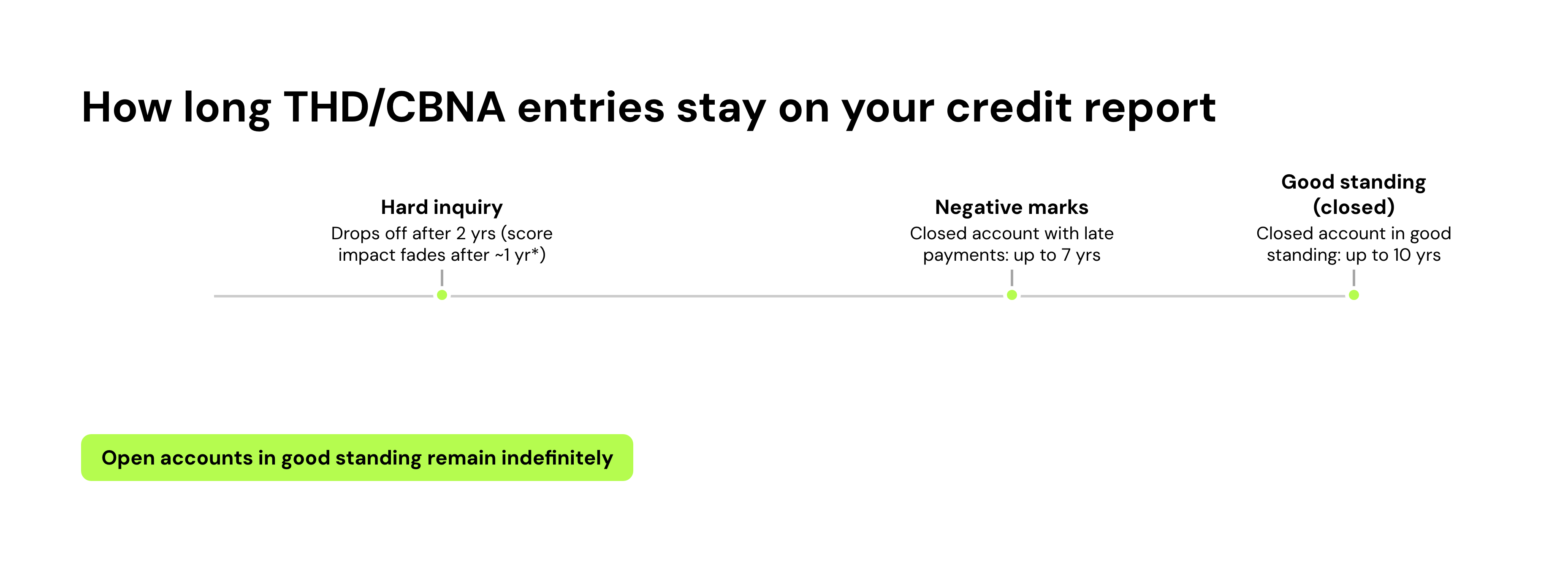
Hard inquiries remain on your credit report for two years, though their impact on your score typically fades after the first year. This means even if you applied and were denied, the inquiry will eventually age off on its own without any action needed on your part.
Open accounts in good standing stay on your report for as long as the account remains open, and even after you close them, they can continue to appear for up to 10 years. Closed accounts with negative marks, like missed payments or a charge-off, are generally reported for up to seven years from the date of first delinquency.
This said, the age of your accounts is also a factor in your credit score, which is primarily reflected in the "length of credit history" category that makes up 15% of the FICO model. Keeping a well-managed account open for a long time can actually help your score, so closing an older card isn't always the right move.
Conclusion
THD/CBNA on your credit report is basically Citibank reporting activity related to a Home Depot credit card, whether that's a hard inquiry from an application or an open account tradeline.
In most cases, this is a completely expected entry, and if the account is in good standing, it's likely working in your favor over time. The only time to take action is if you genuinely don't recognize the entry and suspect it may be fraudulent, in which case disputing it through the relevant bureau is your clearest path forward.
If you're focused on building a strong credit profile, tools like Kikoff can help you grow credit efficiently, starting at just $5 a month with reporting to all three major credit bureaus.
Frequently Asked Questions
About the editor

Disclaimer: The information provided in this blog post is meant for informational purposes only and does not constitute financial advice.