




Your overall net worth can give you an idea of where you stand financially, but it doesn't necessarily tell you how much money you can access when you need it. You could own a home worth hundreds of thousands of dollars and still have trouble covering an unexpected expense.
That's where liquid net worth comes in. Liquid net worth focuses on assets you can readily turn into cash, giving you a clearer picture of the resources available to handle an emergency, make a large purchase, or take advantage of a financial opportunity.
What is liquid net worth?
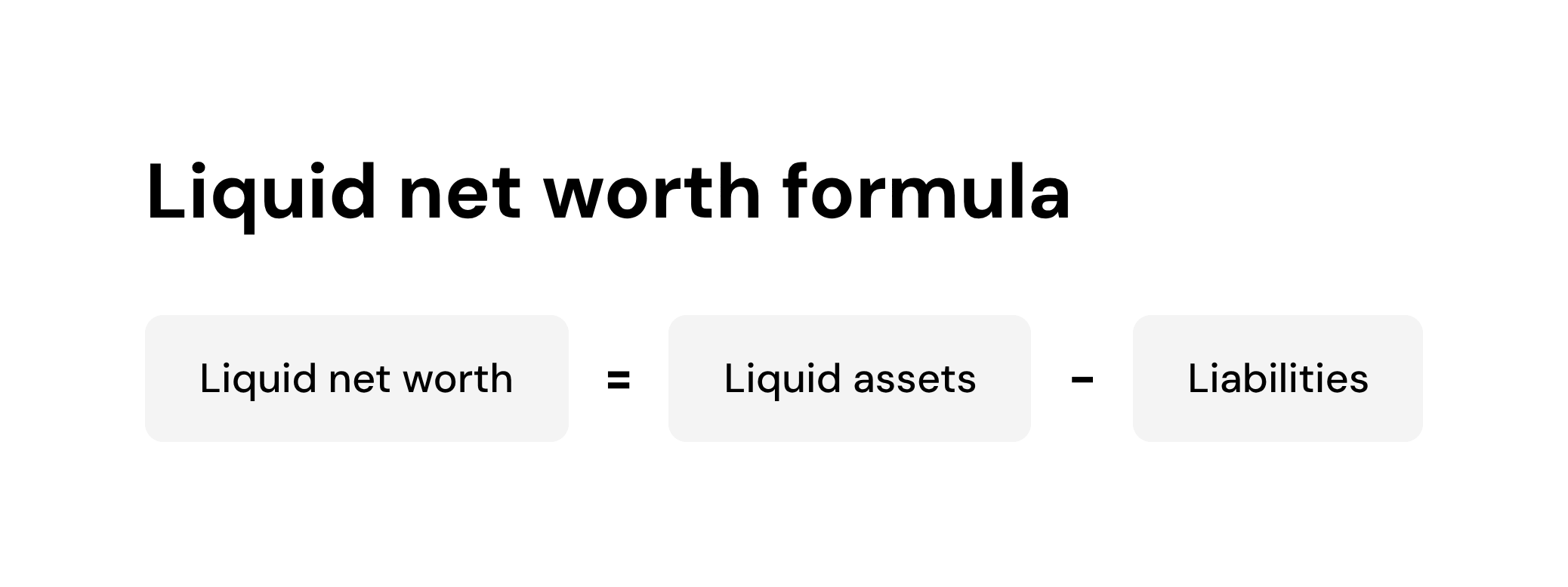
Liquid net worth is the value of your liquid assets minus your liabilities. A liquid asset is generally something you can quickly convert to cash without losing a significant portion of its value.
Cash in your checking or savings account is already liquid. Investments such as publicly traded stocks, bonds and exchange-traded funds (ETFs) can also generally be converted to cash relatively quickly, although their market values can fluctuate.
Your home, car and other physical property usually aren't considered liquid assets because selling them can take time and may involve significant costs.
Read more >> How to save for retirement: The complete guide
Liquid net worth vs. net worth
The main difference between net worth and liquid net worth is which assets you include in the calculation.
Your net worth includes the value of all your assets, including your home, vehicles, investments, bank accounts, and other valuable property. You then subtract everything you owe.
Your liquid net worth uses a narrower definition of assets. You count only assets that are already cash or can generally be converted to cash relatively quickly. Liquid net worth is typically smaller than overall net worth.
| Net worth | Liquid net worth | |
|---|---|---|
| Cash | Included | Included |
| Checking and savings accounts | Included | Included |
| Stocks and other marketable investments | Included | Generally included |
| Home equity | Included | Generally excluded |
| Vehicles | Included | Generally excluded |
| Personal property | Included | Generally excluded |
How to calculate your liquid net worth
Calculate liquid net worth with a simple formula:
Step 1: Add up your liquid assets
Start with assets you can readily access or convert into cash. This might include cash, checking and savings account balances, certificates of deposit (CDs) that you can cash out and taxable investment accounts.
Use current balances or market values rather than what you originally paid for an asset.
Step 2: Add up your liabilities
Next, total what you owe. Common liabilities include:
- Credit card balances
- Personal loans
- Auto loans
- Student loans
- Medical debt
- Mortgages
- Other outstanding debts
Use the current balance owed on each account rather than your monthly payment.
Step 3: Subtract liabilities from liquid assets
Suppose you have $8,000 in checking and savings, $2,000 in a CD, and $15,000 in taxable investments. Your liquid assets total $25,000.
If you have $4,000 in credit card debt, a $6,000 car loan, and $10,000 in student loans, your liabilities total $20,000.
$25,000 − $20,000 = $5,000 liquid net worth
Your liquid net worth would be $5,000, even if your total net worth is much higher because you own a home or other non-liquid assets.

What counts as a liquid asset?
An asset is generally considered liquid when you can access its value relatively quickly without having to find a buyer or accept a substantial discount.
Liquidity exists on a spectrum. Money in your checking account is more liquid than stock because it's already cash. A stock can usually be sold quickly, but its value can change before you sell it.
What doesn't count as a liquid asset?
Assets that take longer to sell or may lose significant value when converted to cash usually aren't included in liquid net worth.
Examples include your home, vehicles, jewelry, collectibles, furniture, and other personal property. These assets can contribute to your overall net worth, but you might need weeks or months to sell them.
Retirement accounts can be trickier. They contain investments that might otherwise be considered liquid, but withdrawing money before you're eligible for qualified distributions could result in taxes or penalties. For that reason, some experts recommend excluding tax-advantaged retirement accounts from your liquid net worth before age 59 1/2.
Consider talking with a financial advisor for guidance specific to your situation and retirement goals.
Why liquid net worth matters
Liquid net worth gives you another way to measure financial flexibility. A high overall net worth doesn't necessarily mean you have enough accessible money to handle short-term needs.
Knowing your liquid net worth can help you:
- Evaluate whether you have enough accessible assets for emergencies.
- Decide whether you're financially prepared for a major purchase.
- See how much of your wealth is tied up in property and other non-liquid assets.
- Track your financial progress alongside your overall net worth.
Looking at both overall and liquid net worth can provide a more complete view of your finances.
How to increase your liquid net worth
Increasing liquid net worth generally comes down to increasing accessible assets, reducing liabilities or doing both.
- Build cash reserves. Consider automating transfers to make saving part of your monthly routine.
- Pay down debt. Reduce credit card balances and other liabilities to increase your liquid net worth even if your assets stay the same.
- Add to accessible investments. Once you have appropriate emergency savings, investing additional money in a taxable brokerage account could help you build liquid assets. Keep in mind that investment values can rise or fall with the market.
- Review where your wealth is concentrated. If most of your net worth is tied up in your home or other difficult-to-sell assets, consider building additional liquid savings to reach your goals.
Read more >> How to build an emergency fund you can rely on
Bottom line
Liquid net worth doesn't replace your regular net worth calculation. Instead, it answers a different question: How much financial value could you actually access without selling major assets?
Tracking both figures can help you understand your long-term financial position and how well you can handle surprise expenses today.
When liquid savings run short, credit is usually what stands between a rough month and selling something you’d rather keep. Building it before you need it means having options that don’t cost you an asset.
Kikoff's Credit Account reports your on-time payments to all three credit bureaus, helping you build the payment history that carries the most weight in your score. No hard credit check required.
Frequently Asked Questions
Disclaimer: The information provided in this blog post is meant for informational purposes only and does not constitute financial advice.