






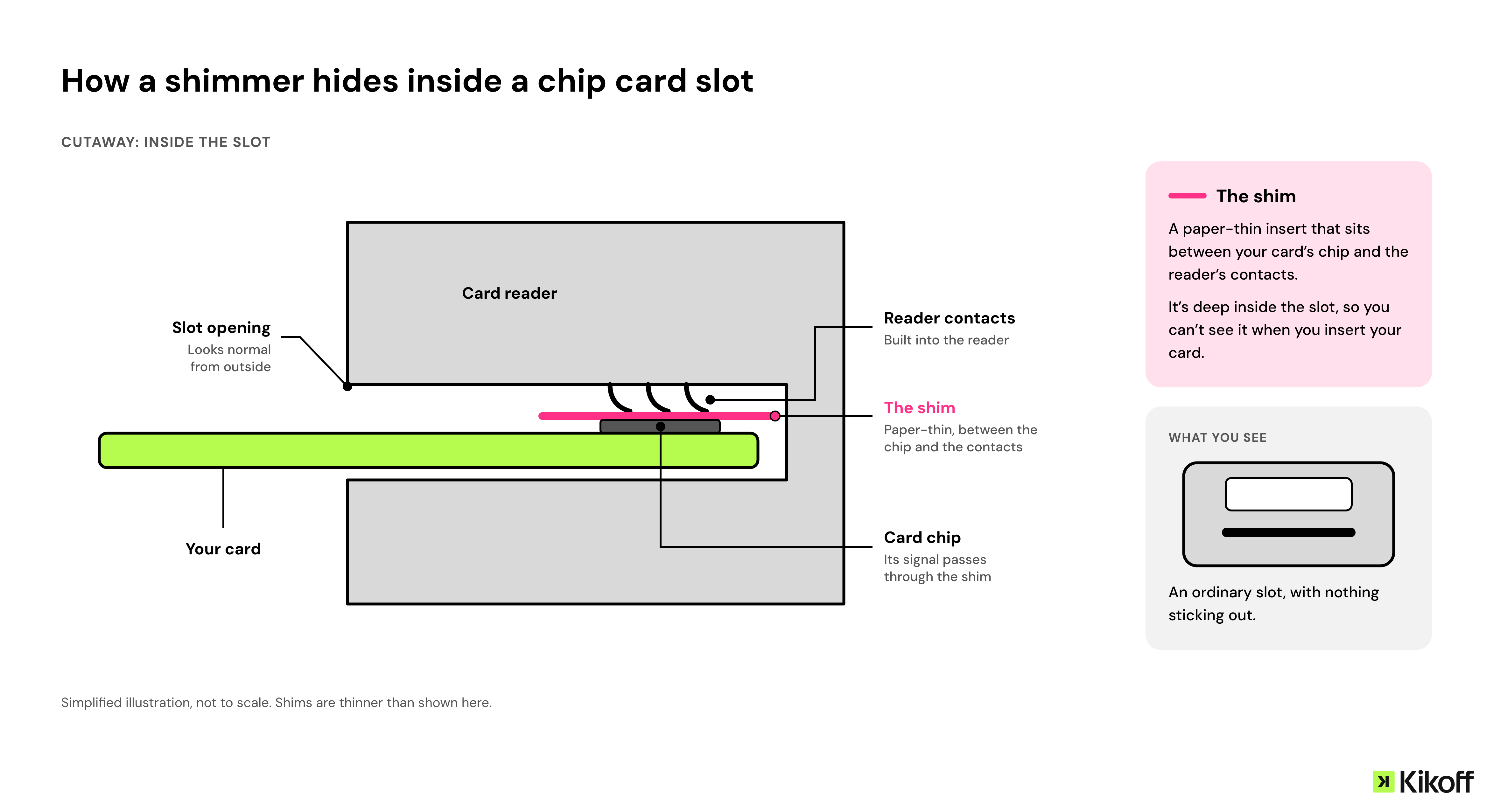
Credit card shimming is a scam where a thief slides a thin device, called a shim, into the chip slot of a card reader. When you insert your card, the shim sits between the chip and the reader and records your card data. The machine still works, so you may not notice anything until strange charges appear.
If you just paid at a pump or ATM that felt off, your money has a backstop. When a thief has your credit card number but you still have the card, federal law says you don’t owe anything for charges you didn’t make. Debit cards are covered too, but how well depends on how fast you report.
How shimming works
A shim is a sliver of plastic with a tiny chip and memory built in. It’s thin enough to fit inside the slot where you insert your card, so it doesn’t change how the reader looks from the outside.
Shimming is a newer version of skimming. The two scams go after different parts of your card.
Chip data is harder to turn into a working copy of your card than stripe data, but thieves may still try to use it. Treat a suspected shim like a stolen card number.
Read more >> 6 Common Credit Card Scams and How to Avoid Them
Where shimmers show up and how to spot one
Shimmers turn up where a card reader is easy to reach and nobody’s watching closely, like ATMs, gas pumps, and self-checkout lanes. The FTC has specifically warned drivers to check gas pumps for tampering.
You won’t always catch one, but a few habits lower the odds:
- Check for a tight fit. If your card is hard to push in or scrapes on the way, take it out and pay another way.
- Give the reader a gentle tug. A reader that wiggles or looks crooked is a warning sign.
- Look for the seal on gas pumps. The FTC notes that many stations put security seals over the pump panel, and an opened panel shows a label that reads “void.”
- Tap or use your phone when you can. Contactless payment skips the slot, so a shim inside it can’t read your card.
- Turn on transaction alerts in your card’s app, so you hear about a charge you didn’t make within minutes, not weeks.
Read more >> How to Protect Yourself From Credit Card Fraud
Something feel off at the pump or ATM? Don’t insert your card. Tell an employee or call the number on the machine, then pay inside or use another machine. If you already used your card, call the number on the back of it today.
What to do if you think your card was shimmed
These steps follow the FTC’s identity theft recovery plan for a stolen debit or credit card number. You can do every one of them for free.
- Call your card company. Use the number on the back of your card. Ask it to cancel the card and send a new one with a new number.
- Change your PIN if it’s a debit card or you used a PIN at the machine.
- Go through your recent transactions. Report every charge you didn’t make. Write down the date and the name of the person you spoke with, in case you need to follow up.
- Update autopay. Add your new card number anywhere the old one was saved, so a bill doesn’t bounce.
- Check your credit reports. You can get them free every week at AnnualCreditReport.com, and checking your own report doesn’t hurt your credit.
To place a fraud alert, contact any one of the three credit bureaus, and it has to tell the other two. It’s free and lasts one year. A credit freeze is also free and stays until you lift it, but you place it with each bureau separately.
Credit vs. debit: what you could owe
Credit cards and debit cards fall under different federal rules. With a shim, the thief usually has your card number but not your card, and the FTC treats those cases separately.
The debit limits come from Regulation E. If the bank needs more than 10 business days to investigate, it generally has to put the money back in your account provisionally while it finishes. If you have a credit card, it’s the safer choice at pumps and unattended machines. Card companies can set their own fraud policies on top of the law, so ask yours whether it covers the full amount.
Read more >> Are Credit Cards Safer Than Debit Cards?
Does shimming hurt your credit?
Not by itself. Fraudulent charges on your existing card show up on your statement, not as a new mark on your credit reports, and your card company can remove them once you report them.
Your credit reports come into it if your information is used to open something new, like a credit card or phone plan in your name. A shim grabs card data, not your Social Security number, so that’s less likely. It’s still worth checking, especially if your details were exposed somewhere else, such as in a hacked online account.
Found an account you didn’t open? Dispute it with each credit bureau. It’s free. If you also file an Identity Theft Report at IdentityTheft.gov and send a copy to the bureaus with proof of ID, they have to block the account from your report. Kikoff’s AI Credit Disputes, included with every Kikoff plan, can draft the disputes for you.
Bottom line
Shimming copies your card data through a hidden device in the chip slot. Tap when you can, skip any reader that feels wrong, and call your card company the same day if you think your card was hit.
That call fixes the card. It won’t tell you if someone opens something new in your name, because that shows up on your credit report, not your statement. You can pull all three reports free every week at AnnualCreditReport.com. If you’d rather not have to remember, Kikoff Premium watches Equifax, Experian, and TransUnion and alerts you when a new account appears. Premium is $20 a month.
Frequently Asked Questions
Article Sources
Disclaimer: The information provided in this blog post is meant for informational purposes only and does not constitute financial advice.