





A credit card hold is a temporary block on part of your available credit. Hotels, gas stations, rental car companies, and restaurants use holds to make sure you can cover a bill they can’t total yet. The held amount isn’t a charge, but you can’t spend it until the hold clears.
If you’re worried a hold means you’ll pay twice, you won’t. When the final charge posts, it takes the hold’s place. The real risk shows up when your limit is small. A hold can tie up enough credit that your next purchase gets declined, and if you pay another way, the FTC says a hold can last up to 15 days.
How a credit card hold works
Most holds are authorization holds, which come from the business you’re paying. They usually go like this:
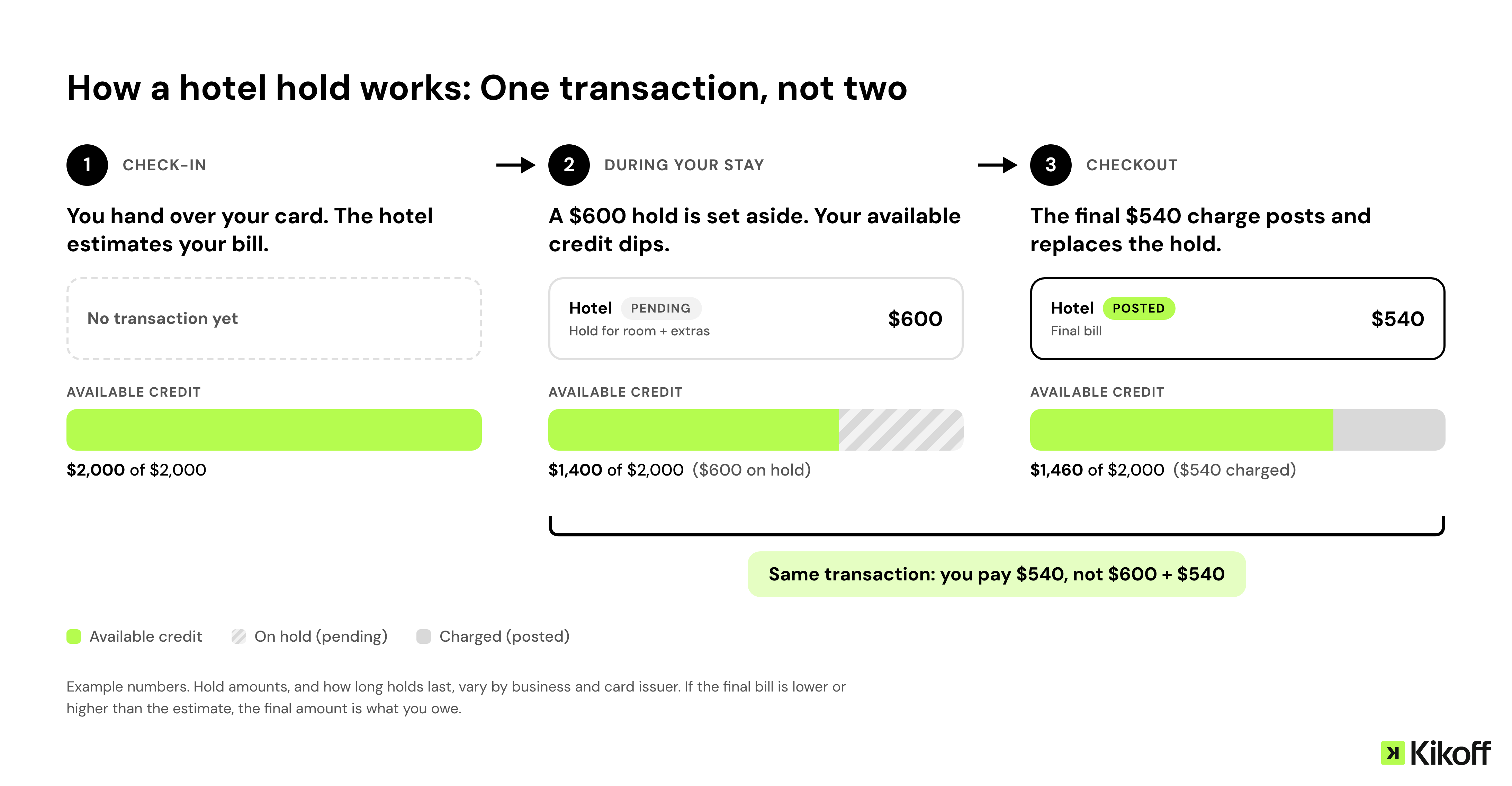
- You hand over your card at check-in, at the pump, or when you open a tab.
- The business asks your card company to set aside an estimate. The FTC describes this as a block for the business’s “estimated total of your bill.”
- Your available credit drops by that amount. You’ll usually see it as a pending transaction in your card’s app.
- The final charge posts and replaces the hold. If the final bill is lower or higher than the estimate, the final amount is what you owe.
Read more >> How Long Do Pending Transactions Take to Post?
Authorization holds vs. account holds
Your card company can also restrict the account itself for reasons like a missed payment, a balance over the limit, or activity that looks like fraud. An account hold can stop new purchases, and it’s typically active until you contact the card company.
If your card suddenly stops working, call the number on the back of your card and ask what caused the hold and what will release it. If it’s a missed payment, pay at least the minimum as soon as you can, since a late payment can end up on your credit reports. If it’s suspected fraud, go through recent charges with them and report any you didn’t make.
Can't cover the minimum? Call your card company before the due date if you can. It might work with you to change your payment during a financial emergency. Before you call, figure out what you can pay each month and for how long, then ask for that. If they offer a hardship plan, get the terms in writing.
If you're behind on more than one bill, a nonprofit credit counselor can help you sort out what to pay first. The National Foundation for Credit Counseling offers free or low-cost counseling at 800-388-2227.
How long a hold lasts
If you pay a hotel or rental car bill with the same card you used to book or check in, the final charge will most likely replace the hold in a few days. If you pay with a different card, cash, or a check, the hold may last up to 15 days, because your card company doesn’t know you paid another way.
If you switch cards at checkout, tell the front desk and ask them to release the original hold promptly.
If a hold lasts longer than the business said it would, call the business first, since it placed the hold. Then call your card company and ask when the pending amount will drop off. If a hold turns into a charge you didn’t agree to, you can dispute it with your card company in writing within 60 days of the statement it first appears on.
Before you check in, rent a car, or start a tab, ask whether the business will put a hold on your card, how much it will be, and how long it lasts. If your limit is low, the answers tell you whether you’ll have enough left for gas, groceries, or other essentials that week.
What a hold means for your limit, fees, and credit
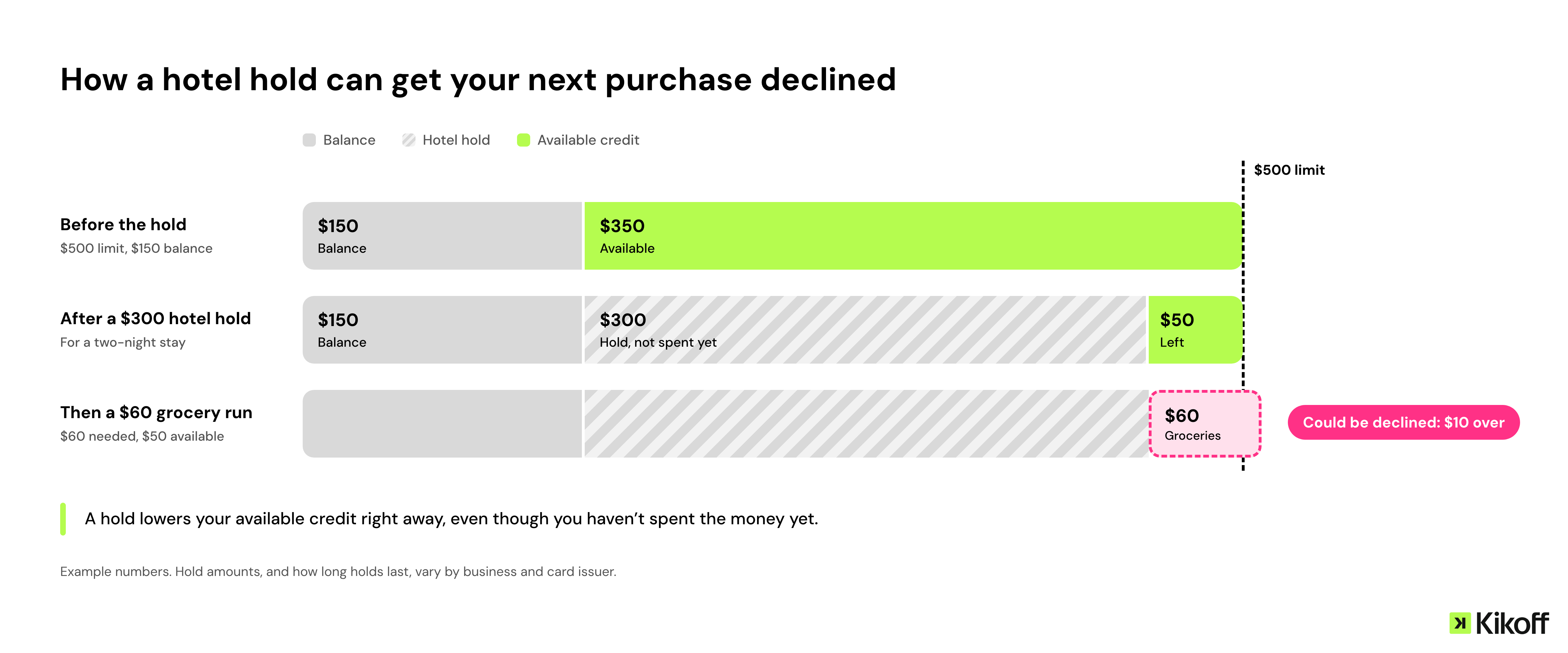
- Your available credit. Here’s an example: Say your card has a $500 limit and a $150 balance, so you have $350 available. A hotel places a $300 hold for a two-night stay. Until it clears, you have $50 left. A $60 grocery run could get declined, even though you haven’t spent the $300 yet.
- Overlimit fees. Under Regulation Z rules that carry out the CARD Act, your card issuer, meaning the bank or company that gives you the card, can’t charge an over-the-limit fee unless you’ve opted in. If you haven’t, the company can decline the purchase or approve it without a fee. Ask your card company whether you’ve opted in. You can revoke consent at any time.
- Interest and credit reports. A hold isn't a charge, so it isn't part of the balance your card company reports, and it doesn't appear on your credit reports. Once the final charge posts, it’s treated like any other purchase under your card’s terms.
Read more >> How to Use a Credit Card at the Gas Pump (And Avoid Holds)
Debit card holds work differently
A hold on a debit card ties up money in your checking account, not credit. It can leave your balance low enough that a check bounces or a recurring payment gets declined.
Federal rules require your bank to get your opt-in before it can charge an overdraft fee on an ATM withdrawal or an everyday debit card purchase. The rule doesn’t cover checks or autopay, so if a hold drains your account, those can trigger overdraft and return payment fees. When you can, use a credit card for hotels, rental cars, and gas pumps. With only a debit card, pay inside at the gas station, and ask the hotel how much it will hold before you check in.
Read more >> Are Credit Cards Safer Than Debit Cards?
Bottom line
A credit card hold sets aside part of your available credit until the final charge posts. It usually clears in a day or two if you pay with the same card. Ask how much a business will hold before you hand over your card, and call the business that placed it if a hold lasts longer than you were told.
Holds hit hardest when a debit card is all you have, because they tie up cash you need for bills. A credit card takes that pressure off your checking account, but getting approved for one usually starts with some credit history. Kikoff's Credit Account adds an account in your name that reports your on-time payments to Equifax, Experian, and TransUnion, with no credit check to sign up. It's used only in the Kikoff Store, so it's for building that history, not spending. Plans start at $5 a month.
Frequently Asked Questions
Article Sources
Disclaimer: The information provided in this blog post is meant for informational purposes only and does not constitute financial advice.