



If you've ever searched for ways to build credit without a traditional credit card or loan, you've probably come across the term "credit building app."
These apps have grown into a popular category of fintech tools, and for good reason: they offer a low-barrier, structured way for everyday people to start generating the kind of credit history that lenders actually care about.
In this post, we'll break down exactly what a credit building app is, how these apps work, what to look for when choosing one, and which ones are worth your time.
What is a credit building app?
A credit building app is effectively a financial tool designed to help you establish or improve your credit by creating reported, positive credit activity on your behalf.
Most people think of credit cards or car loans when they think about building credit, but credit building apps offer a more accessible alternative, be it a secured card, a credit-builder loan, a rent reporting service, or some combination of all three.
The core idea is simple: the app creates some form of credit activity in your name, and that activity gets reported to one or more of the three major credit bureaus, Equifax, Experian, and TransUnion.
Over time, that reported activity builds up into a credit history, which is what scoring models like FICO and VantageScore use to calculate your credit score.
This makes credit building apps especially useful for people with no credit history, thin credit files, or credit that's been damaged by past financial hardship.
Every individual who has ever been turned down for a credit card or faced a high interest rate due to a low score is exactly who these apps were built for.
How do credit building apps work?
Credit building apps generally work by giving you access to a financial product, like a small credit line, installment loan, or reporting service, and then reporting your payment activity to the credit bureaus.
Here's a breakdown of the most common mechanisms:
Tradeline reporting
Some apps open a small line of credit in your name, which is called a "tradeline," and report your monthly payments on that line to the bureaus.
Even if the credit line is only used to finance a small subscription or digital product, the on-time payment gets logged the same way a credit card payment would.
This is primarily how apps like Kikoff work, and it's one of the most direct ways to start building payment history fast.
Over time, a tradeline with consistent on-time payments paints a picture to lenders of someone who manages their obligations reliably.
Credit-builder loans
A credit-builder loan is a small loan where the borrowed amount is held in a locked savings account while you make monthly payments.
You don't receive the money upfront, but each payment gets reported to the bureaus as positive payment history, and at the end of the loan term, you get the deposited amount back.
The main limitation of credit-builder loans is that they only affect one credit factor: payment history.
Unlike a revolving credit account, a CBL does nothing for your credit utilization, which makes up 30% of your score and is the second most important factor overall.
You're also paying interest and fees throughout the loan term, and your money stays locked up the entire time, making CBLs a less flexible and less impactful option compared to a credit account for most people.
If your main goal is to add an installment account to your credit mix, a CBL can serve a purpose, but for building a well-rounded credit profile as efficiently as possible, a credit account is generally the stronger tool.
Rent reporting
Rent is usually the single most expensive monthly payment in a household, yet it doesn't automatically show up on your credit report.
Rent reporting tools work by verifying your rent payments and submitting them to one or more of the major credit bureaus so they count toward your credit history.
This is a super easy way to get credit for something you're already paying, which makes rent reporting one of the most compelling features to look for in a credit building app.
Kikoff includes rent reporting in its plans starting at $5 a month, with verified payments reported to Equifax.
Secured credit cards
Some credit building apps also offer secured credit cards, which are credit cards backed by a cash deposit you make upfront.
Because the deposit acts as your credit limit, the risk to the issuer is essentially zero, which means virtually anyone can get approved regardless of their credit history.
Secured card activity gets reported to the bureaus just like a regular credit card, which means you're building real payment history and credit utilization data each month.
What factors do credit building apps affect?
To understand why credit building apps are effective, it helps to know what actually goes into your credit score.
Your score is generally calculated using five factors: payment history (35%), credit utilization (30%), length of credit history (15%), credit mix (10%), and new credit inquiries (10%).
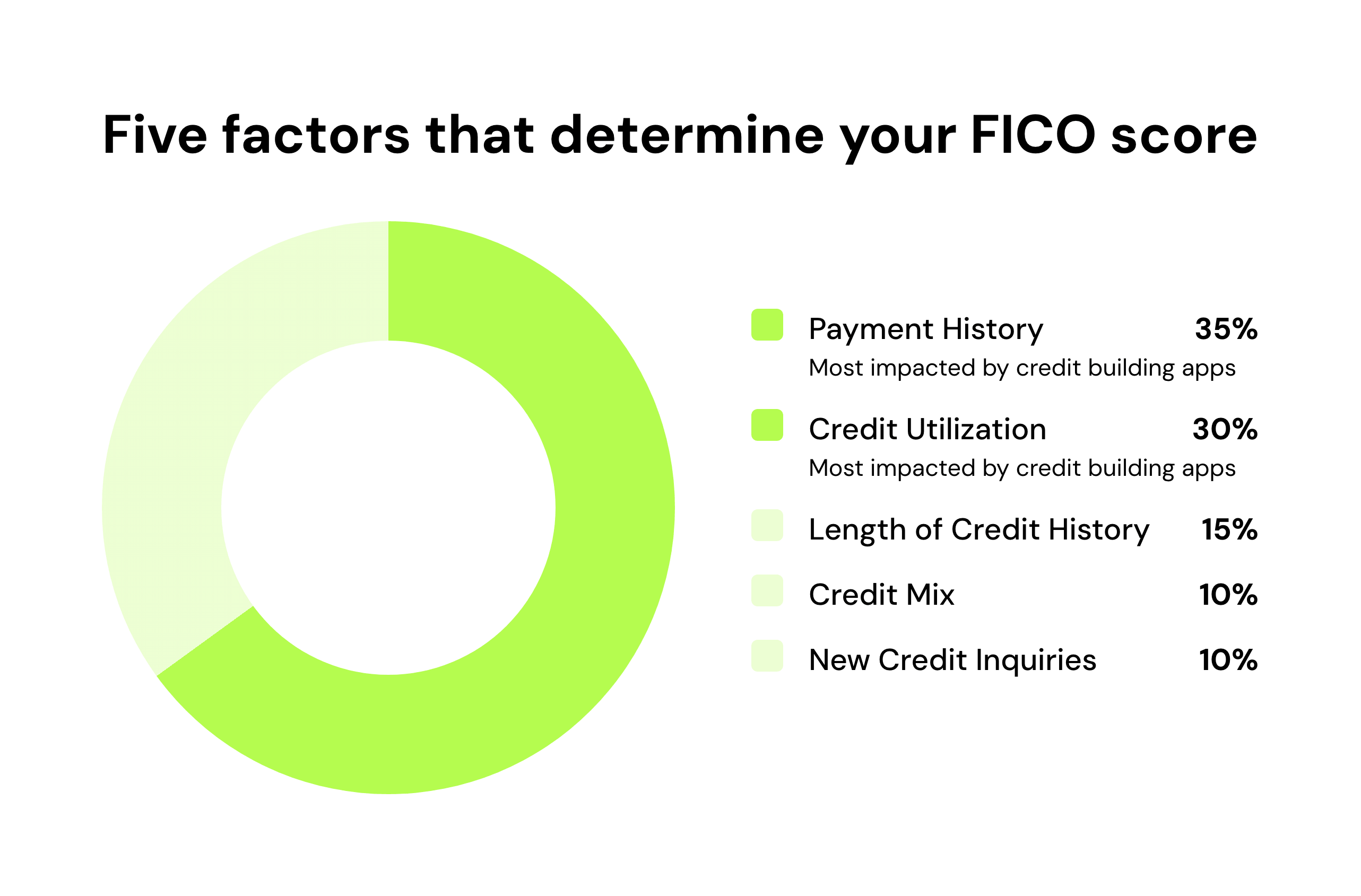
Credit building apps mainly target the first few factors, particularly payment history and, in the case of tradelines and secured cards, credit utilization.
Payment history is the single most important factor in your credit score, which is why consistent, on-time payments through a credit building app can have a meaningful impact over time.
Apps that report a tradeline or credit line also contribute to credit utilization, especially if you keep balances low, and can contribute to your length of credit history the longer you maintain the account.
What to look for in a credit building app
Not every credit building app is the same, and knowing what to look for will help you avoid wasting time on tools that don't actually move the needle.
Bureau reporting
The most important thing to check is which credit bureaus the app reports to.
Ideally, you want an app that reports to all three major bureaus, Equifax, Experian, and TransUnion, since lenders may pull from any one of them when reviewing your application.
Apps that only report to one bureau are less effective, since your credit score on the other two will remain unchanged.
No hard credit check
Most credit building apps don't require a hard inquiry to get started, which is a big deal if your credit is already low.
Hard inquiries temporarily lower your score, so choosing a tool that uses only a soft check, or no check at all, means you can start building without any upfront damage.
Low cost
Credit building apps vary widely in price, and paying a lot doesn't necessarily mean better results.
Look for options with low monthly costs and no hidden fees, since the whole point is to build credit affordably rather than taking on new financial stress.
Multiple credit building tools
The best apps give you more than one way to build credit, be it a tradeline, rent reporting, a secured card, or dispute tools.
Stacking multiple credit-positive activities in one place generally produces better results than relying on a single product.
Top credit building apps
Let's jump in to some of the most popular credit building apps available today.
Kikoff
Kikoff is a credit building platform designed for people who are starting from scratch, rebuilding, or looking to add positive payment history to their credit report.
Kikoff offers a free Credit Account, which is an unsecured revolving tradeline that reports payments to all three major credit bureaus with no interest, no hard credit check, and no hidden fees.
Paid plans starting at $5 a month unlock rent reporting, which submits verified rent payments to Equifax, as well as access to Kikoff's secured credit card, which is issued by Coastal Community Bank and reports to all three bureaus.
Kikoff also provides free dispute tools to every user, regardless of whether they have a paid plan, which means you can file disputes against inaccurate items on your credit report without any additional cost.
For anyone looking to build credit responsibly with a low-cost, multi-tool platform, Kikoff is a strong starting point.
Self
Self is a credit building app that primarily offers credit-builder loans, where users make monthly payments into a savings account and receive the balance at the end of the term.
Payments are reported to all three major credit bureaus, and Self also offers a secured credit card that users can unlock after meeting certain savings milestones.
Experian Boost
Experian Boost is a free tool from Experian that lets users add utility, phone, and streaming subscription payments to their Experian credit report.
It only reports to Experian, so it won't affect your TransUnion or Equifax scores, but it can be a useful supplement for people with thin files who want a quick, no-cost credit bump.
Credit Strong
Credit Strong offers a variety of credit-builder installment loan products, including accounts specifically designed to help users build savings alongside their credit history.
Payments are reported to all three bureaus, and users can choose from several different loan sizes and term lengths depending on their goals.
How long does it take to see results?
Most credit building apps will begin reporting your activity to the bureaus within 30 to 60 days of your first on-time payment.
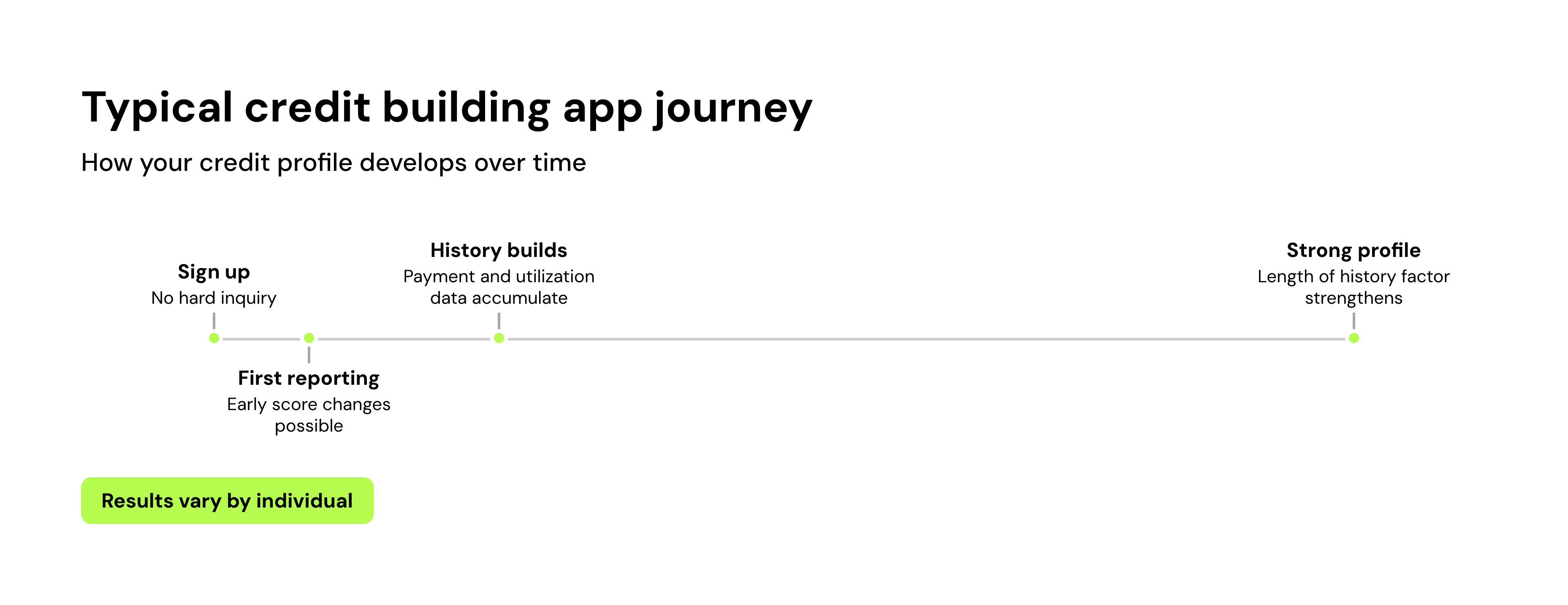
Early score changes can be noticeable in as little as one to two months, especially for users who are starting with no credit history at all.
That said, building a truly strong credit profile generally takes consistent activity over 12 to 24 months, since factors like length of credit history take time to develop by definition.
The key is to make your payments on time every month and keep any credit balances low, since those two behaviors drive the factors that matter most.
Luckily, most credit building apps are structured around exactly those behaviors, which makes sticking to good habits much easier than managing traditional credit products on your own.
Conclusion
A credit building app is one of the most accessible ways to start generating positive credit history, whether you're brand new to credit or looking to recover from a rough financial period.
The best apps report to all three major bureaus, keep costs low, require no hard credit check, and give you more than one way to build credit simultaneously.
Kikoff covers all of those bases, with a free tradeline, affordable paid plans that include rent reporting and a secured card, and free dispute tools available to every user. Build credit responsibly with Kikoff's plans, starting at $5 a month.
Frequently Asked Questions
About the editor

Disclaimer: The information provided in this blog post is meant for informational purposes only and does not constitute financial advice.