





Most people pay their sewer bill without a second thought, but there are real ways to bring that number down. Let's jump in and look at what drives sewer costs and how to take control of them.
Sewer bills are one of those expenses that can quietly creep up over time, and lots of households never realize how much room there is to save. Every individual who takes a closer look at their utility usage tends to find at least one or two easy wins.
How sewer bills are calculated
Understanding your bill is the single most important first step before trying to reduce it. Sewer charges are generally based on how much water you use, which is primarily measured through your water meter.
This means your sewer bill is not a flat fee in most cities; it rises and falls with your water consumption. Most utilities calculate sewer costs as a percentage of your water bill or apply a rate per gallon used.
Because the billing paints a picture of your total household water flow, any reduction in water use will usually translate directly into a lower sewer charge. This said, some municipalities charge a flat sewer rate regardless of usage, so it is worth calling your utility to confirm how yours is structured.
If you are on a flat-rate system, the strategies below still apply to your water bill and can reduce overall household utility costs. Knowing your billing method basically tells you which levers will have the most impact.
Fix leaks as soon as possible
A dripping faucet or a running toilet is one of the fastest ways to inflate both your water and sewer bill. Luckily, most household leaks are inexpensive to fix once you find them.
A running toilet can waste hundreds of gallons per day, and since sewer charges track water usage, you are effectively paying twice for water that never served any purpose. Just make sure to check the flapper valve inside your toilet tank, which is usually the culprit in a slow, silent leak.
Leaky faucets under sinks and around appliance connections are also common. Every individual who does a monthly walk-through of their home looking for drips and moisture tends to catch problems early before they balloon into bigger bills.
Upgrade to low-flow fixtures
Low-flow showerheads, faucets, and toilets can cut water consumption significantly without changing your daily routine. This is generally a no-brainer upgrade for homeowners looking for lasting savings.
A standard showerhead uses around 2.5 gallons per minute, while a low-flow model uses 1.8 or less. Over the course of a month, that difference adds up to lots of gallons and a noticeably smaller bill.
WaterSense-certified products, a label from the EPA, meet strict efficiency standards and are widely available at hardware stores. For renters, low-flow aerators on faucets are cheap, easy to install, and usually reversible when you move out.
Reduce outdoor water use
Outdoor watering, be it a lawn, garden, or car wash, contributes to your water meter reading and therefore your sewer bill. Scaling back outdoor use is one of the most effective ways to see a quick drop in your monthly charges.
Watering early in the morning reduces evaporation, so your plants get more benefit from less water. A rain sensor or smart irrigation timer can also prevent your sprinklers from running right after it rains, which is a common and wasteful oversight.
Homeowners who switch to drought-tolerant landscaping or replace portions of their lawn with gravel or mulch tend to see lasting reductions in water use year over year. Even small changes, like using a broom instead of a hose to clean driveways, can shave a few dollars off each bill.
Check your meter and dispute errors
Billing errors are more common than most people expect, and every individual who suspects their bill spiked without explanation has the right to request a review. Checking your water meter yourself is a good first step.
Turn off all water in your home, note the meter reading, wait an hour, and check again. If the number has moved with nothing running, you likely have a leak somewhere in your system.
If your usage looks accurate but your bill still seems high, contact your utility and ask for an itemized explanation. Most utilities have a formal dispute process, and some will adjust your bill if a verifiable leak caused an unusual spike, which is primarily true for first-time occurrences.
Look into sewer cap programs and income-based assistance
Many water and sewer utilities offer assistance programs that lots of customers never know exist. These programs are mainly designed for low-to-moderate income households and can provide discounts, payment plans, or even bill credits.
Some cities have a sewer cap program, where your sewer charge is capped at a certain percentage of your water use, regardless of the actual amount billed. This can be super helpful for households that experienced a one-time high-usage event like filling a pool or a burst pipe.
The Low Income Home Energy Assistance Program (LIHEAP) sometimes covers water and sewer utilities depending on the state. It is worth contacting your local utility directly and asking what assistance programs are available, since they are not always advertised prominently.
Renter vs. homeowner considerations
The strategies available to you depend quite a bit on whether you rent or own your home. Here is a breakdown of how each situation is different.
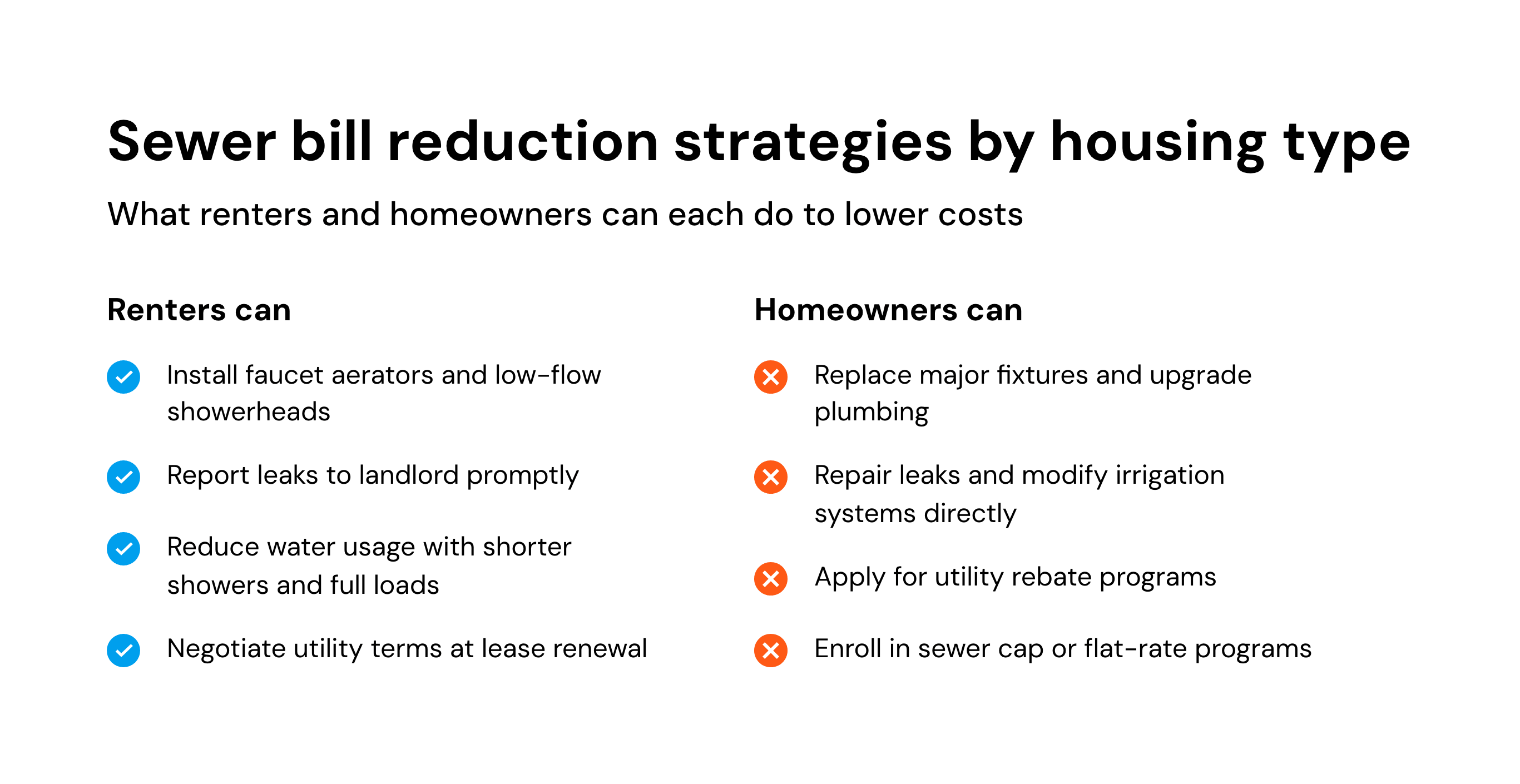
Renters typically cannot replace major fixtures or make plumbing upgrades without landlord approval, but they can still reduce usage, install faucet aerators, and report leaks promptly. If your sewer bill is included in your rent, documenting high usage can still be a useful negotiating point at lease renewal.
Homeowners have full control over fixtures, irrigation systems, and leak repairs, which means they generally have more levers to pull. Homeowners can also apply for utility rebate programs that provide discounts on low-flow fixture upgrades, which is an option usually not available to renters.
Every individual who rents should check their lease to understand exactly who is responsible for utility costs and which repairs fall to the landlord. Reporting leaks in writing creates a paper trail that protects you if your bill is disputed.
Conclusion
Reducing your sewer bill is basically a matter of understanding how it works and taking consistent, targeted steps to lower your water usage. Small changes, like fixing a running toilet or switching to a low-flow showerhead, can effectively add up to meaningful savings over the course of a year.
Managing household bills is a core part of overall financial health, and every dollar you free up is a dollar you can put toward building a stronger financial foundation.
If you are working on improving your financial picture more broadly, Kikoff offers tools designed to help you build credit over time.
Frequently Asked Questions
About the editor

Disclaimer: The information provided in this blog post is meant for informational purposes only and does not constitute financial advice.