


.jpg)


When you make on-time payments and those payments get reported to credit bureaus, your score improves. Payments on mortgages, credit cards, personal loans, and auto loans are usually reported, but rent payments typically aren't. However, more companies are offering rent reporting to help renters build their credit scores.
But can reporting your rent payments to credit bureaus really help that much? Let's take a look at what the Consumer Financial Protection Bureau (CFPB) has to say.
CFPB rent reporting observations
Rent payments don't always appear on credit reports, although rent reporting is becoming more common. The CFPB classifies rental information as "alternative data" that may be used to expand access to credit, stating:
"Someone without a loan repayment history on their credit report might pay other bills or recurring charges on a regular basis. These bill payment histories might demonstrate to some lenders that the person will repay a debt as agreed."
Rent reporting is still relatively new, and it's not universal. Before deciding whether it's right for you, it's important to understand how it works.
How rent reporting works, according to the CFPB
In 2025, the CFPB published a report on rental payment data reporting. The report focuses mostly on the data, but it does briefly explain how the rent reporting process works:
"[The credit reporting company used in the study] maintains a database containing information on rental housing payments, leases, inquiries, and collections. Property management companies can choose to furnish data to the credit reporting company via their property management software provider."
How does rent reporting help your credit score? When on-time payments are reported to credit bureaus, they help you establish a positive payment history, just like payments on a credit card would.
Like a late credit card payment, though, a late rental payment can cause major credit damage.
Which bureaus accept rent payment data?
All three credit bureaus (Experian, Equifax, and TransUnion) accept rent payment data, but they don't typically go out of their way to collect it.
Instead, landlords and property management companies may choose to work with third-party companies that collect rental data and then furnish it to the credit bureaus. However, Experian has a specialized division called RentBureau that's focused on rent data.
Limitations the CFPB flags
According to the CFPB, rent reporting can be useful, but it has limitations. Many renters are eager to add on-time rent payments to their credit reports in hopes of boosting their scores. And while a history of paying on time can help your credit score, rent reporting comes with risks and limitations:
- Once a renter signs up, many reporting companies won't give credit bureaus retroactive data
- Late or missed rent payments could cause serious credit damage
- Many landlords and property management companies don't offer the service
- Some reporting services only report to one or two credit bureaus
Notably, some rent reporting services charge setup fees, ongoing fees, or both.
How to start reporting your rent payments
Based on the information provided by the CFPB, rent reporting has clear merits, but it also has risks. If your landlord or property management company offers rent reporting, consider opting in to help build your credit score.
But what if you can't report rent through your landlord? Fortunately, there are third-party services that let you set up rent reporting yourself, and Kikoff is one of them! We also offer advantages that many companies don't:
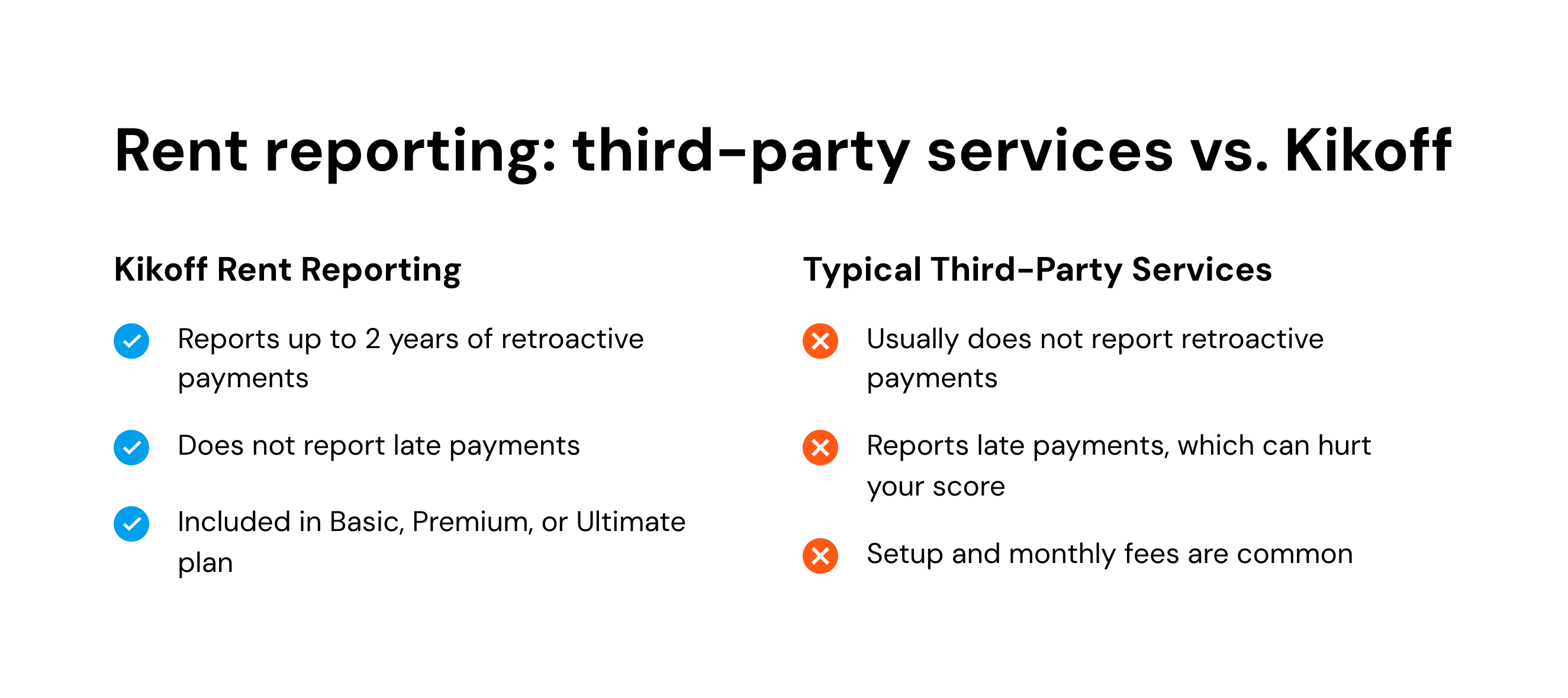
- When you sign up, we'll report up to two years of prior rent payments
- We don't report late payments, which means that they won't hurt your credit
Rent reporting is a feature included in our Basic, Premium, and Ultimate plans.
Start boosting your credit
Rent reporting can be a great way to boost your credit score, but it's just one item in your toolbox. At Kikoff, we aim to help everyone (especially people with bad credit, limited credit, or no credit at all) increase their credit scores while working toward their financial goals.
In addition to rent reporting, we offer credit lines, secured credit cards, dispute tools, personalized financial insights, and other resources to help you along your credit journey. Joining is free, and we don't check your credit. Get started with us today!
Frequently Asked Questions
About the editor
Article Sources
Disclaimer: The information provided in this blog post is meant for informational purposes only and does not constitute financial advice.