.jpg)
.jpg)



Saving money on a low income is hard, especially when most of your paycheck already goes toward rent, food, transportation, and other essentials. The fastest realistic approach is to understand where your money goes, protect your most important bills, and save small amounts whenever you can.
You may not be able to make every strategy work right away. Start with the step that gives you the most breathing room, then build from there.
Understand your cash flow
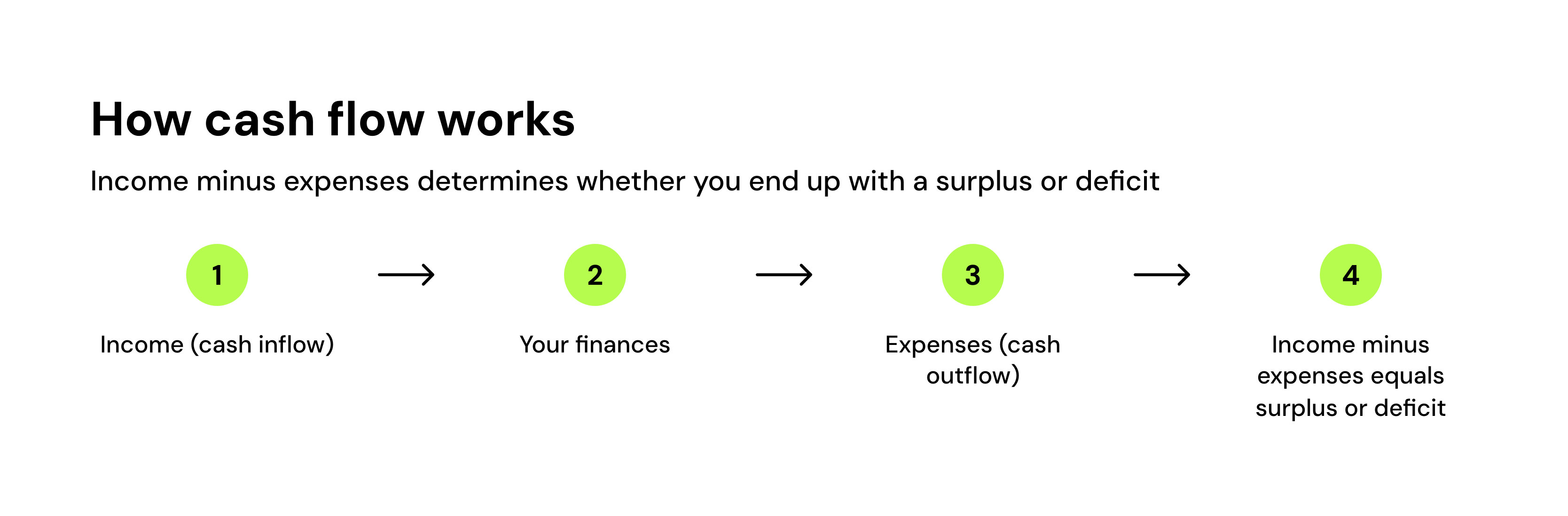
Cash flow is the timing of money coming in and going out. If more money comes in than goes out, you have a surplus. If your expenses are higher than your income, you have a deficit.
Start by listing:
- Your take-home income and when you receive it
- Essential bills and their due dates
- Minimum debt payments
- Flexible expenses, such as groceries, gas, and household supplies
- Irregular costs, such as prescriptions, school expenses, or car maintenance
Look at several months of statements if you can. One month may miss quarterly bills or expenses that only come up occasionally.
If the numbers show that your essential expenses are higher than your income, that is not a budgeting failure. Cutting optional spending may help, but you may also need benefits, a payment arrangement, or additional income to close the gap.
Protect essentials before you save
Prioritize the bills that keep you housed, safe, healthy, and able to work. Start with housing, utilities, food, medication, transportation, insurance, and other bills that carry immediate consequences if you miss them. After those are covered, decide how much you can put toward minimum debt payments.
If several bills are due at once, ask providers whether you can change a due date or set up a payment plan. The Consumer Financial Protection Bureau notes that adjusting bill due dates may help when the timing of your income and expenses does not line up.
Try to avoid moving money into savings if doing so could cause an overdraft or leave an essential bill unpaid. Saving should create stability, not another fee.
Build a budget around your actual numbers
Percentage budgets such as 50/30/20 can be useful examples, but they are not rules. If housing and food take up most of your income, a preset percentage may not fit your life.
Instead, make a simple plan for each paycheck:
- Cover essential bills due before your next payday.
- Set aside money for food, transportation, and other immediate needs.
- Make required minimum debt payments.
- Choose a realistic amount for savings, even if it is only a few dollars.
- Decide how to use anything left over.
If your income changes from week to week, base your core plan on a lower-income month. During better weeks, you can direct part of the extra money toward upcoming bills or savings.
Cut costs without making life harder
Small cuts can add up, but focus first on expenses you will not miss. You could:
- Cancel or pause subscriptions you rarely use.
- Compare phone, internet, insurance, or utility plans before renewing.
- Plan a few low-cost meals around food you already have.
- Choose a lower-cost or generic product when the quality and safety are comparable.
- Use a short no-spend period for optional purchases.
- Ask whether a provider offers a lower-cost plan or hardship discount.
You do not need to cut every comfort or cook every meal at home. Pick changes you can repeat without exhausting yourself. A $10 monthly reduction that lasts is more useful than an extreme plan you abandon after a week.
Check benefits and community assistance
Assistance with food, utilities, health care, housing, or child care can free up money for other essentials and savings. Eligibility and program availability vary, so use current state and local information.
The USAGov benefit finder organizes programs by categories such as food, housing and utilities, health, unemployment, and cash assistance. You can also call 211 or search your local 211 database for nearby programs and help applying.
Applying for assistance you qualify for is part of managing your finances. It can be more effective than trying to cut an already tight grocery or utility budget.
Read more >> How to pay bills when you have no money
Look for safe ways to bring in more money
When there is little left to cut, increasing income may create more room than reducing expenses. Depending on your time, health, transportation, and caregiving responsibilities, options may include:
- Asking for additional shifts or overtime
- Selling items you no longer use
- Taking occasional freelance, delivery, pet care, or household work
- Applying for a higher-paying role or a training program with clear job prospects
- Directing part of a tax refund, work bonus, or cash gift to savings
Count the costs before accepting extra work. Transportation, child care, supplies, platform fees, and taxes can reduce what you actually keep. Gig and side-job income generally must be reported for tax purposes, and additional earnings may affect eligibility or benefit amounts for some assistance programs.
Keep records and check the rules for any benefits you receive. Be cautious of jobs that require upfront payment, ask you to deposit a check and send money back, or promise unusually high pay for simple tasks.
Save small amounts consistently
You do not need a large deposit to start. Choose an amount that will not cause you to miss a bill, whether that is $2 per paycheck, $5 per week, or the change left after a purchase.
If your income is steady, consider an automatic transfer just after payday or ask whether your employer can split direct deposit between checking and savings. Check your balance first so the transfer does not trigger an overdraft.
If your income varies, save manually during higher-income weeks. You can also save part of one-time money, but only after covering urgent needs and bills that are already due.
Small savings still count. Consistency matters more than choosing an amount that strains your budget.
Build your emergency fund in stages
An emergency fund is money reserved for unplanned expenses, such as a medical bill, car repair, or loss of income. There is no single amount that works for everyone.
The CFPB recommends choosing a goal based on the unexpected expenses you are most likely to face and what they tend to cost. It also notes that even a small amount can provide some financial security.
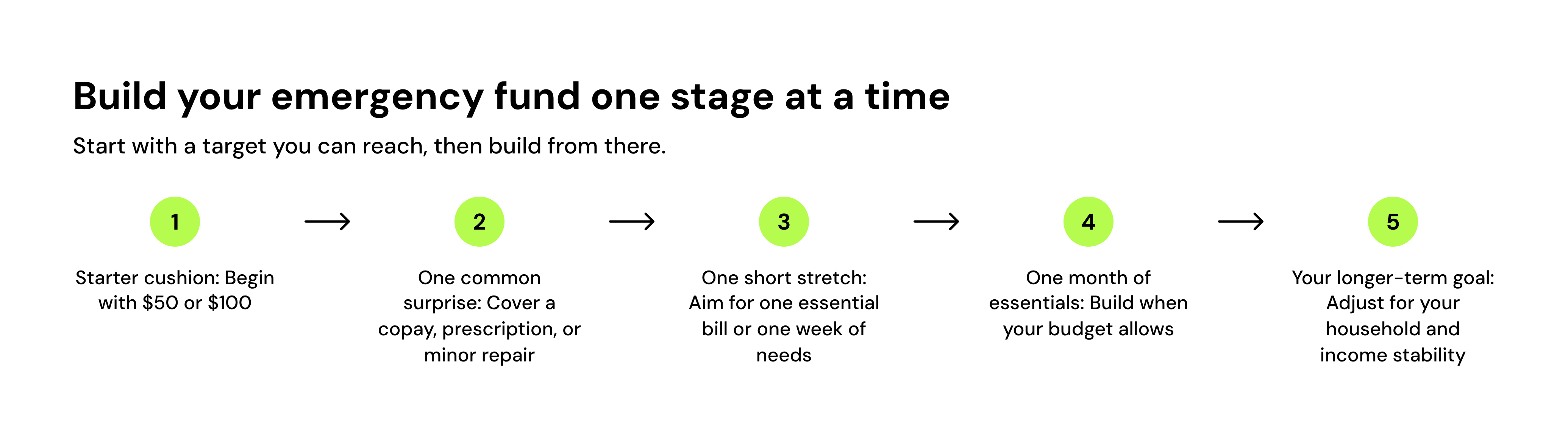
Try building your fund in stages:
- Save a small starter cushion, such as $50 or $100.
- Save enough to cover one common surprise, such as a prescription, copay, or minor repair.
- Work toward one essential bill or one week of necessary expenses.
- Build toward one month of essential expenses, if your budget allows.
- Continue toward a longer-term target that fits your income, job stability, and household needs.
Keep emergency money somewhere safe, accessible, and separate enough that you are less likely to spend it on routine purchases. If you use it, restart with the first manageable stage rather than treating the withdrawal as a setback.
What if you need money before your fund is ready?
Start with the bill itself. Ask the provider, landlord, utility company, or creditor about an extension, hardship program, fee waiver, or payment plan. You can also contact 211 for local help or talk with a nonprofit credit counselor about your situation.
Be careful with any loan or cash advance marketed as fast emergency money. Review the total repayment amount, fees, annual percentage rate, due date, and what happens if you cannot repay on time. The CFPB describes payday loans as short-term, high-cost loans that are typically due by the next payday, which can put pressure on your next paycheck.
Read more >> How to get emergency money
Bottom line
The best way to save money fast on a low income is to create a little breathing room and protect it. Track when money comes in and goes out, prioritize essentials, use assistance you qualify for, cut costs that do not improve your life, and save an amount you can repeat.
Savings can help with the next unexpected expense. Building positive payment history can support another part of your financial foundation. Kikoff's Credit Account reports on-time payments to all three credit bureaus, with no hard credit check to sign up.
Frequently Asked Questions
Disclaimer: The information provided in this blog post is meant for informational purposes only and does not constitute financial advice.