.jpg)
.jpg)



If you’re having trouble repaying your student loans or just want to save money while you do so, you’re not alone. Refinancing with a private lender may not be right for every situation, but it could help you qualify for a lower rate or monthly payment. Whether it saves you money depends on the new rate, fees, and repayment term.
Learn more about how to refinance student loans and how to tell if refinancing is right for you.
What does it mean to refinance student loans?
When you refinance student loans, you take out a new private loan and use it to repay one or more older loans. You can refinance federal or private student loans.
Refinancing can help you secure lower interest rates, lower monthly payments, or both. If you have multiple loans, replacing them with a single loan can help simplify your finances.
How to refinance student loans: step-by-step
If you’re wondering how to refinance student loans, the good news is that the process is simpler than you may imagine.
Step 1: Check your credit score
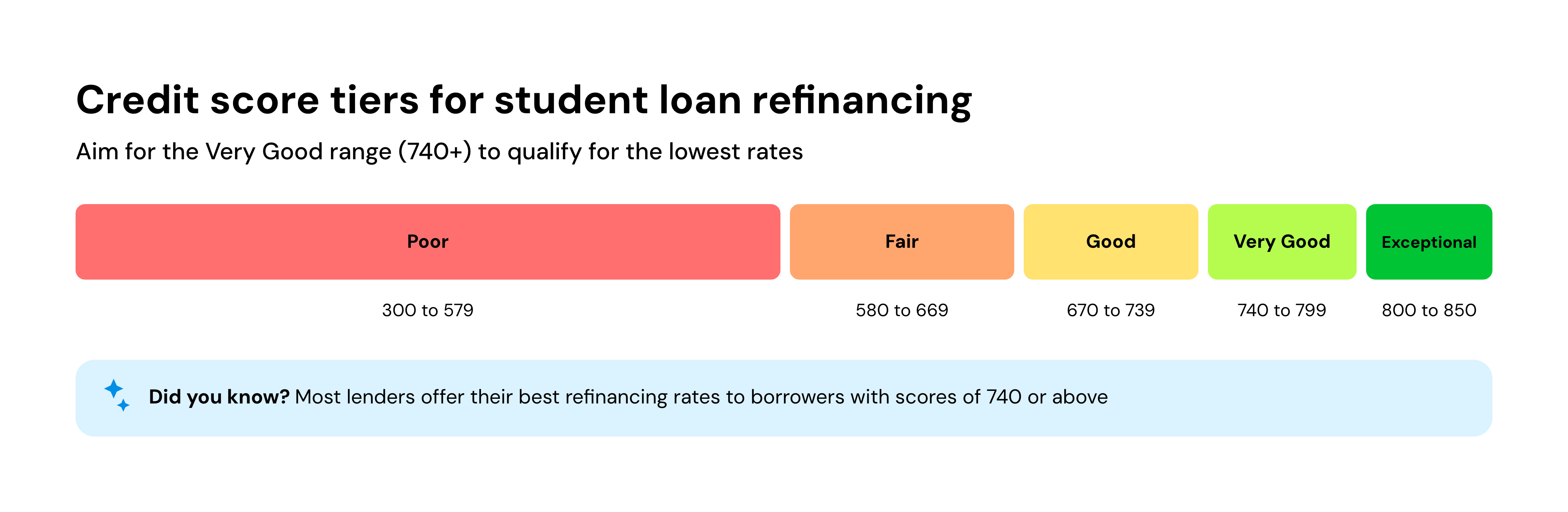
Student loan refinancing requirements vary by lender. Your credit score matters, but lenders may also look at your income and existing debts. A stronger credit profile can help you qualify for better rates, but there is no single score that guarantees the best offer.
Step 2: Compare lenders and rates
If you’re curious about the rates you may qualify for with your current credit score, you can likely get an idea without hurting your score. Some lenders have “prequalification” options that involve doing a soft pull on your credit.
A “soft pull” lets a lender access your credit information without impacting your credit score.
When you’re reviewing your refinancing options during the prequalification phase, pay close attention to the following:
- Annual percentage rate (APR)
- Fixed or variable interest rate
- Monthly payment
- Repayment term
- Total amount you will repay
- Origination and other fees
- Hardship or forbearance options
A lower rate is a good start, but look at the full cost. A longer repayment term could lower your monthly payment while increasing the total interest you pay.
Step 3: Gather your documents
Having the necessary documentation close by can save you time and stress while you refinance. These are some of the most common forms of documentation lenders require:
- Your government ID
- Tax returns or pay stubs
- Degree verification
- Current student loan billing statements
Each lender sets its own documentation requirements, so you may need additional documentation as well.
Step 4: Apply with your chosen lender
Once you’ve chosen the best prequalification offer, you can submit an official application with the lender of your choice. Keep in mind that submitting a formal application typically results in a hard credit inquiry, which can affect your credit score.
Step 5: Review and accept your new loan terms
If you’re approved, don’t sign just yet! Read through your loan offer to make sure you’re okay with the interest rate and other loan terms you’re being offered.
When refinancing student loans makes sense
Student loan refinancing isn’t right for every situation. Refinancing might be the right option if any of the following apply:
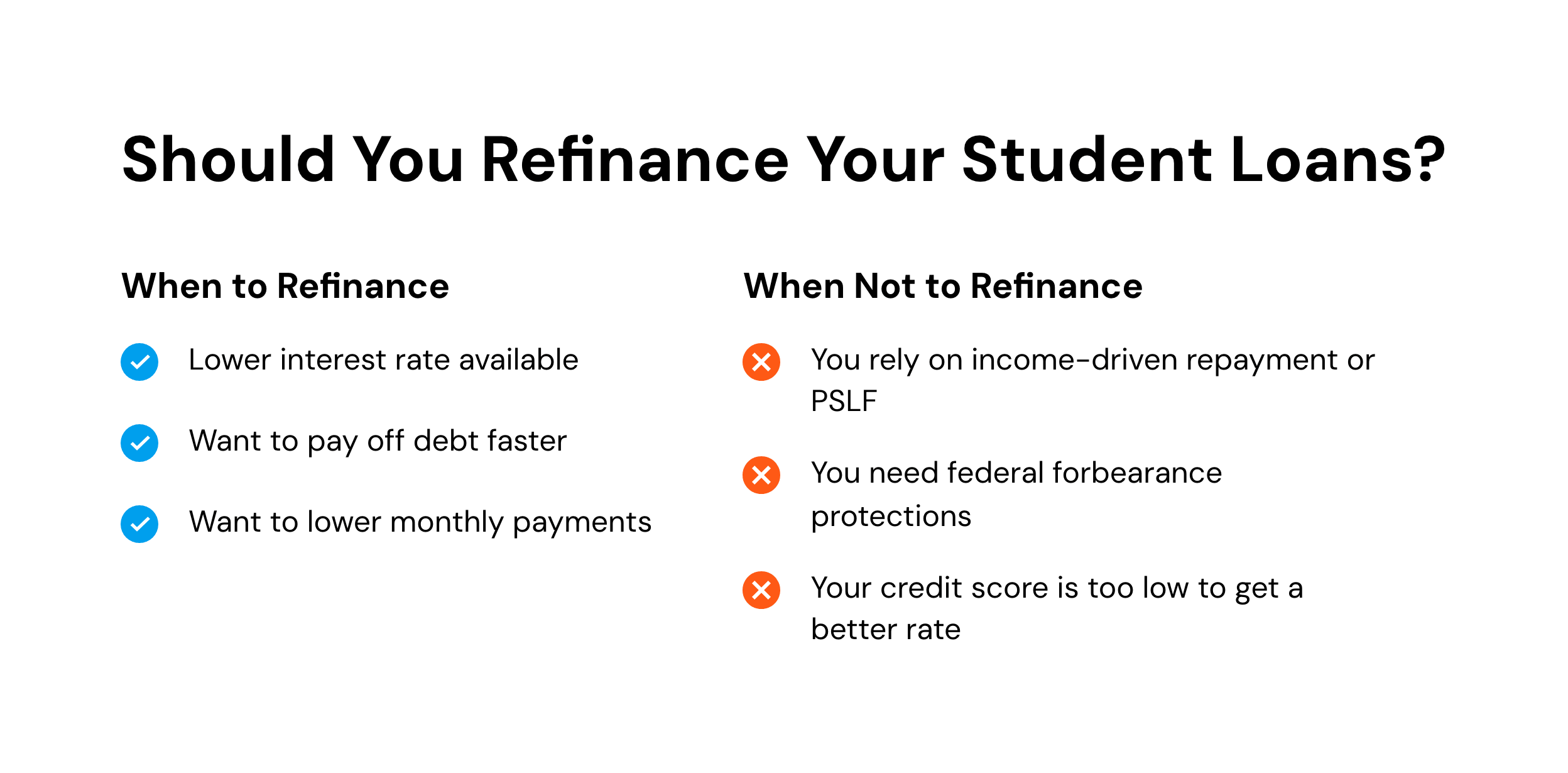
- You want to secure a lower interest rate
- You want to pay off debt faster (or otherwise change your repayment timeline)
- You want to lower monthly payments to improve your cash flow
If you aren’t qualifying for competitive rates yet, it may be worth waiting while you build a stronger credit profile.
When you should not refinance student loans
There are a few situations where refinancing student loans may not be the best way forward.
You have federal loans and need income-driven repayment or Public Service Loan Forgiveness
In some cases, refinancing federal loans with a private lender may result in a lower interest rate. However, federal loans come with several benefits that private loans do not.
Income-driven repayment plans and Public Service Loan Forgiveness (PSLF) can reduce the total amount you pay, but if you refinance with a private lender, you permanently lose access to them.
Before you refinance: Federal repayment rules changed on July 1, 2026. Depending on your loan type and when it was disbursed, your options may include the Repayment Assistance Plan (RAP) or an older income-driven repayment plan. Refinancing with a private lender ends access to whichever federal options apply to you, along with federal deferment, forbearance, and certain forgiveness or discharge programs. Review the current repayment options and talk with your federal loan servicer or a nonprofit credit counselor before deciding.
You don’t want to lose access to forbearance options
Federal student loans offer deferment and forbearance in qualifying situations. Private lenders may offer hardship assistance too, but the options and eligibility requirements vary by lender.
If you’re interested in refinancing but concerned about forbearance options, look very closely at each private lender you consider.
Your credit score is too low to get a better rate
If the best offer has a higher rate, added fees, or a longer term that increases your total interest, refinancing may not save you money. Compare the complete loan terms before deciding.
Ready to build credit before you refinance?
Not seeing the refinance rates you hoped for? Your credit history is one of the factors lenders consider when reviewing your application.
Kikoff’s Credit Account reports your on-time payments to all three credit bureaus, helping you add positive payment history to your credit profile. There’s no hard credit check to sign up. Get started today.
Frequently Asked Questions
Article Sources
Disclaimer: The information provided in this blog post is meant for informational purposes only and does not constitute financial advice.