


.jpg)




Your bank has until the second business day to release most check deposits, and at least the first $275 has to be available the next business day. The wait can be longer for a large deposit, a new account, or a check the bank has reason to doubt. And even after the money appears, the check can still come back unpaid.
How long does it take for a check to clear?
Most check deposits have to be available by the second business day after you make them, under Regulation CC. That’s the federal rule setting the longest a bank can hold your money. Business days are Monday through Friday, not counting federal holidays.
While many banks release money faster than the rule requires, how long depends on the type of check.
Personal and business checks
Regulation CC treats personal and business checks the same way. Your bank has to make the first $275 of each day’s check deposits available by the next business day, and the rest by the second business day.
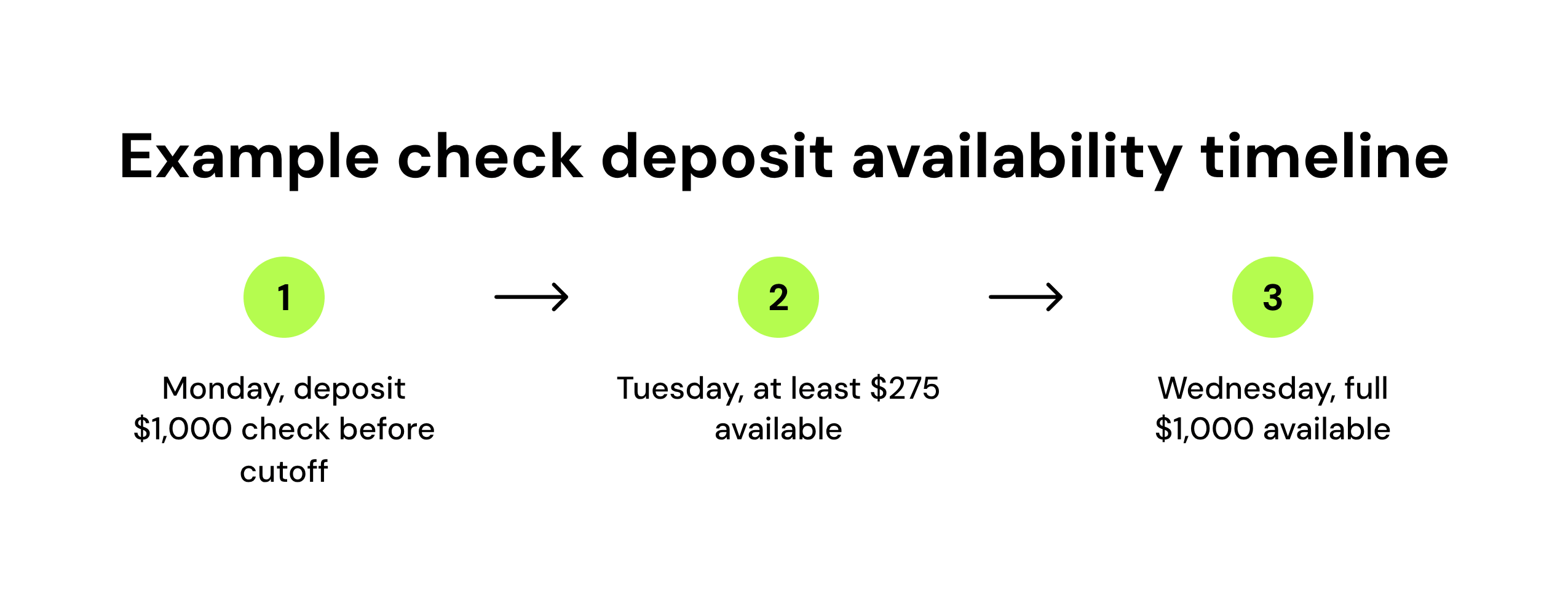
Say you deposit a $1,000 check before your bank’s cutoff time on Monday. You’d have at least $275 on Tuesday and the full $1,000 by Wednesday.
The $275 amount went into effect July 1, 2025, and it’s adjusted for inflation every five years.
Cashier’s, certified, and teller’s checks
These are available the next business day if you deposit them in person with a teller into an account in your name. Some banks require a special deposit slip. At an ATM, the bank can take until the second business day. In an account that’s open less than 30 days, the first $6,725 is still available the next business day, but the bank can hold the rest until the ninth business day.
Government checks
U.S. Treasury checks are available the next business day, whether you deposit them with a teller or at your own bank’s ATM. State and local government checks are available the next business day if you deposit them in person in the same state as the government that issued them, though your bank may require a special deposit slip.
What does it mean for a check to clear?
Clearing is what happens between banks. Your bank sends the check to the check writer’s bank, the bank confirms the money is there, and the funds transfer over. Availability is when your bank lets you spend or withdraw the money.
Deadlines run whether the clearing is finished or not, so money can show up in your balance before the check writer’s bank has paid.
That gap is where an issue can arise. If the check comes back unpaid, your bank takes the money back out, even days later. If you’ve already spent it, your account can go negative and you may owe overdraft fees.
If you don't know the person who wrote the check, contact the bank it’s drawn on before you spend the money. Because fake checks often include fake phone numbers, look up the bank’s phone number yourself.
A returned check won't show up on your credit report. An unpaid negative balance that goes to collections can.
Read more >> What Happens When Your Bank Account Goes Negative?
Factors that can delay check clearing
Large deposits
If your check deposits add up to more than $6,725 in a single banking day, the first $6,725 still follows the normal schedule. The bank can hold only the amount above that, and the Federal Reserve considers five extra business days reasonable.
It means that if you deposit a $10,000 check on Monday, $6,725 has to be available by Wednesday. The other $3,275 could be held until the following Wednesday.
New accounts
For the first 30 days, federal rules don’t cap holds on personal or business checks. Your bank sets the schedule.
Cash, direct deposits, and the first $6,725 of next-day checks like cashier’s and Treasury checks still have to be available by the next business day.
Checks the bank has reason to doubt
A bank can hold a check longer if it has facts that would lead a reasonable person to believe the check won't be paid. It can also hold longer for a redeposited check, or for an account that was negative on six or more days in the past six months.
Weekends, holidays, and cutoff times
Only business days count. A deposit made after your bank’s daily cutoff time, or on a weekend or holiday, counts as made the next business day.
Read more >> How to Read a Check
How to check if your deposit has cleared
Your account or banking app shows the date held money will be available. If the bank holds a deposit longer than its usual policy, for example for a large deposit, a new account, or doubt about the check, it has to tell you why and when the money will be available. For ATM and app deposits, that notice has to go out by the next business day.
If you think your bank held money past the federal deadline, ask the bank first. You can also file a free complaint with the Consumer Financial Protection Bureau.
Read more >> Current Balance vs. Available Balance: What's the Difference?
Bottom line
Most checks are available by the second business day, and at least $275 by the next one. Available doesn't mean paid, though, so a check can still come back after the money shows up.
Your checking account itself doesn't appear on your credit report. Years of deposits and steady balances show a lender nothing unless something reports them. Kikoff's Credit Account reports your on-time payments to Equifax, Experian, and TransUnion. There's no credit check to sign up, and plans start at $5 a month.
Frequently Asked Questions
Article Sources
Disclaimer: The information provided in this blog post is meant for informational purposes only and does not constitute financial advice.