


.jpg)
.jpg)



Keeping an eye on your credit can help you spot unfamiliar activity, but monitoring doesn’t prevent identity theft. Reviewing credit together can also help you and your spouse plan for shared goals, such as buying a home.
Start with a conversation about what you’re comfortable sharing. Each person should access their own credit information and choose what to review together.
How to monitor your spouse’s credit score
Being married does not give you automatic access to your spouse’s credit report. The Fair Credit Reporting Act limits who can access credit reports, and marriage alone isn’t a permissible purpose.
The simplest approach is for your spouse to get their own report or score and share it with you. Don’t use their personal information to impersonate them or open a monitoring account in their name.
Choose what to review together
A credit score is a number calculated from information in a credit report. The report contains the account details you’ll need to investigate changes, so checking the score alone isn’t enough.
Each of you can get your own free reports through AnnualCreditReport.com. Those reports don’t include credit scores; scores may be available through your bank, card issuer, a credit bureau, or a monitoring service.
When tracking a score over time, check which scoring model and bureau the service uses. Scores from different sources may differ without either being wrong.
Set up a routine that works for both of you
Agree on a regular time to check in, such as during your monthly budget review. Each person can open their own report or app and share the information they want to discuss.
Focus on useful questions:
- Are there accounts or inquiries either of you doesn’t recognize?
- Are balances and payment statuses accurate?
- Are shared payments becoming difficult to manage?
- Is there anything to address before a joint loan application?
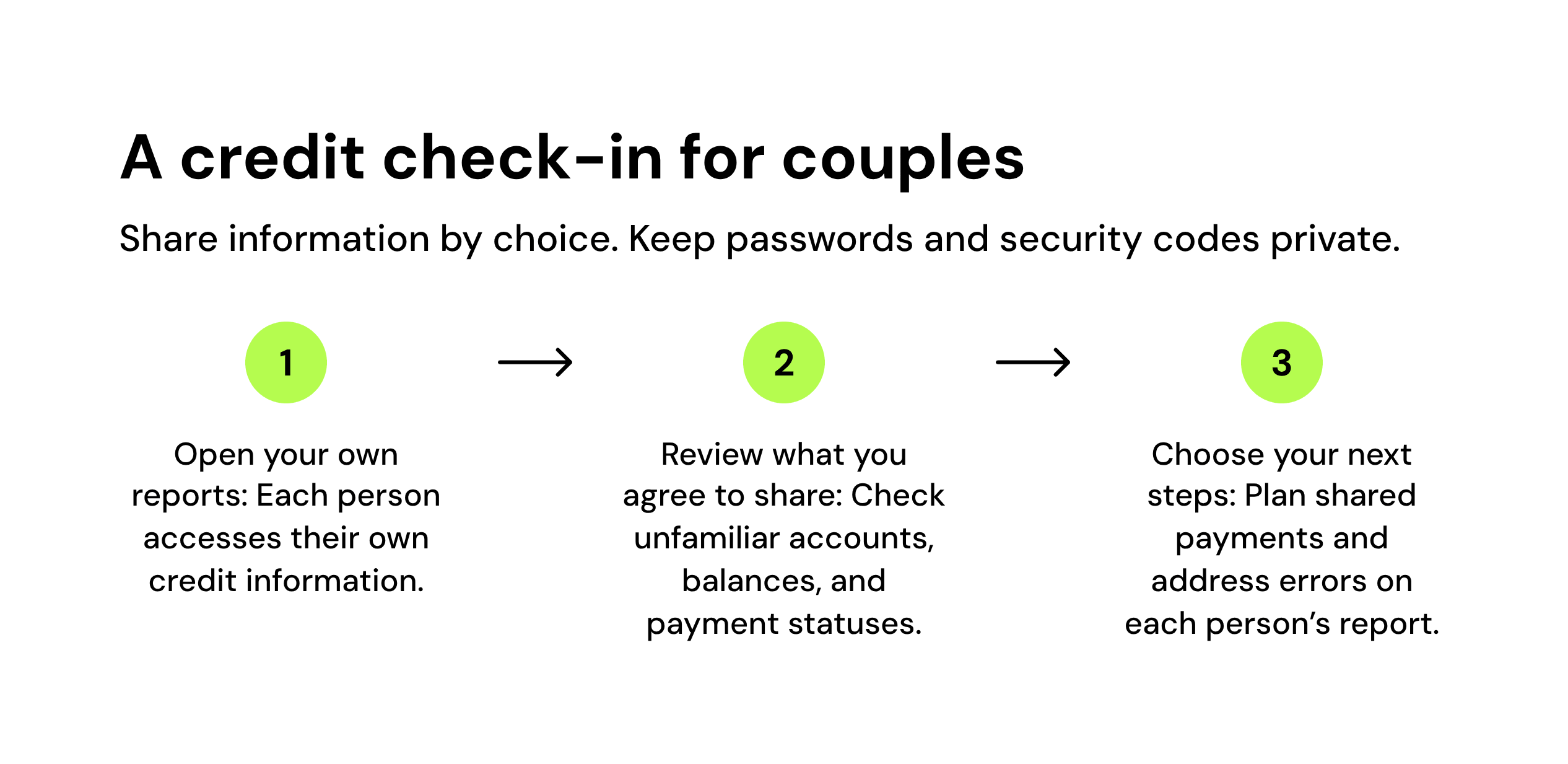
If you use monitoring alerts, each person should receive their own notifications and decide what to share. Keep passwords and security codes private rather than exchanging login credentials.
Kikoff’s credit monitoring tools are one option for tracking your own credit. Check the plan’s bureau coverage and update frequency before choosing it; don’t assume one account monitors both spouses.
Make it a shared review, not shared access. You can discuss goals and review reports together without handing over passwords or giving up control of your personal accounts.
Read more >> How to Read a Credit Report
Is your credit score connected to your spouse’s credit score?
Marriage does not combine your credit files or create a joint credit score. You and your spouse continue to have separate credit reports.
Joint credit accounts, such as a mortgage or car loan with both of you as borrowers, can appear on both reports when the lender reports them. A reported late payment on a joint account can affect both people’s credit, even if one spouse normally handles the bill.
Being an authorized user on your spouse’s credit card is different from being a joint borrower. The account may appear on your report depending on the issuer’s reporting practices, but authorized users generally aren’t responsible for repaying the debt.
Your spouse’s individual accounts don’t automatically become part of your credit history when you marry. Their score also doesn’t directly change yours.
What to do if you find errors in your spouse’s credit report
Your spouse should review the unfamiliar item and compare it with their records. An unfamiliar company name can belong to a legitimate lender or account servicer, so check before assuming it’s fraud.
If it is an error, your spouse should dispute it with each bureau displaying the error and the company that reported it. There’s no need to send the same dispute to a bureau whose report doesn’t contain the problem.
You can help organize documents or draft an explanation, but your spouse should submit the dispute themselves unless you’re acting through an authorized representative process.
A dispute should clearly identify:
- The account or information being disputed
- What is wrong and why
- The correction being requested
- Copies of supporting records, such as statements or payment confirmations
Keep copies of the submission and any confirmation numbers. Credit bureaus generally have 30 days to investigate, although some disputes can take up to 45 days.
If you suspect identity theft
The affected spouse should report the theft at IdentityTheft.gov and contact any banks or creditors involved. The recovery plan can help them address fraudulent accounts and request that qualifying identity-theft information be blocked from their credit reports.
They can also place a free credit freeze with Equifax, Experian, and TransUnion separately. A freeze restricts new creditors’ access to the report, making it harder for someone to open credit in their name.
A freeze has limits. It does not stop unauthorized charges on existing accounts or remove fraudulent information already reported. Contact affected companies directly, and remember that freezing one spouse’s reports does not freeze the other’s.
A freeze stays in place until it’s lifted or removed; it isn’t automatically temporary. Keep checking account statements and credit reports rather than assuming the person misusing the information will stop.
Kikoff’s credit dispute tool can help your spouse prepare a letter about a credit-report error. For identity theft, follow the specific documentation requirements in the recovery plan rather than relying only on a standard dispute letter.
If fraudulent debts remain unresolved or your spouse receives court papers about an account they didn’t open, consider contacting a consumer-law attorney or legal aid organization.
Read more >> How to Report Identity Theft
Bottom line
Monitoring credit as a couple starts with consent and a routine you both find useful. Access your own information, review what you agree to share, and focus on account details as well as scores.
Marriage doesn’t merge your credit files, but shared borrowing can affect both of you. If you spot an error, the person whose report contains it should dispute it with the relevant bureau and reporting company.
For help keeping track of your own credit, explore Kikoff’s credit monitoring tools. Use what you learn to support shared goals while keeping each person in control of their own information.
Frequently Asked Questions
Article Sources
Disclaimer: The information provided in this blog post is meant for informational purposes only and does not constitute financial advice.