





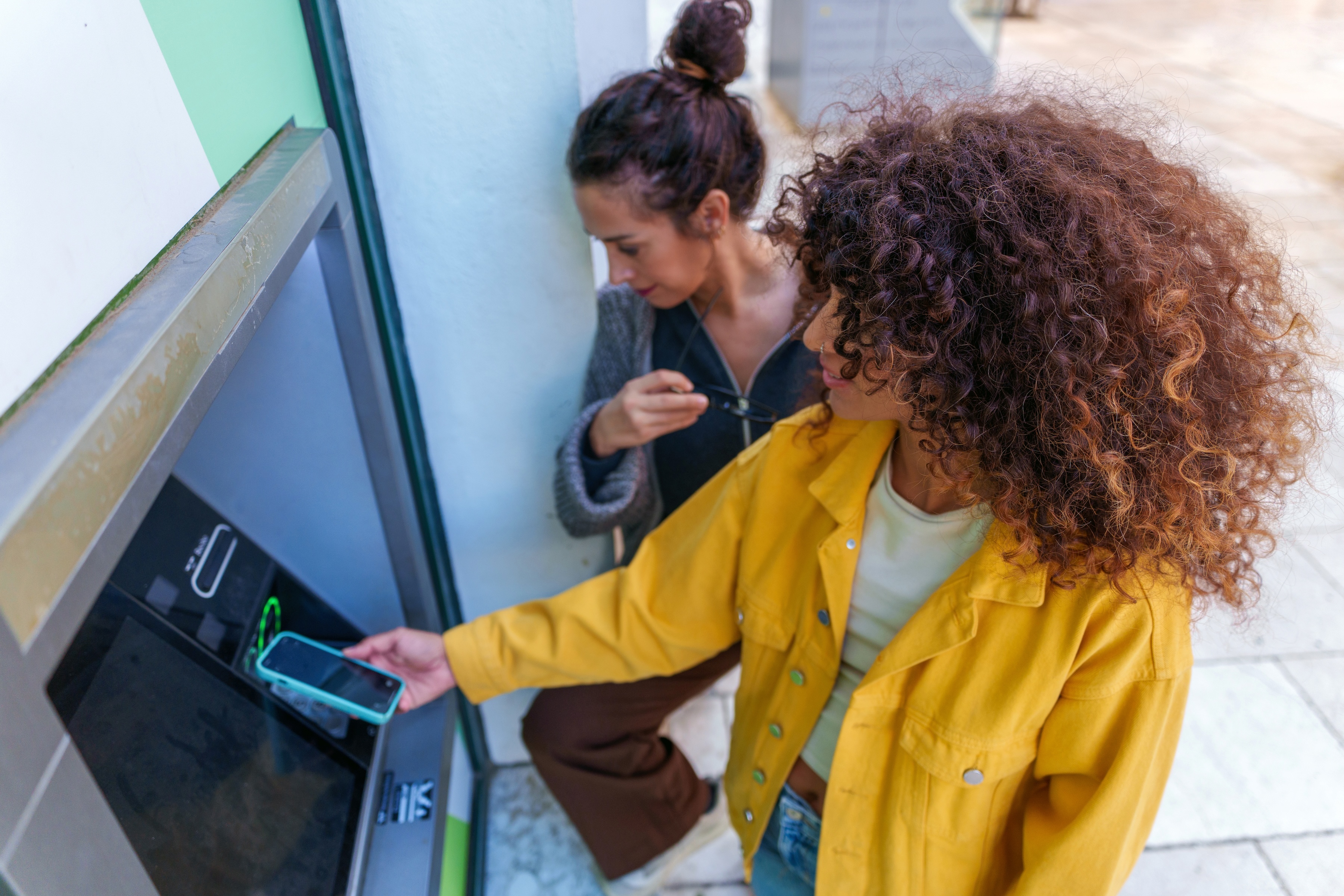
You can still get to your money without your debit card. A teller at your bank can withdraw cash for you with your photo ID, some banks’ ATMs work through your phone, and if your card’s already in Apple Pay or Google Pay, you can pay at the store without cash at all. Before you do anything else, decide whether the card is misplaced or stolen. How fast you report a lost card limits how much you could be on the hook for.
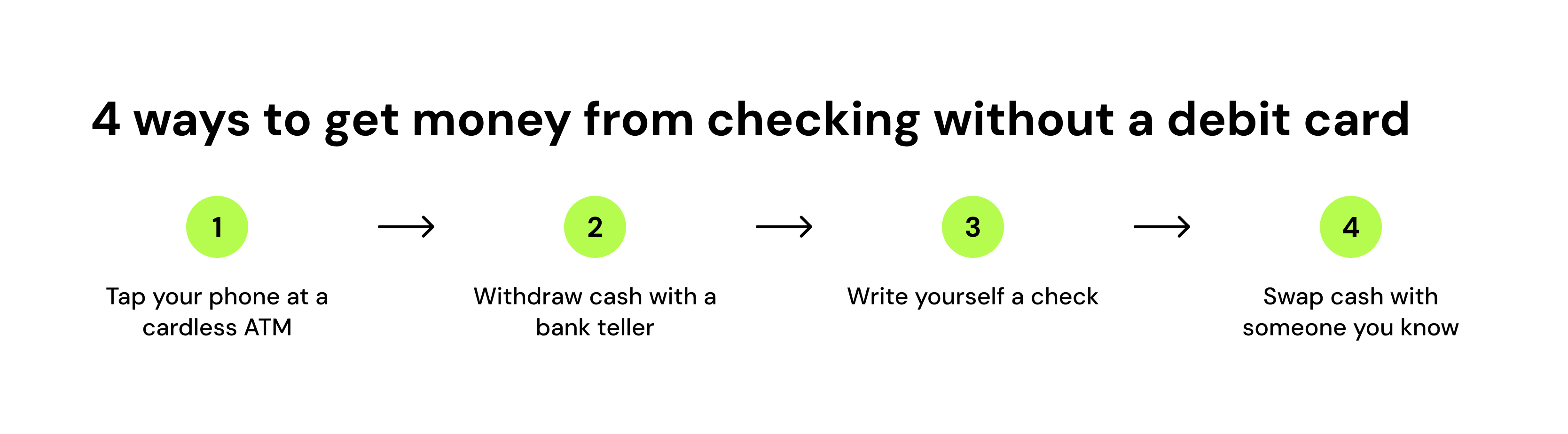
1. Tap your phone at a cardless ATM
Some of the largest U.S. banks have ATMs that take your phone instead of your card. You’ll usually need an ATM at your own bank, and your bank’s app or ATM locator shows which machines near you work this way.
There are usually two ways in:
- Your phone’s wallet. Open Apple Pay or Google Pay, pick your debit card, and hold your phone near the ATM’s contactless symbol. It looks like a sideways Wi-Fi signal.
- Your bank’s app. Scan a QR code on the machine or enter a one-time code the app sends you.
Either way, you’ll usually still need your debit card PIN.
💡 What to check before you go
This option only works while your card is active. If you’ve frozen it, ask your bank whether a freeze also blocks your phone’s wallet. At some banks, it does.
If you’ve reported the card lost, your bank will usually issue a new card number. Ask whether you can add the new card to your phone’s wallet before the physical card arrives.
You may not need cash at all. If your card’s in your phone’s wallet, you can tap to pay anywhere you see the contactless symbol.
Read more >> Are Digital Wallets Safe?
2. Withdraw cash with a bank teller
If your card isn’t in your phone, or your bank doesn’t have cardless ATMs nearby, a teller can help. Bring a government-issued photo ID, like a driver’s license or passport. The teller can look up your account with it, so you don’t need your card or account number.
A teller withdrawal isn’t held to your daily ATM limit, which helps if you need more cash than an ATM would give you. If you need several thousand, call the branch first. A branch may not keep that much cash on hand.
Branch hours vary, so check them in your bank’s app or on its website before you go. If you bank with a credit union, ask whether it’s part of a shared branch network. You may be able to withdraw at another credit union’s branch closer to you. (If your bank is online-only, skip to No. 1 or No. 4.)
💡 A question to ask while you’re there
Ask the teller whether they can print a replacement debit card. Some branches can issue a new card on the spot, so you don’t have to wait for one in the mail. If there’s any chance the card was stolen, report it lost during the same visit. That keeps your liability as low as possible.
3. Write yourself a check
If you have paper checks for your account, you can write one to yourself and cash it at your bank. Fill it out like any other check: the date, your name on the “Pay to the order of” line, the amount in numbers and in words, and your signature. And bring along your photo ID.
You can cash it at your own bank where your account is. Other banks and check-cashing stores may turn it down or charge a fee. Like a teller withdrawal, this needs a branch visit during business hours. If you’re asked for your account number, you’ll find it printed along the bottom of your check.
💡 Don’t make it out to “Cash”
A check written to “Cash” can be cashed legally by whoever’s holding it. If it gets lost on the way to the bank, so could your money. Put your own name on the payee line. Then wait to sign the back until you’re at the counter. A check signed on the back with nothing else written on it can also be cashed by anyone holding it.
Read more >> How Long Does It Take for a Check to Clear?
4. Swap cash with someone you know
If a friend or family member has cash on hand, send them the same amount from your bank account and have them hand you the bills. You can send it through Zelle in your bank’s app, or through Venmo, PayPal, or Cash App if you both use one. The money usually reaches them within minutes, and it works any time of day.
Only do this with someone you know and trust. Payments like these are hard to reverse once they’re sent, so double-check the name or phone number before you hit send.
💡 Check how the app pays
Before you send, open the app and look at the payment method. If it’s set to the debit card you lost, switch it to your linked bank account. A frozen or canceled card will decline the payment. Zelle in your bank’s app avoids this, because it pulls straight from your checking account.
Read more >> Can You Use a Credit Card on Venmo?
What to do if your debit card is lost or stolen
Freeze it or report it
If you think the card is just misplaced, use the freeze or lock option in your bank’s app or online banking. A freeze blocks new transactions until you turn it back on. If you’re planning to pay with your phone, confirm whether a freeze also blocks Apple Pay or Google Pay.
If the card was stolen, or you haven’t found it within two business days, call your bank and report it lost. A freeze may not count as reporting it. According to the FTC, how fast you report it sets how much you could owe for charges you didn’t make:
- Nothing, if you report it before anyone uses it.
- Up to $50, if you report within two business days of noticing it’s gone.
- Up to $500, if you report after that but within 60 days of the statement showing the charges.
- Possibly everything taken, if you wait longer than that.
Check your account while you wait
Look through your recent transactions in your bank’s app now. Don’t wait for your statement. Report any charge you don’t recognize to your bank, and ask:
- How long until the new card arrives?
- Is faster shipping available, and is there a fee?
- Can I get a digital card number for my phone’s wallet now?
Once the new card comes, update any bills set to autopay from the old card number.
Read more >> How to Freeze Your Credit
If your wallet was taken, not just your card. A stolen debit card doesn’t affect your credit. But if your ID or Social Security card was in the same wallet, someone could try to open accounts in your name.
Two free steps help:
1. Place a credit freeze with the bureaus. It’s free and doesn’t affect your credit scores.
2. Check your credit reports at AnnualCreditReport.com. If you find an account you didn’t open, report it at IdentityTheft.gov.
Kikoff’s AI Credit Disputes tool is free once you sign up, no plan required, and can help you dispute accounts that aren’t yours.
Bottom line
Losing your debit card cuts off one way to reach your money, not the money itself, and it doesn’t touch your credit. Your debit card and checking account aren’t on your credit report. That also means they aren’t building anything there, which matters if you’d like a credit card as a backup someday: card approval depends on your credit history.
The Kikoff Credit Account reports your on-time payments to Equifax, Experian, and TransUnion, with no credit check to sign up. Plans start at $5 a month.
Frequently Asked Questions
Article Sources
Disclaimer: The information provided in this blog post is meant for informational purposes only and does not constitute financial advice.