



If you're planning home renovations and trying to figure out how to pay for them, two loan types may be popping up on your radar: home equity loans and home improvement loans.
While they sound similar on the surface, they’re different loans that come with distinct benefits and drawbacks. Which one you choose often comes down to interest rates, funding times, and your tolerance for risk.
What's the difference: Home equity loan vs. home improvement loan?
The main difference between the two is collateral.
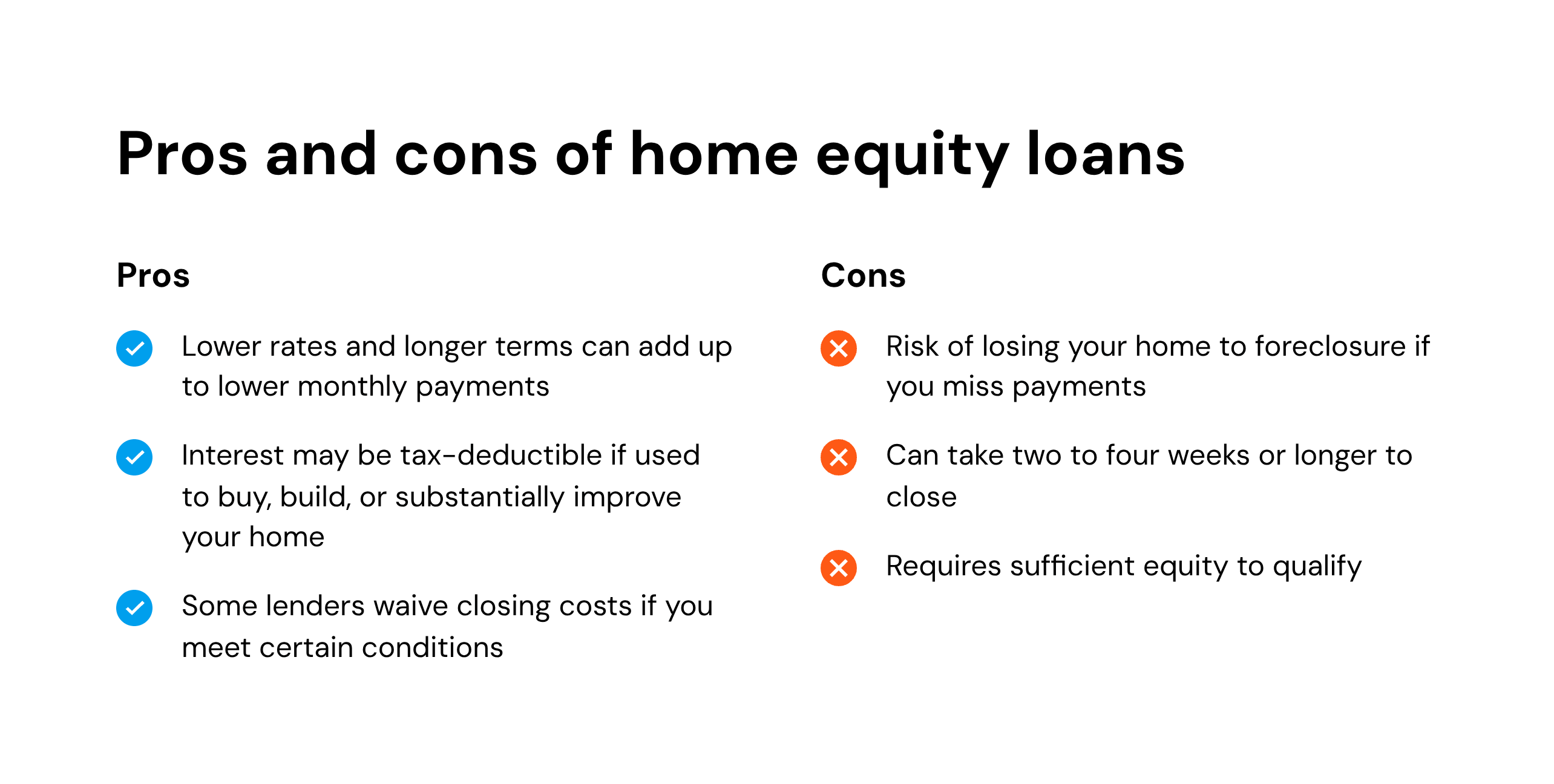
- A home equity loan uses your home as collateral. This means if you can’t keep up with the repayments, your home could be foreclosed on.
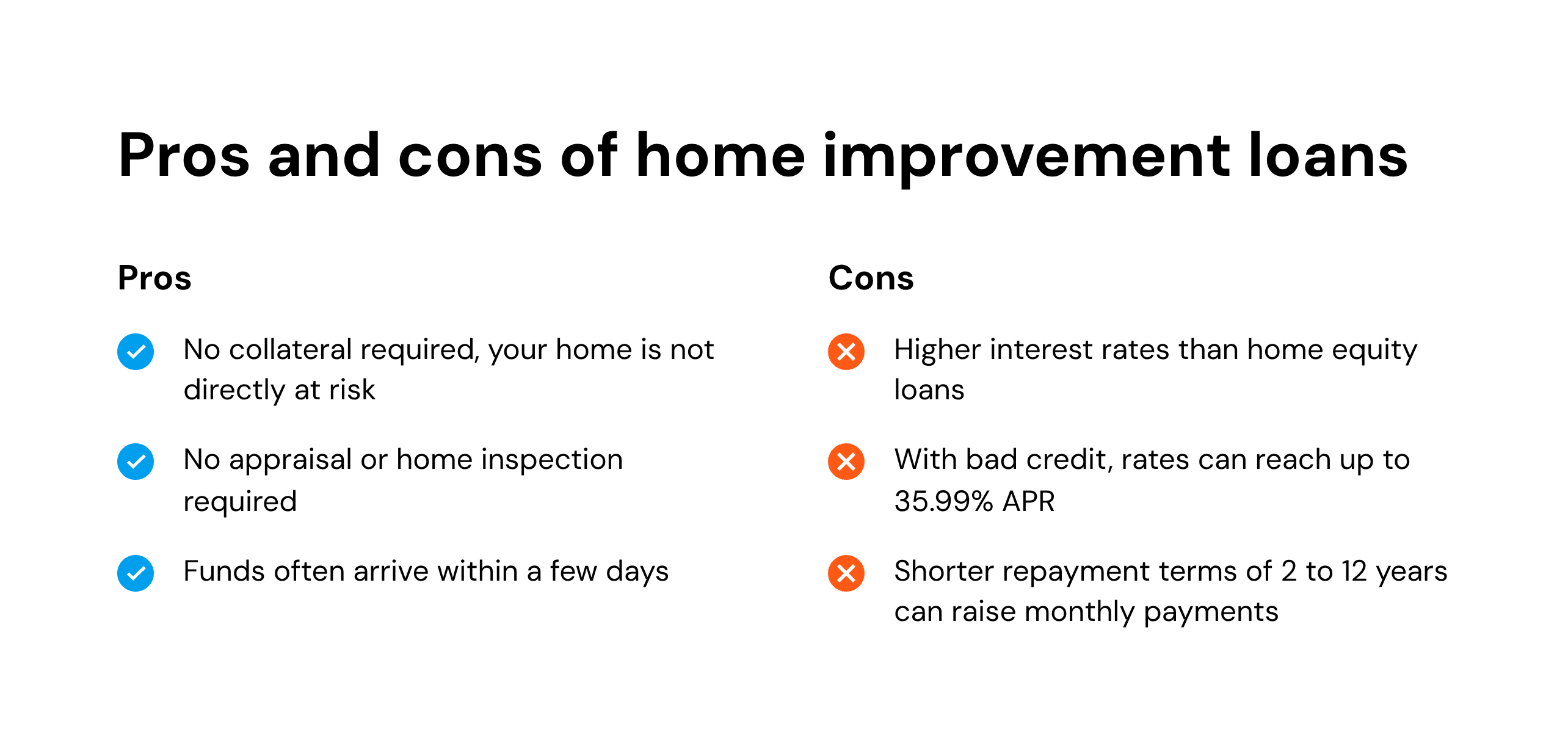
- A home improvement loan does not use your home as collateral. It's typically an unsecured personal loan, so your home isn’t directly at risk due to nonpayment.
What is a home equity loan?
A home equity loan lets you borrow against the equity you've built in your home. Equity is the difference between what your home is worth and what you still owe on your mortgage.
How home equity loans work
With a home equity loan, you receive the funds as a lump sum and make monthly repayments with a fixed interest rate over a set term, usually five to 30 years.
How much you can borrow depends on how much equity you have. Most lenders cap your total borrowing at 80% to 85% of your home's appraised value, which includes both your existing mortgage balance and the new loan. This is the combined loan-to-value ratio, or CLTV.
Here's an example to illustrate how it works:
- Home value: $300,000
- Mortgage balance: $200,000
- Lender's cap (80% to 85%): $240,000 to $255,000 ($300,000 × 0.80 to 0.85)
- Subtract what you owe: $240,000 to $255,000 − $200,000
- Available to borrow: $40,000 to $55,000
One thing to budget for is closing costs. They can run 2% to 5% of the loan amount if they do apply. On a $50,000 loan, that's $1,000 to $2,500 out of pocket (or rolled into your loan balance, if your lender allows it).
Some lenders advertise a "no closing cost" version that charges a higher rate and often a cancellation fee if you pay it off early. Carefully read the fine print for rates and fees before signing.
Read more >> Are Home Equity Loan Interest Payments Tax-Deductible?
You have three days to walk away. Federal law gives you three business days after signing to cancel a home equity loan on your primary residence. No penalty, no reason needed. It's also why the money doesn't arrive at closing: Your lender can't release it until the window closes. If the terms at the table don't match your quote, cancel in writing and keep proof of the date.
What is a home improvement loan?
A home improvement loan is an unsecured personal loan that lenders market to people looking to do renovations. Unlike a home equity loan, you don’t need collateral or home equity to qualify, and your home isn't at risk if you miss payments.
Personal loan amounts run from a few hundred dollars to $100,000 at most lenders, with a handful going higher. What you're approved for depends on your credit and income, not your home's equity.
How home improvement loans work
Like a home equity loan, you receive a lump sum and repay it in fixed monthly installments. The amount you can borrow and your rate depends heavily on your credit, and the spread is wide.
The Federal Reserve puts the average two-year personal loan at a commercial bank at 11.86%, while borrowers with damaged credit are commonly offered rates several times that.
An exception worth knowing: Federal credit unions are capped at 18% on most loans, a limit the NCUA extended through September 2027. Banks and online lenders have no cap.
If your credit is poor, price a federal credit union against online lenders. You can check a credit union's charter with the NCUA's Research a Credit Union tool.
On a $20,000 loan repaid over five years, that’s a payment of about $443 at 11.86% and about $508 at 18% — roughly $65 more a month, or about $3,860 more in interest over the life of the loan.
At a glance: Home equity loan vs. home improvement loan
How to decide which loan is best for you
Ask these questions to narrow down a clearer choice:
- Do you have at least 20% in equity? If not, a home improvement personal loan is a more realistic option.
- Do you need more than $50,000? For bigger projects, home equity loans typically offer longer repayment terms, lower rates, and potential tax benefits. For smaller projects, a home improvement loan can make more sense as you typically borrow less and pay it off faster.
- Do you need the money in under two weeks? Personal loans are often funded within three days of approval. Home equity loans can take weeks from initial application to funding.
- Would a missed payment put you at risk of losing your home? If putting your home on the line feels like too much risk due to job uncertainty or an income that varies, a personal loan may be a better fit.
The same $20,000, three different loans
How your credit score affects your options
Your credit score sets the rate you're offered, and the gap across score bands is wide.
If your score is below 580, a home equity loan is likely off the table. Some personal loan lenders are more flexible and may accept bad credit if you have steady employment. But with poor credit, you face much higher rates. (For example, digital lender Upstart advertises rates of up to 35.99% APR on a five-year loan.)
If your score is in the mid- to high-600s, you might qualify for both, but the gap is wide. Many lenders let you check your rate with a soft credit pull, so it's worth seeing the numbers on both before you commit.
If your score is 740 or higher, you’re more likely to qualify for both, but lower rates and longer repayment terms on a home equity loan can keep monthly payments manageable on bigger projects, even if you end up paying more in interest over the long term.
Bottom line
If you have equity and you want the lowest payment, a home equity loan often beats a home improvement loan on rate. If you're earlier in homeownership or don't want to use your home as collateral, an unsecured improvement loan costs more each month, but with less risk.
Either way, your credit score decides the price. Pull your three reports free every week at AnnualCreditReport.com to see where you stand before you apply. And if you're weighing a lien on your home against an unsecured loan and the numbers are hard to compare, a licensed attorney can tell you what the lien actually means in your state. The National Foundation for Credit Counseling offers free or low-cost help deciding whether to borrow at all at 800-388-2227.
Kikoff reports a credit line to Equifax, Experian, and TransUnion with no credit check, with plans from $5 a month. Every on-time payment builds the history lenders price you on.
Frequently Asked Questions
Article Sources
Disclaimer: The information provided in this blog post is meant for informational purposes only and does not constitute financial advice.