.jpg)




A home equity loan lets you borrow against the equity you have in your home, usually at a lower rate than an unsecured loan. The interest can be tax-deductible, but only if you spend the money on the home that secures the loan. Borrow against your house to pay off credit card debt, cover medical bills, or pay tuition, and none of that interest is deductible.
Is home equity loan interest tax-deductible?
Sometimes. Four things must be true, and the first is most important:
- You used the money to buy, build, or substantially improve the home securing the loan.
- That home is your main home or a second home you use yourself, not a rental or an investment property.
- You itemize deductions instead of taking the standard deduction
- Your total debt secured by the home is within the IRS cap.
The money has to go back into the home
The IRS counts an improvement as “substantial" if it adds to the value of your home, prolongs the home's useful life, or adapts it to a new use.
If you borrow against your primary residence to renovate a rental you own, the interest isn't deductible as home mortgage interest. The money has to go into the house that's on the hook for the loan.
The home has to be yours
Your main home is where you live most of the year. A second home is one you use yourself part of the year, like a weekend or vacation place. If you rent a second home out part of the time, you have to use it yourself enough for it to still count as a home rather than as rental property.
Investment and rental properties don't qualify for this deduction.
There’s a cap on how much the debt counts
Either way, the loan has to be secured by your main home or your second home.
The cap covers all the debt secured by the home, not just the home equity loan. Your first mortgage counts. So does a HELOC. Say your mortgage balance is $700,000 and you take a $100,000 home equity loan to add a room: you're at $800,000, or $50,000 over the cap. You don't lose the deduction, rather you deduct the interest on the first $750,000 and not the rest.
These limits were originally scheduled to expire after 2025. The One Big Beautiful Bill Act, signed in July 2025, removed the expiration and made them permanent.
Read more >> How to Use a Home Equity Loan for Debt Consolidation
How to claim the deduction
1. Itemize your deductions
For tax year 2026, the standard deduction is:
Add up your home equity loan interest, your mortgage interest, state and local taxes, charitable gifts, and your other itemized deductions. If the total is higher than the number for your filing status, itemize. If it isn’t, take the standard deduction.
2. Keep records of where the money went
Hold on to your loan paperwork, contractor invoices, receipts, and payment confirmation showing the funds went into the house. If the IRS questions the deduction, you’ll have a paper trail as proof.
3. Check your Form 1098
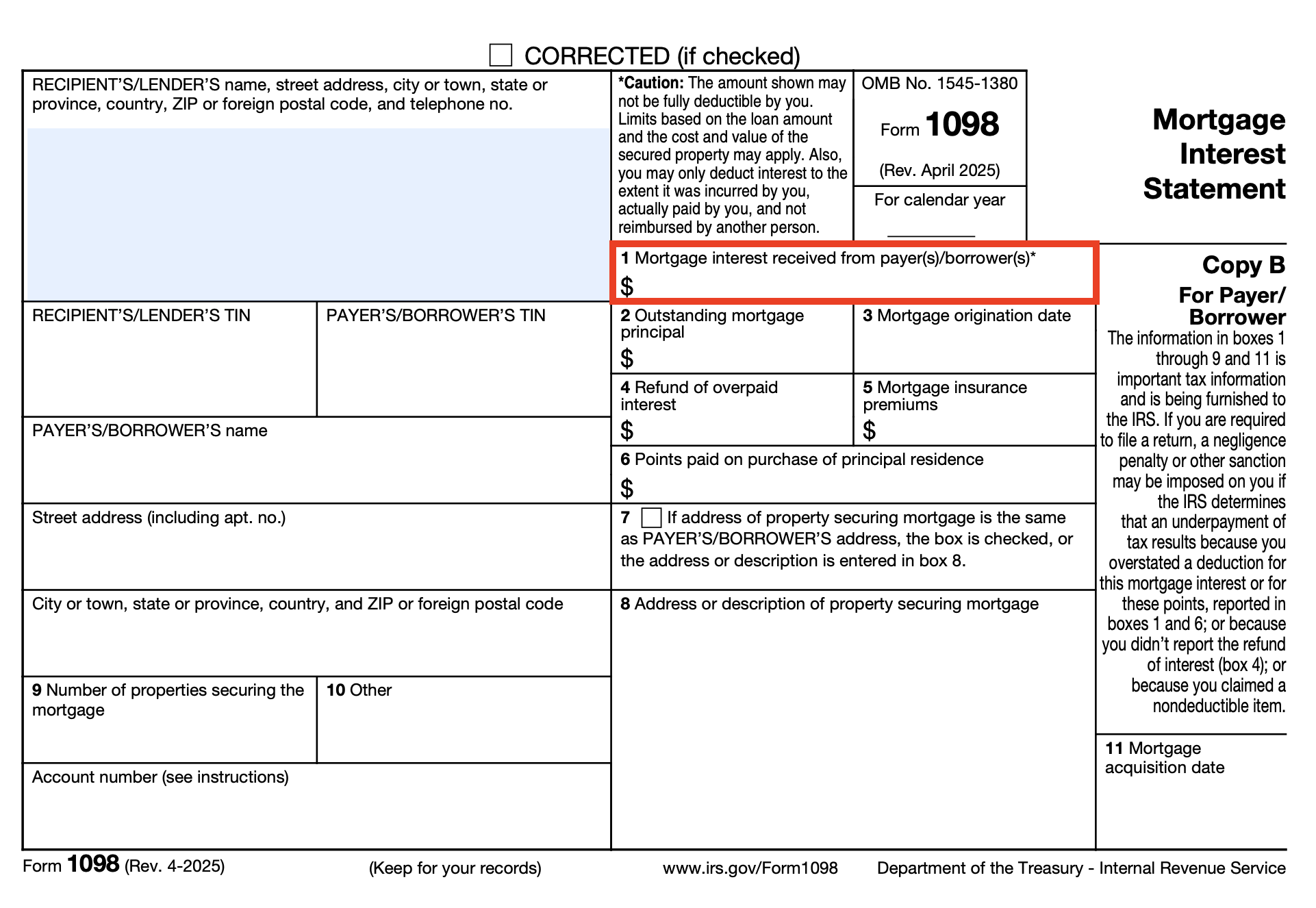
Your lender sends Form 1098 if you paid at least $600 in mortgage interest during the year. Box 1 shows the total. Check it against your own records, and note that getting a 1098 does not mean the interest qualifies.
Read more >> How to Build Home Equity Faster
Home equity loan vs. HELOC: Does the tax treatment differ?
No. Home equity loans and home equity lines of credit (HELOCs) are treated the same way. Interest on either is deductible only if you use the money to buy, build, or substantially improve the home securing it. Both count toward the same debt cap, and both require you to itemize.
⚠️ Before you borrow against your house
A home equity loan is a second mortgage. Your house secures it, which is why the rate is lower than a credit card's. It's also why falling behind can end in foreclosure.
That matters most for the use the tax rules already exclude. If you're thinking about a home equity loan to clear credit card debt, the interest won't be deductible, and you'd be moving debt that can't reach your house onto a loan that can.
There are other ways through debt. The National Foundation for Credit Counseling can connect you with free or low-cost help at 800-388-2227. If you're already behind on payments or dealing with collections, talk to a licensed attorney before you offer your house as collateral.
Bottom line
Home equity loan interest is deductible only when the money goes back into the home securing the loan, only up to the IRS debt cap, and only if you itemize. For most borrowers, the rate on the loan matters more than the deduction does.
The rate is also the part you can still change. A deduction shaves a slice off interest you've already paid. Your credit score sets the rate, and that rate applies to the whole balance for as long as you carry it — which makes credit something to work on before you apply, not after.
Kikoff reports a credit line to Equifax, Experian, and TransUnion with no credit check to sign up. Plans start at $5 a month.
Frequently Asked Questions
Article Sources
Disclaimer: The information provided in this blog post is meant for informational purposes only and does not constitute financial advice.