





A cash-out refinance lets you borrow against your home by replacing your current mortgage with a larger one, paying you the difference in cash at closing. A lower credit score can make that more expensive, but it doesn‘t necessarily take it off the table.
Knowing which loan programs are most likely to work with bad credit can save you time and effort. But if the bigger payment becomes hard to manage, you risk losing your home to foreclosure.
Can you get a cash-out refinance with poor credit?
Yes. The Federal Housing Administration (FHA) and the Department of Veterans Affairs (VA) both offer cash-out refinance programs with lower credit score requirements than most conventional loans. That government backing is what lets lenders approve more borrowers.
The minimum score you need depends on the program you‘re applying through and the lender writing the loan.
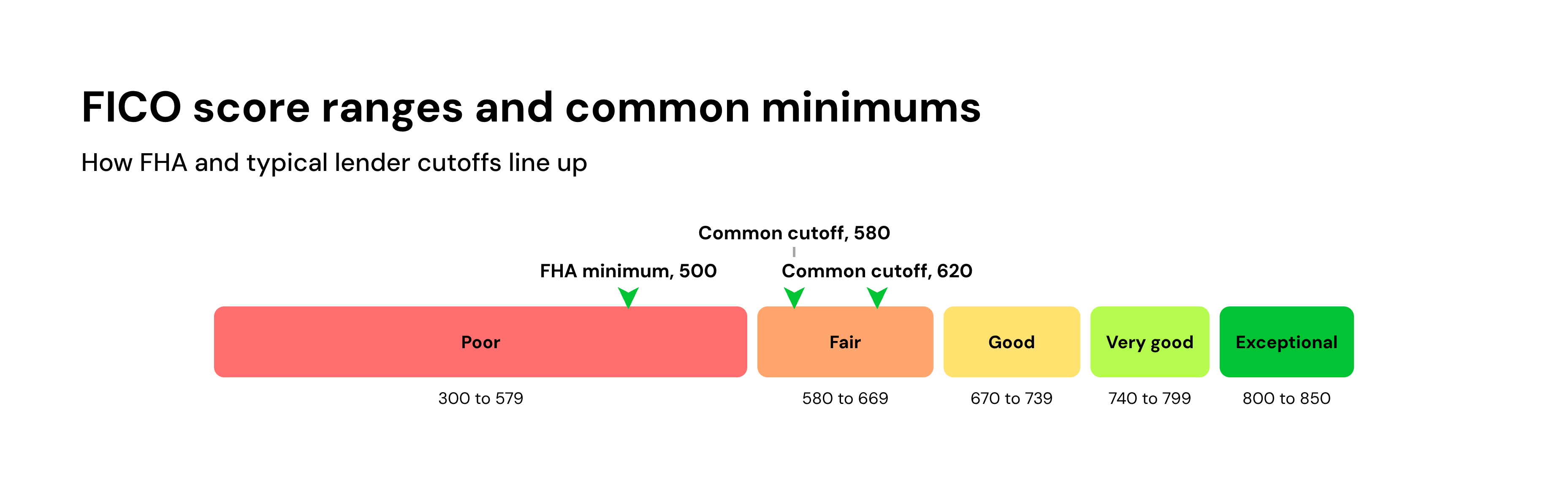
Cash-out refinance credit score requirements by loan type
FHA sets its minimum at 500, and the VA doesn‘t set a minimum credit score at all. But these are program rules only. Most lenders add their own requirements on top, called overlays, so the number you actually need is often higher.
What lenders look at besides your credit score
Your score is just one part of the equation. Lenders mainly want to know whether you can handle the new, higher payment, and a few other factors help answer that question:
- Your home‘s equity. Equity is your home‘s value minus what you still owe on it. The more you leave in the home after cashing out, the less risk the lender takes on, and that can help offset a lower score.
- Your debt-to-income ratio (DTI). This compares your monthly debt payments to your gross monthly income. Fannie Mae allows up to 50% when a loan is approved through its automated system and 36% to 45% when it‘s manually underwritten. FHA and VA set their own limits.
- Your payment history on the mortgage itself. FHA requires no late mortgage payments in the past 12 months, and Fannie Mae requires the mortgage you‘re paying off to be at least 12 months..
Read more >> How to Get a Home Loan With Poor Credit
Cash-out refinance options for bad credit
FHA, VA, and conventional loans set requirements differently. Deciding between them depends on your budget, your home, and the equity you‘ve built in it.
FHA cash-out refinance
This is often the most realistic option if your score is below 620. Since the FHA insures the loan, some lenders accept scores in the 500s.
Eligibility requires you to have:
- Owned and lived in the home as your main residence for the past 12 months.
- Made at least six payments on your current mortgage, with none late in the past 12 months (or ever, if the loan is newer than that)
- Kept enough equity to stay at or below 80% of your home‘s value after cashing out
FHA loans also come with mortgage insurance: an upfront premium of 1.75% of the base loan amount, which you can roll into your balance, plus a yearly premium added to your monthly payment. Because an FHA cash-out loan can‘t go above 80% of your home‘s value, that yearly premium ends after 11 years instead of lasting the life of the loan.
VA cash-out refinance
If you‘re a veteran, service member, or eligible surviving spouse, this may be worth a look. The VA doesn‘t set a minimum credit score, but many lenders look for 620 or higher.
You‘ll need a Certificate of Eligibility, which you can request online through the VA, through your lender, or by mail. You‘ll also pay a one-time funding fee of 2.15% of the loan the first time you use a VA loan or 3.3% after that (unless you‘re exempt, for example, because you receive VA disability compensation).
The VA program allows LTVs up to 100% of your home‘s value, but most lenders set a lower cap.
Conventional cash-out refinance
This is the hardest loan type to qualify for with a low score, but it‘s still worth getting a quote if you‘re near or above 620.
Conventional cash-out refinances are capped at 80% LTV on a one-unit primary residence, so you won‘t pay private mortgage insurance (PMI) as long as you have 20% equity in your home. That can make these loans cheaper than FHA over time.
Lower scores do cost more up front, though: Fannie Mae adds pricing charges for lower scores and for taking cash out, so get the full quote before comparing it with FHA.
Read more >> Are Cash-Out Refinance Interest Rates Higher?
You have three days to change your mind. Federal law gives you three business days to cancel a cash-out refinance on the home you live in for any reason, with no penalty. The CFPB calls it the right of rescission. Cancel in writing before midnight of the third business day, and the lender has 20 days to return your fees and release the claim on your home. Note that it cancels the new loan, not your original mortgage.
Alternatives to a cash-out refinance with bad credit
If you don‘t qualify for a cash-out refinance, or you‘d rather keep your mortgage‘s existing interest rate, you have three main options:
- Home equity loan. A second mortgage alongside your current one, which keeps its rate and term. You get a lump sum at a fixed rate, with your home as collateral.
- HELOC. A revolving home equity line of credit you draw against as needed, also secured by your home. Rates are usually variable.
- Personal loan. An unsecured loan, so it doesn‘t require equity or put your home directly at risk. Rates typically run higher than options that use your home as collateral.
Read more >> Cash-Out Refinance vs. Home Equity Loan: What‘s the Difference?
If you‘re thinking about using home equity to pay off cards or other debt, you‘d be turning debt that isn‘t tied to your house into debt that is. A HUD-approved housing counselor can walk through the numbers with you for free. Search HUD‘s counselor directory or call 800-569-4287. If you‘re already behind on your mortgage, talk with a licensed attorney before you apply.
How to build your credit before you apply
If you don‘t need the money this month, waiting can pay for itself. Here‘s where to put the effort when building your credit.
Pay down existing debt
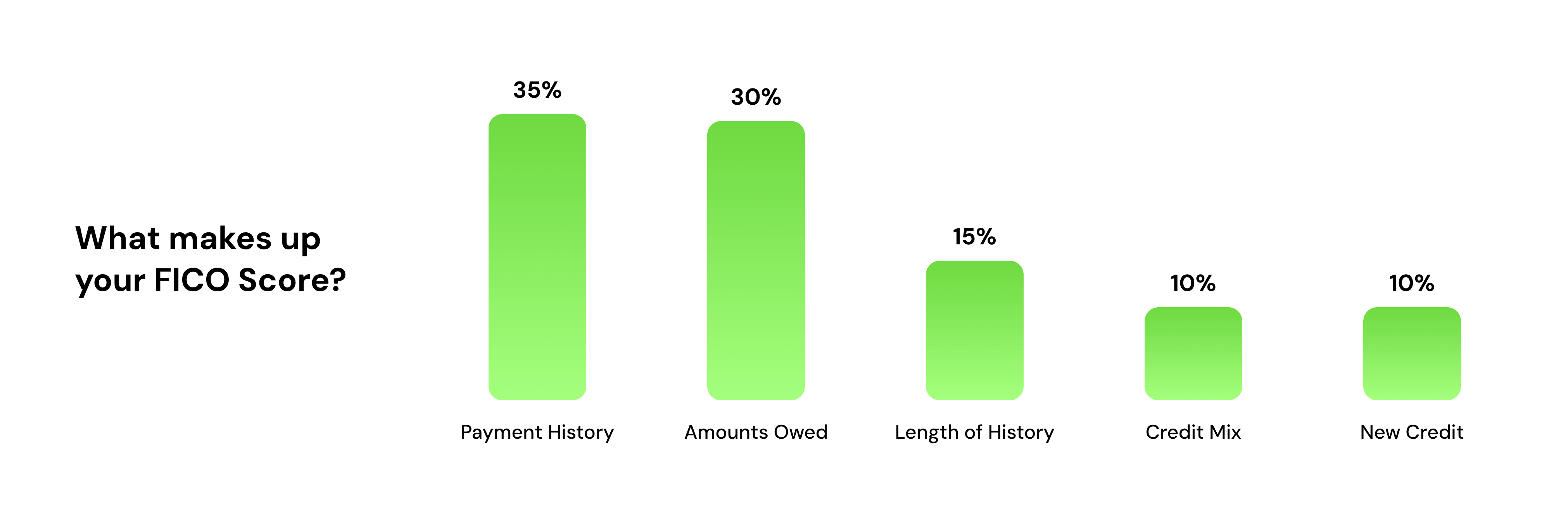
How much you owe makes up 30% of your FICO Score, second only to payment history. On credit cards, FICO looks at how much of your available credit you‘re using, so lowering card balances is where this part of your score moves.
Dispute errors on your credit report
You can check all three of your credit reports for free every week at AnnualCreditReport.com. Errors are more common than people expect, and you have the right to challenge them. Under federal law, Credit bureaus generally must investigate and respond within 30 days.
Disputing only works on errors, however. If a negative mark is accurate, it stays on your report until it expires on its own, usually after seven years.
Build positive payment history
Payment history is 35% of your FICO Score, the largest single piece. Every on-time payment you add is another month of positive record. If you‘re six months or a year out from applying, it‘s the largest part of your score, and the one you can add to month by month.
Read more >> The Importance of On-Time Payments in Building Credit
Bottom line
A low credit score limits your options for a cash-out refinance, but FHA and VA loans leave room that conventional loans don‘t. It also sets your rate that applies to your entire mortgage for as long as you keep it.
If you can wait before applying, that time is worth using. Kikoff‘s Credit Account reports your on-time payments to Equifax, Experian, and TransUnion every month you pay, the largest part of your score. There‘s no credit check to sign up, and plans start at $5 a month.
Frequently Asked Questions
Article Sources
Disclaimer: The information provided in this blog post is meant for informational purposes only and does not constitute financial advice.