.jpg)


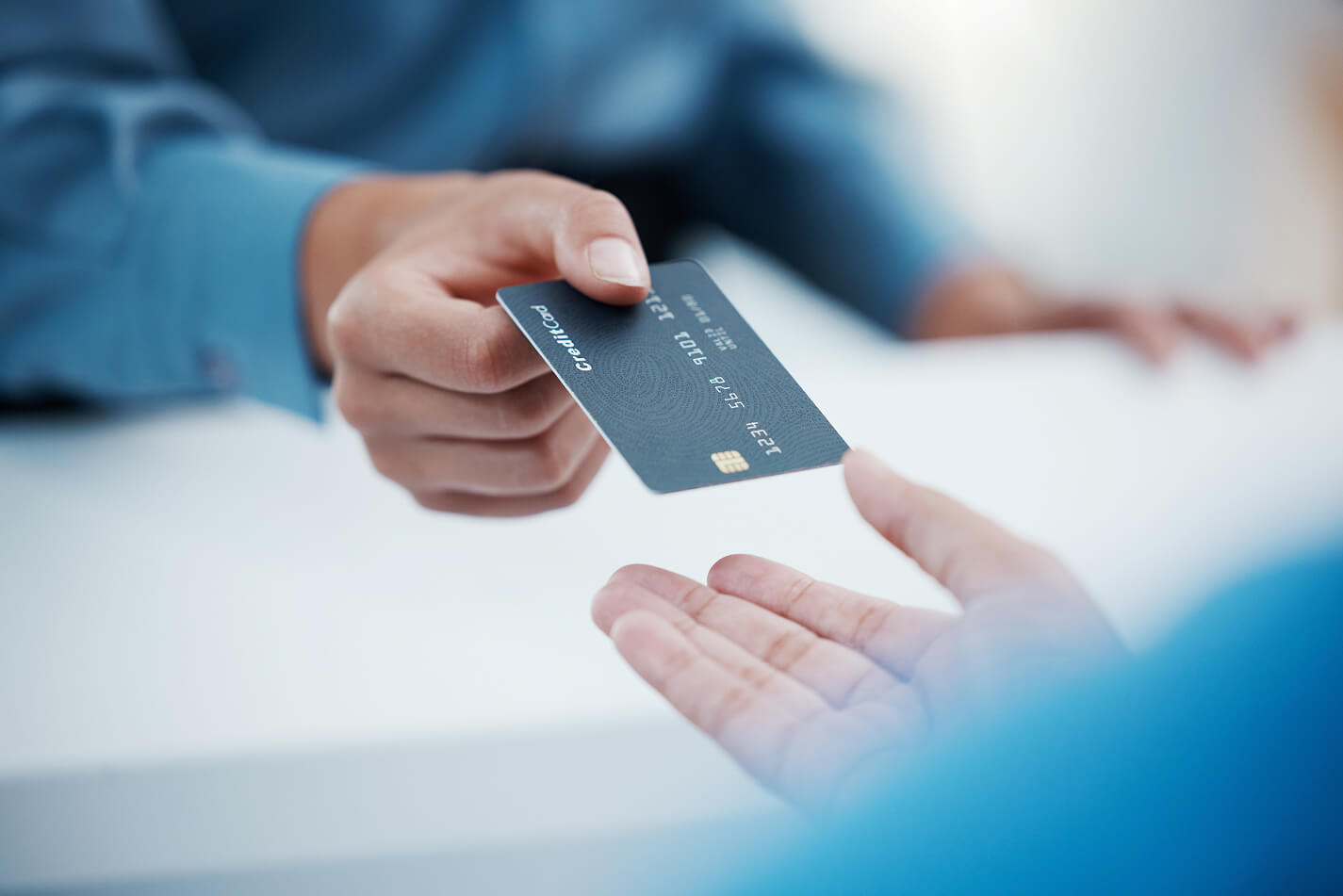
The concept of credit goes back to ancient times. But credit cards, as they are used today, represent a relatively new concept.
In just a few short decades, credit cards have gone from a niche innovation to a force reshaping the world of consumer spending. When were credit cards invented, and how did they get to their current state? Discover the fascinating history of credit cards.
Where credit cards came from

The first real credit card, a credit account that could be used with multiple merchants, was invented in 1950. But even before that, there were some situations where someone could make a purchase on credit and pay for it later.
Early charge accounts and merchant credit
For centuries, some merchants have allowed trusted clients to access products needed now and pay for them later. If a seller believed you could repay when needed, they might let you “run up a tab” and pay for purchases in the future.
The modern version of this would be a store credit card. However, merchant credit has been around longer than most people realize. The Code of Hammurabi, a legal text dating back to around 1753 BC, outlined clear rules for borrowing and repaying money and charging interest[1].
Individual merchant credit agreements persisted into modern society, but for the most part, people still had to pay for just about everything in cash. There were a few precursors to the modern credit card, but most were fairly limited in use.
Some retailers began issuing “charge coins” in the 1860s[2]. The coins included a logo and often an account number. If a customer presented the coin at the time of purchase, the retailer would update a paper record.
After Western Union started a trend of “metal money,” many retailers gave customers Charga-Plates[3]. These were card-like metal plates that included each customer’s information, and they allowed for purchases on credit.
The Diners Club card and the birth of the modern credit card
The Diners Club card was a turning point in the history of credit cards. It was inspired by an embarrassing moment when businessman Frank McNamara was dining with clients in New York and realized he had forgotten his wallet.
In 1950, McNamara launched the Diners Club card, which was the world’s first multi-purpose charge card. By 1951, Diners Club had 42,000 members[4].
When the Diners Club card started out, it was a charge card, meaning that members had to pay the balance in full by the end of the month. Another lender, BankAmericard, later revolutionized the industry even further with the revolving credit card.
BankAmericard and the move to revolving credit
In September of 1958, Bank of America, which was based in California at the time, decided to introduce an all-new kind of credit card to the world. In a move that was later called the “Fresno drop,” it delivered 60,000 ready-to-use credit cards to consumers in Fresno, California[5].
None of these people had applied for credit cards. Instead, they just opened the mail one day and found that they had access to a credit line of $300 to $500. Because there were tens of thousands of people looking to use their new credit cards, hundreds of Fresno merchants signed up with Bank of America to start accepting the cards.
The BankAmericard wasn’t a charge card like the Diners Club card was. When a customer made a purchase, Bank of America paid the merchant immediately. The consumer would then repay Bank of America from their bank account at a later date. The concept became known as “revolving credit.”
The BankAmericard proved to be wildly successful. As Bank of America expanded in California, other banks started offering similar cards. Revolving credit was a hit, but in its early days, it led to major problems:
- Delinquencies were extremely common
- Fraud became an issue when criminals learned how to duplicate cards
- Merchants disagreed with having to pay transaction fees
- Many consumers accumulated significant bad debt
- Some merchants gamed the system to steal from consumers, Bank of America, or both
Bank of America almost discontinued its card program. However, once it had successfully adapted to the challenges that came with the new product, it became clear that revolving credit was here to stay.
How the credit card network was built
As credit cards became more popular, banks needed an organized way to process the growing number of payments. Instead of having hundreds of separate card issuers competing in a free-for-all, finance leaders determined that the best course of action was to unite.
The rise of Visa and Mastercard
BankAmericard eventually became its own company as a distinct entity from Bank of America. It formed a cooperative with other card issuers that became known as Visa in 1976[6].
Another group of banks formed Interbank, later renamed Master Charge and then changed again to MasterCard. Visa and Mastercard each worked to forge partnerships with financial institutions around the world. Those partnerships ultimately created the infrastructure that allows cardholders to use credit cards globally.
American Express and the travel and entertainment card
Many modern credit cards offer travel-related rewards and perks like airport lounge access, flight miles, and even insurance for rental cars. That’s largely thanks to American Express, a company that made a splash when it started offering its first credit card in 1958[7].
Prior to making credit cards, Amex was best known for traveler’s checks. It advertised its first credit card as a card that could cover just about anything a traveler would need, such as transportation, meals and accommodations, dining, entertainment, car rentals, and even telegrams and gifts.
The shift from paper to magnetic stripe
Before magnetic stripe technology, credit card transactions were recorded using paper. A merchant pushed the raised letters and numbers on the card onto pressure-sensitive paper[8] that had carbon copies beneath it. It was time-consuming, and as you might imagine, it was a process that was highly prone to error.
In the 1970s, magnetic stripe technology revolutionized the credit card industry. Tiny iron-based particles on the stripe created what was essentially a barcode containing cardholder and account information.
Magnetic card readers turn the information in the barcode into binary data, which the reader’s system then authenticates before authorizing the transaction.
Regulation, consumer protection, and the law
Each time a new technology evolves, it takes time for regulations to catch up. This pattern was no different over the history of credit cards. Consumer laws are constantly evolving, but certain laws were most critical.
The Fair Credit Billing Act and Truth in Lending Act
As credit cards became more mainstream, many people took them out without fully understanding what they were getting into. The Truth in Lending Act (TILA), enacted in 1968, required lenders to give borrowers specific disclosures to help them get a clearer idea of the debt they were taking on[9].
The TILA also applied to many types of loans. These are some of the disclosures the law required credit card companies to make:
- Annual percentage rate (APR)
- Finance charges
- Payment schedule and terms
- Late fees and other possible fees
The TILA has been amended several times, but the Fair Credit Billing Act (FCBA) is one of the most critical amendments. This addition established consumers’ right to dispute unauthorized charges and gave credit card companies a timeline to investigate disputes[10].

Another key amendment to the TILA was passed in 1988. Regulators found that even though credit card companies were making all legally required disclosures, they often buried them in pages of fine print. The 1988 amendment introduced the “Schumer box,” named for Senator Chuck Schumer.
The box provides a clear, standardized format for important disclosures (like APR) that makes it easy for consumers to understand and compare credit card offers[11].
The Equal Credit Opportunity Act
As the use of credit became more prevalent, some lenders used discriminatory practices, especially toward women. Many banks denied credit to single women and required a married woman’s husband to co-sign credit applications.
The Equal Credit Opportunity Act (ECOA) is a key part of the history of credit cards. When it was first passed in 1974, it prohibited lenders from discriminating based on sex or marital status. In 1976, the law was expanded to ban discrimination based on several other factors, including:
- Race or color
- National origin
- Religion
- Age (as long as the applicant was old enough to sign a contract)
The amendment also prohibited lenders from discriminating based on income source, meaning that receipt of public assistance (like unemployment or Social Security) couldn’t be counted against a credit applicant[12].
The Credit CARD Act of 2009
The Credit Card Accountability Responsibility and Disclosure Act of 2009 (often called the Credit CARD Act) addressed credit card industry practices that unreasonably favored credit card companies.
The law included several provisions, but one of the most important is the limitation it sets on raising interest rates. Before the Credit CARD Act, credit card companies could raise interest rates at any time for any reason. The law established several key requirements around rate increases:
- Card issuers may not raise interest rates in the first 12 months after someone opens an account
- If they want to raise the rate after that, they must send a notice at least 45 days prior
- The notice must include a reason for the increase
- The increase may only affect new purchases
- The issuer must reevaluate the account every six months to see if the reason for the increase still applies
The Credit CARD Act also established several other protections, including placing caps on certain fees and requiring creditors to apply payments in a way that favors cardholders[13].
The credit card in the digital age
As of 2024, 81% of American adults had at least one credit card[14]. For many, credit cards have become an integral part of everyday life. They probably aren’t going anywhere anytime soon, but in today’s digital age, the way people use credit cards (and handle credit in general) has begun to change.
Online shopping and card-not-present transactions
Early credit cards were designed to be used in person. Over time, people needed to make card transactions over the phone (and eventually online). There were a few different ways credit card companies were able to make these transactions more secure.
Card verification value (CVV) codes are among the most important innovations. These codes (which are usually three or four digits) are printed on credit cards and add another layer of security for transactions where the card isn’t present. Mastercard first introduced CVVs in 1997[15], and other companies soon followed suit.
EMV chips and contactless payments
Magnetic stripe technology was revolutionary when it first came out, but over time, it became more vulnerable to fraud. Three companies, EuroPay, Mastercard, and Visa, worked together to find a solution. The EMV chip (named after the companies that developed it) is a metal computer chip embedded in most modern credit cards[16].
Credit card processors equipped with “chip readers” are able to read the data on the computer chip to make sure the card is authentic. Some of these readers can work with contactless EMV chips, so the reader can access data when the chip is held close to it.
However, when EuroPay, Mastercard, and Visa first developed the EMV chip, they faced a challenge. Merchants had already invested in magnetic card readers, and they would likely hesitate to upgrade their systems.
To incentivize more businesses to switch to chip-enabled card readers, these companies announced an EMV liability shift. If a merchant failed to upgrade its card reader, it would be liable for chargebacks.
Virtual cards, digital wallets, and buy now pay later
The internet offers unparalleled convenience, but unfortunately, it’s also made it easier for criminals to access sensitive information.
Some credit card issuers make it easier to protect your information online with virtual card numbers. A virtual number is like an alias for your credit card. You use it when making online purchases, and if it’s exposed in a data breach, you can change it without having to get a new physical card.
Digital wallets offer you another way to make online payments fast and secure. A digital wallet is an app that holds your account and password information for credit cards, debit cards, and even bank accounts. You can make purchases online (and sometimes even in person) while keeping your data shielded from potential fraud.
Buy now, pay later (BNPL) apps have recently emerged as a competitor to credit cards. These apps let consumers split online purchases into multiple payments, and most do it without adding interest or fees.
Some credit card companies are now offering BNPL features to customers. That way, their customers can pay interest-free over time while still enjoying reward points and other cardmember benefits.
How credit cards shaped consumer credit in America
For better or for worse, credit cards have reshaped the way we look at credit. Before the dawn of the credit card, most people paid for daily necessities in cash and took out bank loans when they needed to buy a house or a car (or otherwise access a large lump sum).
Credit cards make it possible to spread out expenses over time, and when used strategically, they can even save you money.

However, thanks to high interest rates and the power of compound interest, credit card debt can quickly spiral out of control. The Federal Reserve reported that in the first quarter of 2026, Americans collectively owed $1.25 trillion in credit card debt[17].
Credit cards can offer cash back and other perks. They’re convenient, and when you’re struggling with the rising cost of living or faced with an unexpected expense, they offer you a chance to pay over time. However, if you aren’t careful, they can keep you trapped in a never-ending debt cycle.
FAQ
When were credit cards invented?
The Diners Club card, which is widely considered to be the first modern credit card, was created in 1950. However, “charge coins” (a precursor to credit cards) were around in the 1860s.
Were credit card interest rates always as high as they are now?
No. According to the Federal Reserve, commercial credit card interest rates are close to an all-time high[18].
Is BankAmericard still around?
Yes and no. The company BankAmericard turned into Visa in the 1970s. However, Bank of America still offers a credit card called the BankAmericard.
The history of credit cards: Why does it matter?
Like any financial product, a credit card has the potential to make your life a lot easier or a lot harder. When you understand how credit cards work, where they came from, and how they can (and can’t) help you, you’ll be better equipped to work toward success on your own financial journey.
Frequently Asked Questions
About the editor

Article Sources
Disclaimer: The information provided in this blog post is meant for informational purposes only and does not constitute financial advice.