


.jpg)




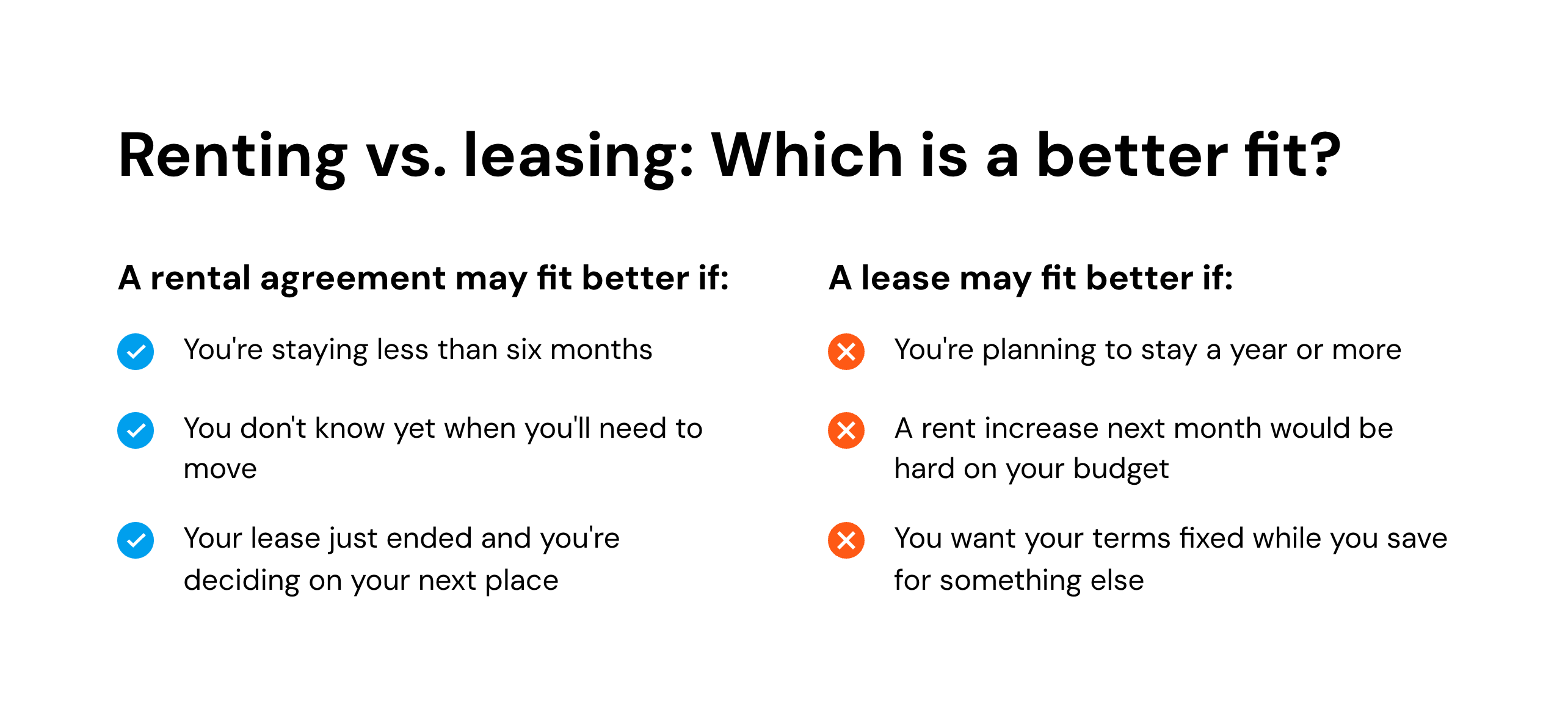
A lease locks your rent and terms for a fixed period, usually 6 or 12 months. A rental agreement runs month to month and renews automatically, and either side can change it or end it with proper notice. Same apartment, same landlord, different amount of certainty.
Which one is better for you comes down to three things: how long you plan to stay, whether you could absorb a rent increase next month, and what your state requires of a landlord who wants to make a change. That last one varies more than most renters expect.
What's the difference between renting and leasing?
Length of time
Rental agreements usually run one month at a time and renew on their own until someone ends them. Leases run 6 or 12 months, sometimes longer.
Monthly cost
A lease locks your rent for the full term. In a month-to-month agreement, your landlord can raise it with the notice your state or city requires. Those notice periods vary widely. California, for example, requires 30 days for an increase of 10% or less and 90 days for anything larger. Your state's rules are on HUD's tenant rights page for your state.
Landlords who offer month-to-month terms sometimes price them higher, because it can cost them more to keep a short-term rental filled. Check the lease rate and the month-to-month rate for the same unit before you decide one is cheaper.
Agreement terms
When a landlord and tenant sign a lease agreement, both are bound by its terms for the life of the lease. With a rental agreement, landlords can typically make changes as long as they give tenants proper notice.
What each side can change
When you sign a lease, both you and the landlord are bound to its terms until it ends. Under a rental agreement, a landlord can generally change the terms or end the agreement with proper notice.
But that's not true everywhere. A growing number of states and cities require a landlord to have a legally recognized reason to end an agreement for longer-term tenants. In California, after 12 months of continuous occupancy, a landlord must have "just cause" to end an agreement, even if it's month to month. Oregon, Washington, New Jersey, and a long list of cities have their own versions.
You can end a month-to-month agreement within the notice your state requires. If you're weighing a move against a rent increase and the notice rules where you live aren't clear, a licensed attorney or a local tenants' rights organization can tell you what applies to your address. Many offer free consultations.
How your rent payments can help build credit
Mortgage payments appear on credit reports. But a lease isn't a line of credit, which means rent isn't reported by default. Landlords and property management companies aren't legally required to report your payments.
That's changing in a few places. Since April 1, 2025, California requires landlords of larger properties to offer tenants positive rent reporting to at least one credit bureau, and they can charge up to $10 a month for it. Colorado, New Jersey, and several other states have introduced similar rent reporting legislation and pilot programs.
When rent does get reported, it lands where it counts. Payment history is 35% of your FICO score, the single most important factor used to calculate your score. Which bureaus get the data depends on the service doing the reporting.
Bottom line
Whether you sign a lease or go month to month, you're paying rent either way. And neither agreement puts a single on-time payment on your credit report.
Paying rent on time for two years is one thing, while having those two years on your credit report is another. Only one of them is visible to a lender.
Kikoff Rent Reporting reports your rent to Equifax and TransUnion and can add up to two years of rent you've already paid for a one-time $50 fee. Plans start at $5 a month.
Frequently Asked Questions
Article Sources
Disclaimer: The information provided in this blog post is meant for informational purposes only and does not constitute financial advice.