


.jpg)
.jpg)



Sometimes, making it to payday is a struggle. A surprise bill, higher expenses, or a budgeting mistake can leave you short, and a loan denial adds another layer of stress.
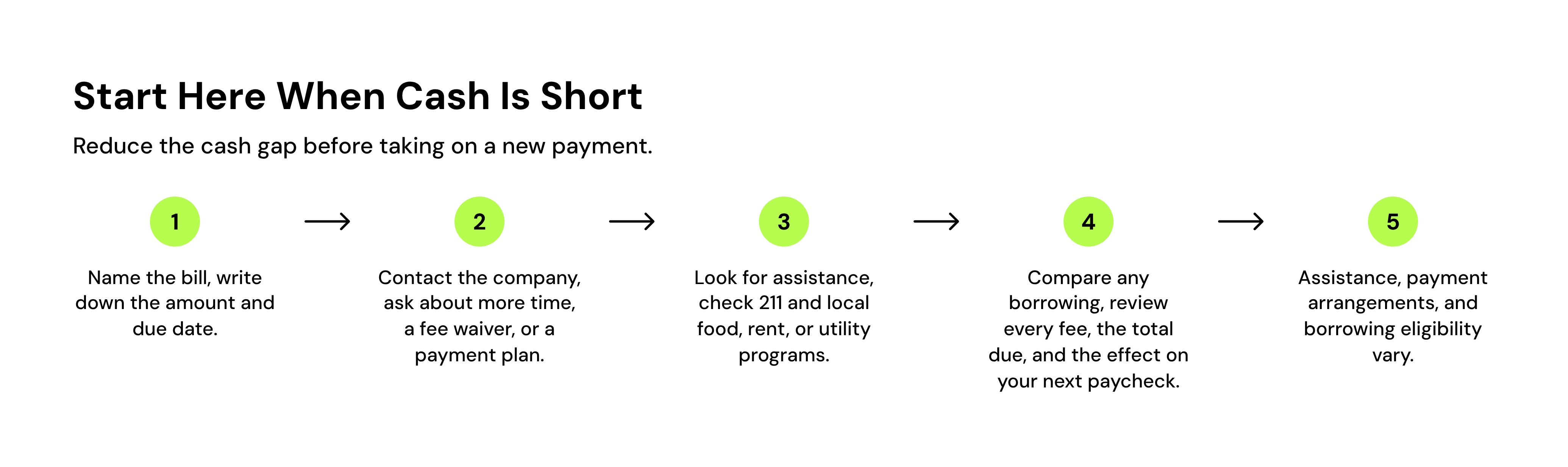
If you need money but can’t get a loan, start by identifying the exact bill, amount, and deadline. You may be able to buy time, lower the immediate cost, or get assistance without taking on another debt payment. If you still consider an advance or loan, compare the total cost and what repayment will do to your next paycheck.
What to do when you need money but can’t get a loan
The best option depends on what the money is for and how quickly you need it. Start with choices that do not require borrowing.
Ask for more time or a payment plan
Contact the landlord, utility company, medical provider, lender, or other business before the due date. Explain how much you can pay now and when you expect to pay the rest.
Some companies may move a due date, waive a late fee, or offer a short-term payment plan. The Consumer Financial Protection Bureau recommends contacting creditors early because ignoring a bill may lead to added fees or more serious consequences.
Before accepting an arrangement, ask whether interest or fees will continue and whether the account may be reported late. Get the agreement in writing when possible.
Look for emergency assistance
Local programs may help with food, rent, utilities, transportation, or medical expenses. Eligibility and funding vary, but receiving help with one essential bill may reduce the amount of cash you need.
For rent help, USAGov recommends calling 211 or searching for state and local emergency rental assistance. USAGov also lists food assistance programs, including SNAP, WIC, and emergency food resources.
Ask whether your employer offers early pay
Some employers let workers access wages they have already earned before the regular payday. This may be called earned wage access, early pay, or a paycheck advance.
Ask whether the program charges a transaction or expedited-delivery fee and how the advance will be deducted. Getting part of your pay early means your regular paycheck will be smaller, so make sure the remaining amount can cover your next round of bills.
Compare cash advance apps carefully
Cash advance apps may offer small advances without a traditional credit check, but that does not make every advance free. Depending on the provider and delivery method, costs may include subscription fees, expedited-transfer fees, transaction fees, or requested tips.
The CFPB found that repeat use and expedited-delivery fees account for a substantial share of the cost of earned wage products. Before using an app, add up every cost, check when repayment will be taken, and decide whether the advance will leave your next paycheck short.
A product advertised as having no interest can still cost money. Compare all fees and the total amount due, not just the interest rate.
Sell something you no longer need
Selling an item outright may bring in cash without creating a future payment. Compare offers before accepting one, protect personal information, and use a safe meeting place for an in-person sale.
Pawning is different from selling. A pawn transaction is a loan secured by your item. You must repay the amount borrowed plus interest and fees to get the item back, and you may lose it if you do not repay. Avoid pawning anything essential for work, transportation, communication, or daily life.
Pick up short-term work
Gig work, extra shifts, freelance tasks, or local odd jobs may help if the payment arrives before your bill is due. Check the payout schedule first. New platform applications, background checks, transfer delays, taxes, fuel, and other work expenses may reduce how quickly the job solves the shortage.
Borrow from family or friends
If someone close to you can help, be specific about the amount, repayment date, and whether the money is a loan or a gift. Put the agreement in writing so both people remember the same terms.
Do not promise a repayment date you cannot realistically meet. A smaller amount or a plan to pay in installments may be easier for both sides.
Check with a credit union
A denial from one lender does not mean every lender will make the same decision. Some federal credit unions offer payday alternative loans, or PALs, with federal limits on amounts, terms, and fees. Membership and approval are still required.
The National Credit Union Administration says PALs II loans may be offered for up to $2,000 with terms of one to 12 months. Ask about the annual percentage rate, application fee, payment amount, and total repayment cost before applying.
Read more >> How to Get Emergency Money
Why was your loan application denied?
Do not guess. Start with the denial notice, sometimes called an adverse action notice. According to the CFPB, a lender must provide the main reasons for denying your application or tell you how to request them within 60 days.
If the decision was based on a credit report, the notice should identify the credit reporting company and explain how to request a free copy of the report used in the decision. Review that report and dispute information you believe is inaccurate.
Low, limited, or uneven credit history
A lender may be concerned about missed payments, collection accounts, high credit card balances, a short credit history, or too little information to evaluate. The exact reason should appear in or be available through the denial notice.
Avoid submitting several new applications before you understand the first denial. Applications that involve hard credit inquiries may affect your credit and do not address the reason you were turned down.
Too much debt compared with income
Lenders may compare your required monthly debt payments with your gross monthly income. This is called your debt-to-income ratio, or DTI. DTI is used during lending decisions, but it is not part of your credit score because credit reports do not contain your income.
Income that does not meet the lender’s requirements
A lender may decide that your documented income is too low for the requested payment or that it cannot verify the income information provided. Income rules vary by lender and loan type.
A short employment history does not automatically lead to denial. What matters is the lender’s criteria and the actual reason listed in your notice.
An incomplete or inconsistent application
Missing documents, conflicting information, or details the lender cannot verify may delay or prevent approval. Ask whether you can correct the application or provide additional documents instead of immediately applying somewhere else.
Read more >> How to Get a Personal Loan With Bad Credit
What to avoid when you are desperate for cash
Urgency can make an expensive or fraudulent offer look reasonable. Slow down long enough to understand what you are agreeing to.
Upfront-fee loan scams
Do not pay someone who claims that an upfront processing, insurance, or application fee makes approval certain. The Federal Trade Commission warns that promises of credit in exchange for an advance fee are a common loan scam.
Legitimate lenders may charge disclosed application or appraisal fees in some situations, but paying a fee does not make approval certain. Check whether a lender is licensed where required through your state banking regulator or attorney general.
Payday, title, and other high-cost loans
Fast funding can come with high fees and short repayment periods. A payment that consumes most of your next paycheck may recreate the same shortage and make regular bills harder to cover.
Compare the APR, every fee, the total amount due, the repayment date, and what happens if you cannot pay on time. If a lender will not disclose those terms clearly, walk away.
Pawning an essential item
A pawn loan may put transportation, tools, electronics, or another important possession at risk. If losing the item would interfere with your job or daily life, the consequences may outweigh the cash you receive.
Repeated applications
Applying with several lenders in quick succession can add hard inquiries if each lender checks your credit. First read your denial notice, correct any errors, and look for lenders that offer prequalification with a soft inquiry. Confirm how an inquiry will be handled before providing permission.
Read more >> Best Alternatives to Payday Loans in 2026
How to make the next cash shortage easier
Once the immediate bill is handled, look at whether the shortage was a one-time surprise or part of a recurring gap.
If it happens repeatedly, list your take-home income, essential bills, minimum debt payments, and irregular expenses. A bill calendar can show whether due dates are clustered before payday. Some companies may let you move a due date to a better point in the month.
When possible, start with a small emergency cushion rather than an intimidating savings target. Even enough to cover a prescription, tank of gas, or utility overage can reduce the amount you need to find next time.
If debt is piling up or your essential expenses routinely exceed your income, consider speaking with a nonprofit credit counselor for guidance specific to your situation. The National Foundation for Credit Counseling can connect you with a certified counselor at 800-388-2227. Ask about any fees before enrolling in a service or debt management plan.
Bottom line
If you need money but cannot get a loan, start with the bill itself. A payment arrangement, emergency assistance, an employer program, a sale, or short-term work may solve part or all of the problem without another loan. If you consider an advance, compare every cost and make sure repayment will not create the same shortage next payday.
A stronger credit history can give you more borrowing options over time, although it will not solve today’s emergency. Kikoff reports your on-time payments to all three credit bureaus, with no hard credit check to join. Start building positive credit history when the payment fits your budget.
Frequently Asked Questions
Article Sources
Disclaimer: The information provided in this blog post is meant for informational purposes only and does not constitute financial advice.