



Getting a great deal on a car isn't just about the sticker price.
The financing terms you secure can save or cost you thousands of dollars over the life of your loan. Every individual who is shopping for a vehicle should understand that the interest rate, loan length, and down payment requirements are all directly tied to their financial profile.
Luckily, there are concrete steps you can take before stepping onto the lot that put you in a stronger negotiating position. Let's jump in.
What lenders actually look at when you apply for auto financing
Before you can secure favorable terms, you need to understand what lenders care about.
Auto lenders evaluate your application based on a combination of factors that paint a picture of how likely you are to repay the loan. Your credit score is generally the single most important factor, but it's not the only one.
Lenders also consider your debt-to-income ratio, which is basically the percentage of your monthly gross income that goes toward existing debt payments. A lower ratio signals that you have room in your budget to take on a new payment.
Employment history and income stability matter as well. Lenders want to see consistent income over time, which suggests you'll be able to make payments for the full loan term.
The loan-to-value ratio is another key metric. This means the amount you're borrowing relative to the car's actual value, and a lower ratio reduces the lender's risk.
Finally, the size of your down payment directly affects your terms. A larger down payment reduces the principal, which usually results in a lower interest rate and shorter loan term options.
How your credit score affects your auto loan rate
Your credit score is effectively the gatekeeper to favorable financing.
Borrowers with scores above 740 generally qualify for the lowest available interest rates on auto loans. Those in the 670 to 739 range can still secure competitive rates, but they'll typically pay a noticeable premium compared to top-tier borrowers.
Below 670, rates climb quickly. Subprime borrowers with scores between 580 and 669 may see rates that are several percentage points higher, which translates to thousands of extra dollars in interest over the life of the loan.
Here's a breakdown of how credit tiers typically affect auto loan rates:
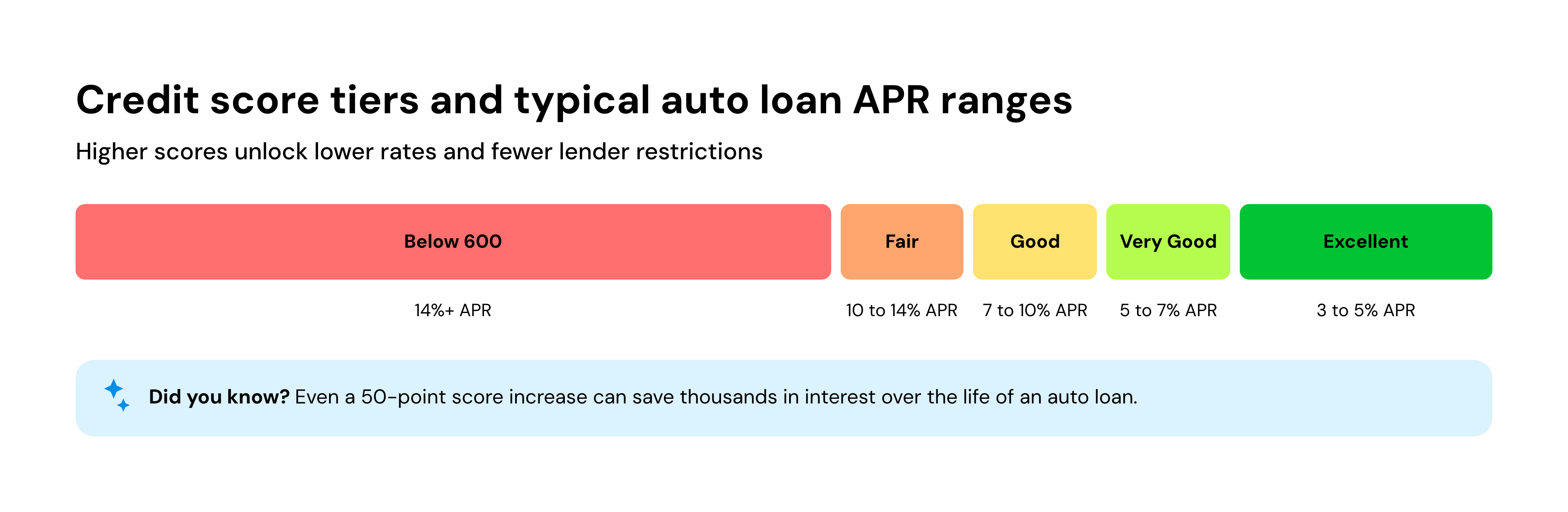
- 750 and above: Best available rates, usually in the low single digits
- 700 to 749: Slightly higher rates, still competitive
- 650 to 699: Moderate rates with some lender restrictions
- 600 to 649: Higher rates and potentially larger down payment requirements
- Below 600: Highest rates, limited lender options, and possible requirement for a co-signer
This said, even a small improvement in your credit score before applying can shift you into a better tier and save you real money. Building credit with a platform like Kikoff before you shop for financing can help you move into a more favorable range.
Steps to take before applying for an auto loan
Preparation is super important when it comes to getting the best terms.
Start by checking your credit reports from all three bureaus at annualcreditreport.com. Look for errors, outdated negative items, or accounts that don't belong to you, and dispute anything inaccurate before you apply.
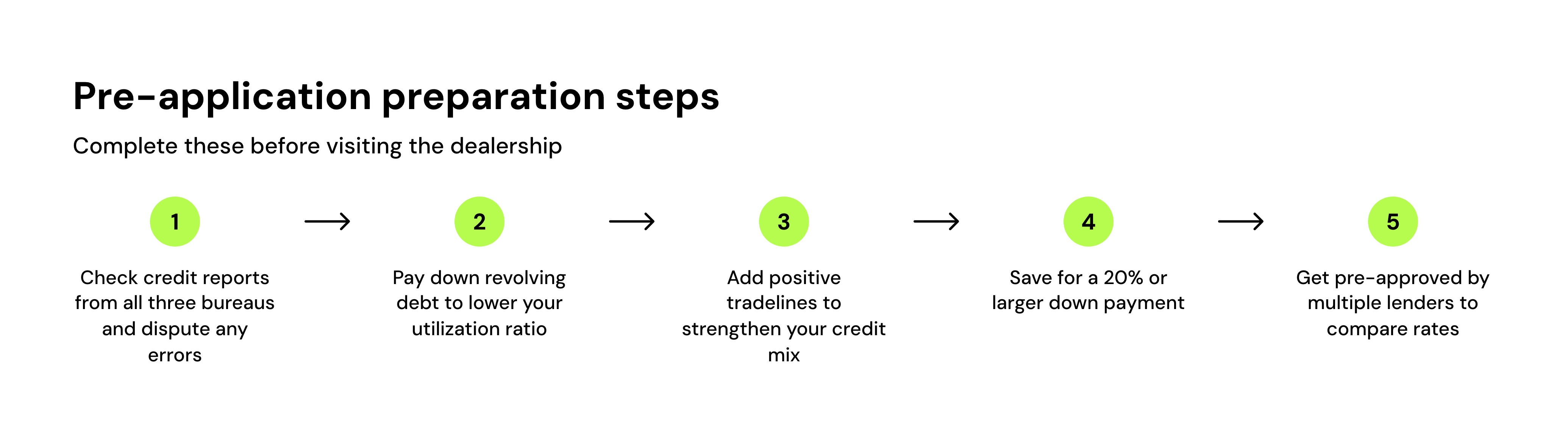
Next, work on paying down existing revolving debt. Lowering your credit utilization ratio, which is primarily the percentage of your available credit that you're using, can boost your score relatively quickly.
If you have a thin credit file or a limited payment history, consider adding positive tradelines before applying. A credit-building account like Kikoff reports on-time payments to the major credit bureaus, which helps establish the payment history lenders want to see.
Save for the largest down payment you can reasonably afford. Putting down 20% or more signals commitment and reduces the lender's exposure, which usually results in better rate offers.
Finally, get pre-approved by multiple lenders before visiting a dealership. Pre-approval gives you a baseline rate to compare against dealer financing offers, and it shows you exactly where you stand.
Where to shop for the best auto loan rates
Not all lenders offer the same terms, so shopping around is a no-brainer.
Credit unions are generally known for offering lower auto loan rates than traditional banks. Membership requirements have relaxed over the years, and many credit unions now serve broad geographic areas or employer groups.
Online lenders have also become increasingly competitive. They often have lower overhead costs, which allows them to pass savings along in the form of reduced rates.
Traditional banks may offer relationship discounts if you already have accounts with them. Just make sure to compare their offers against other options rather than accepting their first quote.
Dealer financing can sometimes be competitive, especially on new vehicles with manufacturer-backed promotional rates. However, be aware that dealers may mark up the rate they receive from lenders, so always compare their offer to your pre-approval.
When you apply to multiple lenders within a short window, usually 14 days, the credit inquiries are typically grouped together and counted as a single hard inquiry for scoring purposes. This means you can shop aggressively without worrying about damage to your score.
Negotiating tactics that actually work at the dealership
Walking into a dealership with preparation gives you leverage.
Always negotiate the purchase price of the vehicle separately from the financing terms. Dealers sometimes offer a lower price but make up the difference with a higher interest rate, or vice versa.
Lead with your pre-approval offer. Let the dealer know you already have financing in place, and ask if they can beat it. This forces them to compete on rate rather than dictating terms.
Be cautious about extended loan terms. While a 72 or 84 month loan lowers your monthly payment, it dramatically increases the total interest paid and puts you at risk of being underwater on the loan.
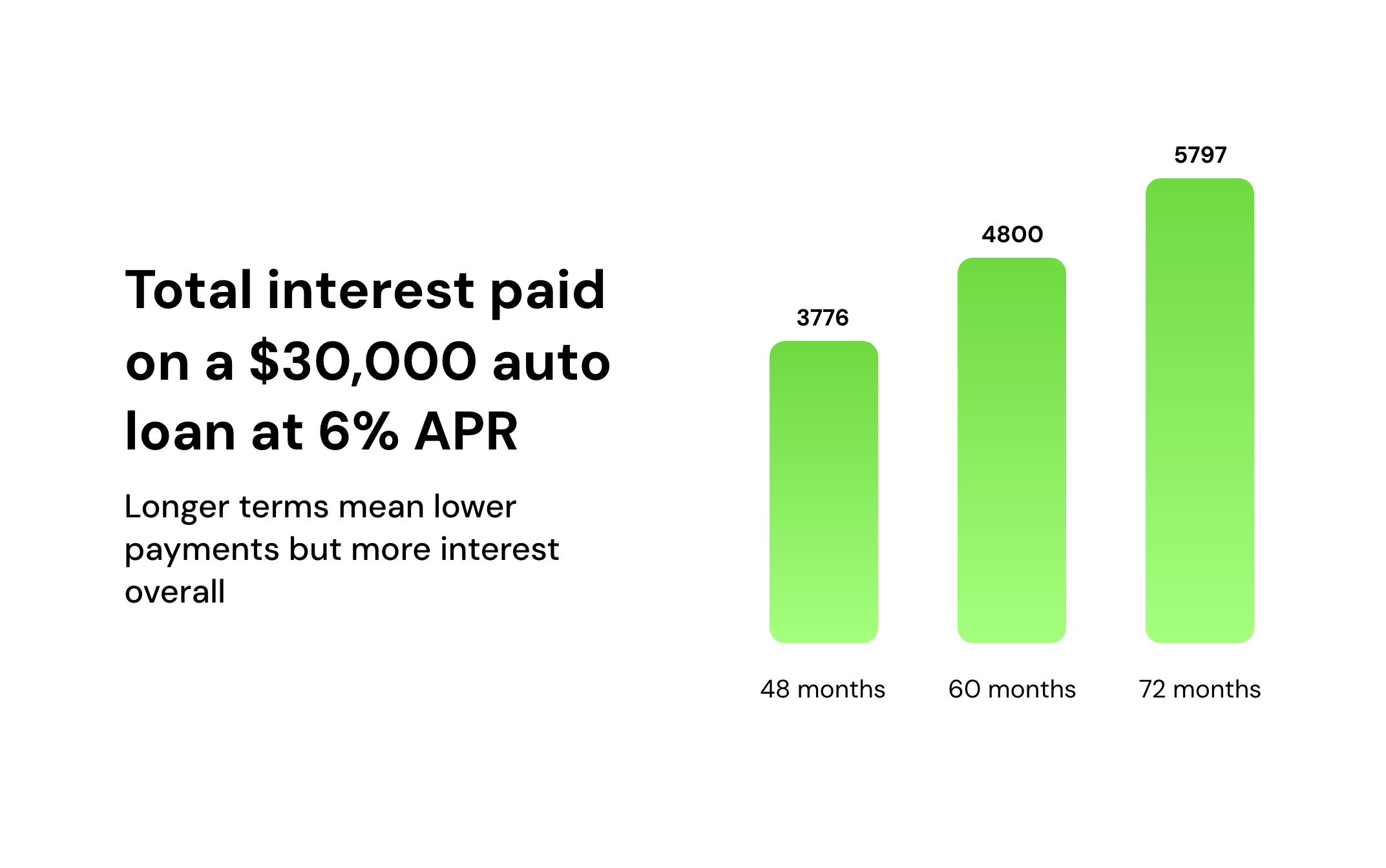
Focus on the total cost of the loan rather than the monthly payment. Dealers often steer conversations toward monthly payment amounts because it obscures the overall expense of longer terms or higher rates.
Don't agree to add-ons like extended warranties, gap insurance, or protection packages without researching their value independently first. These products are frequently marked up significantly at the point of sale.
How to maintain good terms after you've signed
Securing favorable terms is just the beginning.
Set up autopay to ensure you never miss a payment. Late payments can trigger penalty rates on some loans and will damage your credit score, making future borrowing more expensive.
Monitor your credit regularly after taking on the loan. Your auto loan contributes to your credit mix and payment history, both of which affect your overall credit profile.
If interest rates drop significantly or your credit improves substantially, consider refinancing. Many borrowers are eligible for better rates after 12 to 24 months of on-time payments on their original loan.
Keep an eye on your loan balance relative to the car's value. If you're ever in a position to make extra principal payments, doing so reduces your total interest cost and builds equity faster.
Continuing to build credit through consistent activity, be it a credit card, a Kikoff credit account, or other reported tradelines, strengthens your profile for future financing needs.
Conclusion
Securing favorable auto financing terms comes down to preparation, credit health, and smart negotiation.
By understanding what lenders look for, building your credit score before you apply, shopping multiple lenders, and negotiating with confidence, you can save thousands over the life of your auto loan. Every individual who takes the time to prepare puts themselves in a stronger position at the negotiating table.
If your credit profile needs strengthening before you apply, tools like Kikoff can help you build positive payment history reported to the major credit bureaus, all without a hard credit check to sign up.
Frequently Asked Questions
About the editor

Disclaimer: The information provided in this blog post is meant for informational purposes only and does not constitute financial advice.