






Ever open your electric bill and wonder why it’s so high when you haven’t changed a thing? Often the answer isn’t your usage. It’s your rate, a new fee, or the season.
The good news is that you don’t need expensive upgrades to bring the total down, and if you’re already behind, assistance programs can help.
5 ways to lower your utility bills
Before you start unplugging everything in sight, look at your latest utility statements and compare them to the same time last year.
If you’re using more energy, changing your habits could help. But if rates have increased, you might need to explore a different pricing plan or assistance program.
Check whether your utility provider offers an online dashboard that shows your daily or hourly usage. It could reveal patterns, like a spike in electricity consumption when your AC runs.
Quick check: Is it your usage or your rate? Your bill shows two numbers worth comparing with the same month last year: how much you used, and what you paid.
If use went up, our habit changes can help. If use stayed about the same but the total went up, your rate or fees probably changed.
Call your provider and ask whether a different pricing plan, like a time-of-use plan, fits how you use energy. If you’re struggling to keep up, ask about assistance programs too.
1. Reduce your electricity bill
Switch to LED light bulbs
LEDs use about 90% less energy and last roughly 25 times longer than incandescent lighting, according to the U.S. Department of Energy. If you’re still using older bulbs around the house, start with replacing the ones you use most, like those in the kitchen or living room.
Unplug devices you’re not using
Standby power refers to the small amounts of electricity your TV, gaming console, and other electronics may still draw, even when you have them turned off. Unplugging them can help, but you don’t need to unplug everything individually. Instead, connect electronics to a power strip, so you can just switch it off when you’re not using it.
Run appliances during off-peak hours
Some utilities charge less for electricity during off-peak hours, when demand is lower. If you’re on a time-of-use plan, running your dishwasher or washing machine during cheaper hours could lower your bill.
Check your electricity plan first. If you pay a flat rate, running your dishwasher at 10 p.m. instead of 6 p.m. won’t necessarily save you anything.
Read more >> 10 Essential Categories to Include in Your Budget
2. Lower your water bill
Here are three ways to save money on your water bill.
Fix leaks promptly
That dripping faucet or toilet that keeps running after you’ve flushed could be costing you more than you think. According to the Environmental Protection Agency (EPA), the average household’s leaks can waste nearly 10,000 gallons of water annually.
Leaks can add as much as 10% to your water bill. Toilets are a common culprit, and they’re easy to check for free: put a few drops of food coloring in the tank and wait 10 minutes without flushing. If color shows up in the bowl, the toilet is leaking. Then check faucets and showerheads for drips.
If you’re renting, report any leaks to your landlord or maintenance team in writing.
Take shorter showers
A standard showerhead uses about 2.5 gallons per minute, according to the EPA. Cutting a 10-minute shower to eight minutes could save five gallons each time.
You could also install a WaterSense-labeled showerhead, which uses two gallons per minute at most.
Only run full loads of laundry and dishes
Running the dishwasher only when it’s full can cut about one load a week and save nearly 320 gallons of water a year, according to the EPA. The same idea works for laundry: If you’re someone who regularly washes small loads, try waiting until you have more to run. If your appliances have an eco or water-saving setting, try that too.
Read more >> 6 Best Apps To Report Utility Bills for Credit
3. Cut your heating and cooling costs
Seal windows and doors
The Department of Energy recommends caulking stationary gaps around windows and doors. Weatherstripping and removable window-sealing kits can also be inexpensive ways to seal out drafts, especially in very hot and cold weather.
Use fans instead of AC when possible
If the weather is mild enough, you can try staying cool with a portable fan or ceiling fan instead of cranking down the AC. When you leave the room, you can turn off the fan to save even more electricity.
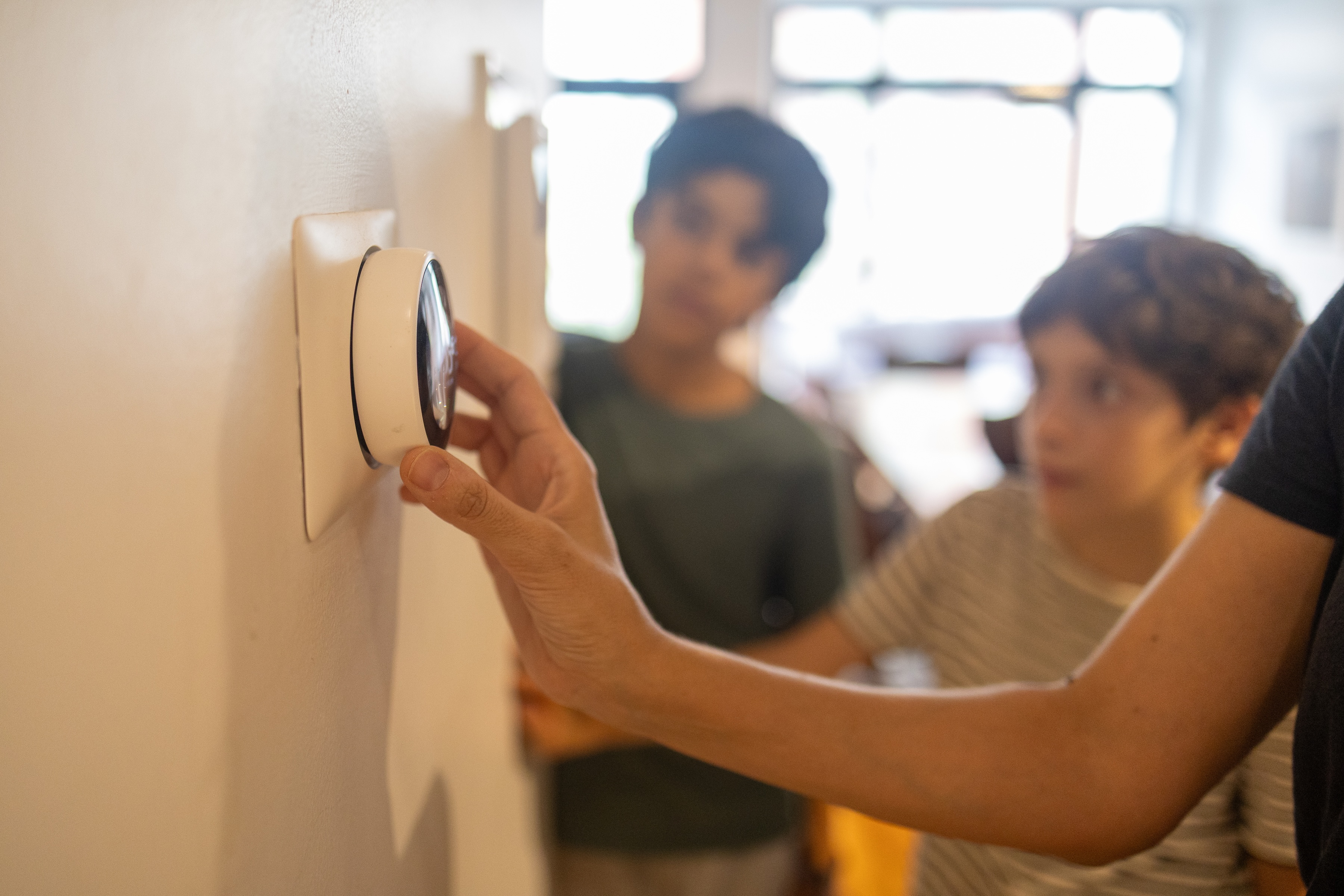
Adjust your thermostat
Setting your thermostat back 7 to 10 degrees for 8 hours a day could save as much as 10% a year on heating and cooling, according to the Department of Energy. Lower it in winter, and raise it in summer. And use a programmable thermostat to adjust temperatures automatically while you’re asleep or away.
Read more >> Can You Pay Bills From a Savings Account?
4. Reduce your internet and phone bills
Negotiate with your provider
If you’ve had the same internet or phone plan for years, call your providers and ask about current promotions, loyalty discounts, or cheaper options. You can also compare competitors’ prices and use those offers as leverage. Your current provider may match a lower price if you name a specific competitor’s offer.
Drop services you don’t use
Take a look at whether your phone and internet plans match how you actually use them. For example, you could be paying for unlimited gigabytes on your cell phone plan when you’re on wifi most of the day. Or, you could be paying for internet speeds you don’t need.
Consider downgrading your plan, removing unused phone lines, or returning unnecessary rented equipment as another way to save money on utility bills.
Read more >> Can You Build Credit With Your Phone Bill?
5. Get help if you’re behind on bills
If a bill is already more than you can pay, look into programs designed to help.
Already got a shutoff notice? Call your utility before the due date and ask about a payment plan. Your state’s public utility commission lists any shutoff protections where you live.
Bottom line
The quickest savings usually come from finding what changed on your bill, then picking the two or three fixes that fit your home. Even $25 a month adds up to $300 a year you can put somewhere else.
One thing a lower bill won’t change: paying your electric, gas, water, and phone bills on time usually doesn’t show up on your credit report. Kikoff’s Bill Reporting reports those on-time payments to TransUnion, so bills you already pay can count toward your credit history. It’s included with Kikoff Premium at $20 a month.
Frequently Asked Questions
Article Sources
Disclaimer: The information provided in this blog post is meant for informational purposes only and does not constitute financial advice.