


.jpg)



Buying a car is a major financial commitment, and walking into a dealership without a plan can cost you. Dealers offer financing options using their preferred lenders, or you may be able to finance directly with the manufacturer.
But dealers and salespersons aren't always looking out for your best interests. They want to get you in a vehicle and get the deal done. Under pressure, you might take on a loan that puts you in a tough spot. If you show up with a pre-approval, you'll know what your budget is, how much your monthly payments will be, and what your loan terms are.
Our guide unpacks how to get pre-approved for a car loan so that you can make your next vehicle purchasing experience faster and less stressful. Here's everything you need to know.
How to get pre-approved for a car loan
Getting pre-approved to purchase a vehicle is a lot simpler than you might expect. Doing it the right way can save you money and make purchasing a vehicle much less stressful. Here's how to get pre-approved for a car loan:
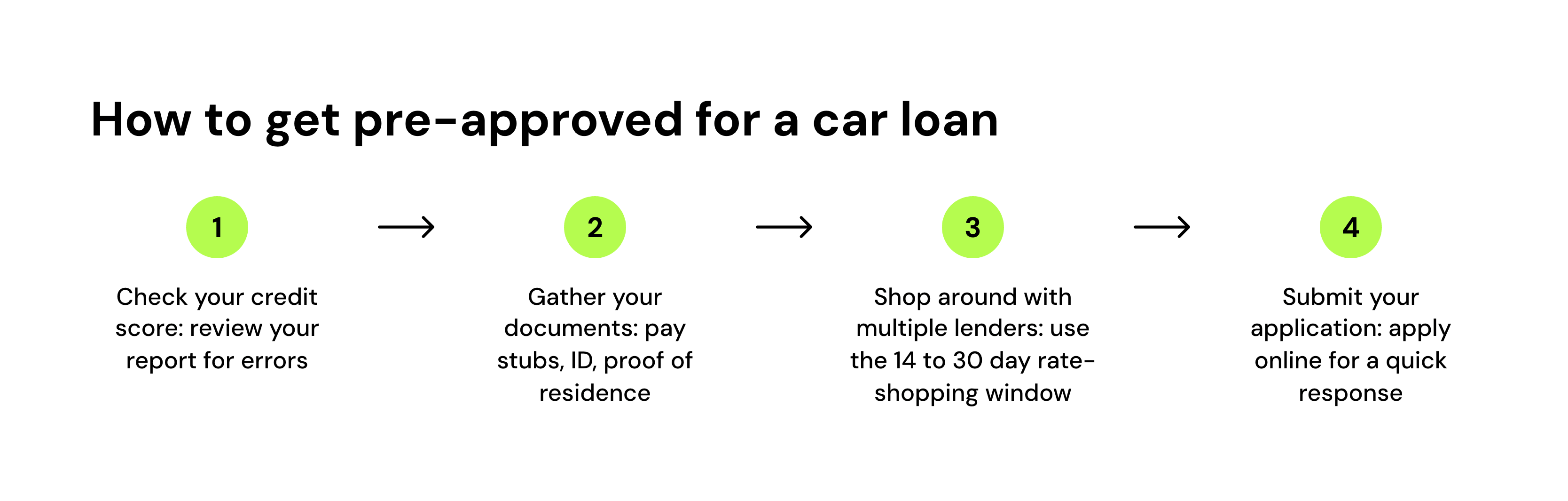
Check your credit score
Before you fill out an application, check your credit score. Your score plays a major role in whether you'll be approved and what interest rate you'll qualify for. Review your credit report for errors so you know where you stand.
Other factors impacting vehicle loan interest rates include current market conditions and inflation. Lenders typically post interest rate information online, but only the most well-qualified borrowers will be eligible.
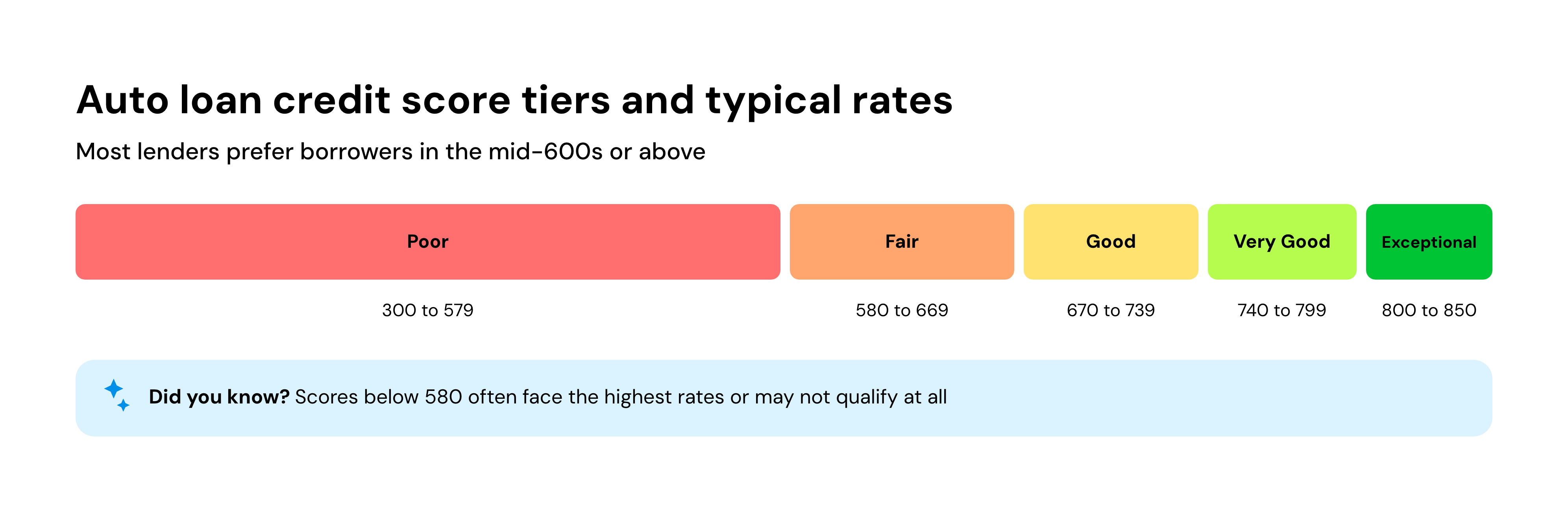
There are no universal minimum credit score requirements for an auto loan. However, lenders prefer borrowers with a score in the mid-600s or higher to qualify for the best rates. If your score is on the lower side, you may still be able to qualify for an auto loan. But be prepared for higher interest rates that could drive up your monthly payment.
Gather your documents
Once you've reviewed your credit score and determined you can qualify for an auto loan, gather documents for the lender. Having your documents ready speeds up the process and improves your chances of approval. The documents you may need are:
- Proof of income, such as pay stubs
- Employment verification
- Proof of residence
- Social Security number
- Driver's license
Not all lenders require all of these documents up front. You may only need to provide a few things, such as your driver's license and 30 days' worth of pay stubs. The lender will also run a credit check.
Shop around with multiple lenders
Once your credit is run as part of an auto loan application, you have a grace period of 14 to 30 days to compare your options. Any other auto loan inquiries on your credit during that time will not count against you. You will only receive one "hit" on your credit score, which could lower it by around three to five points.
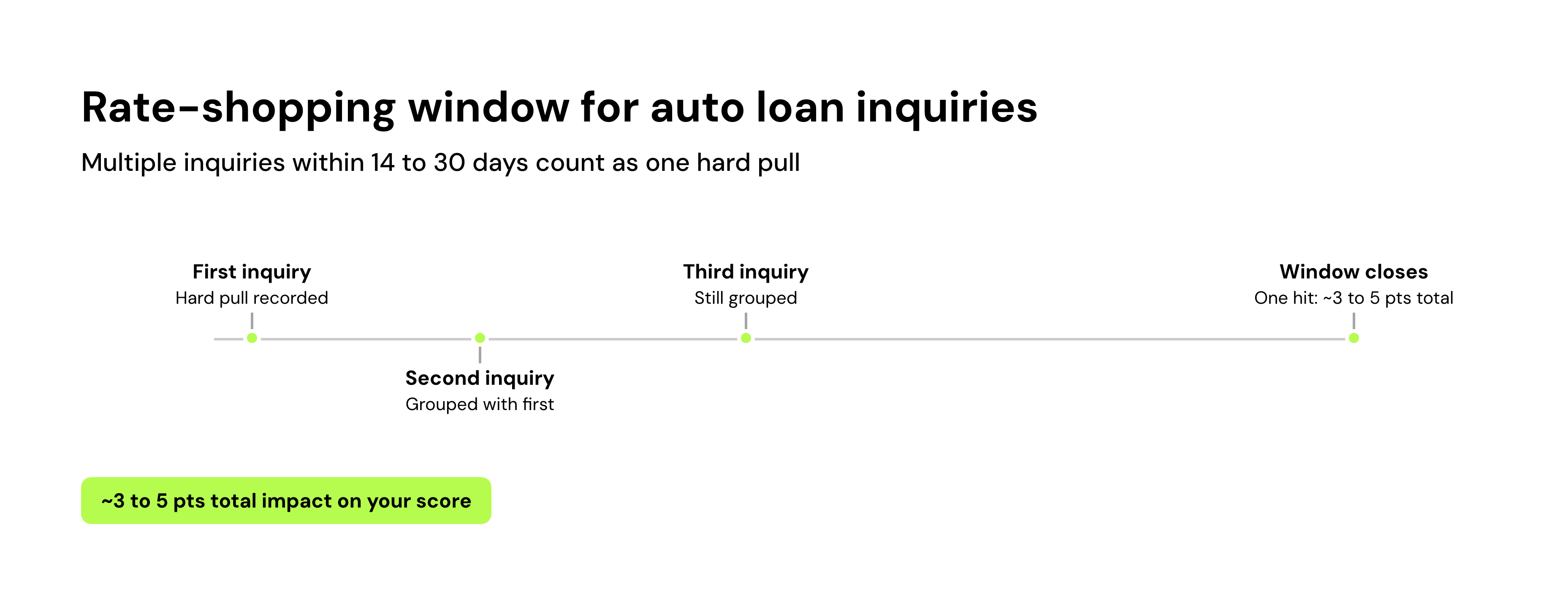
Use the grace period to shop rates with multiple lenders. Consider applying with:
- Banks
- Credit unions
- Online lenders
- Dealership financing departments
Choose the lender that offers you the best terms. The goal is to save as much money as possible in interest.
Submit your application
Most lenders allow you to submit your application online. You should be able to complete an application in a few minutes. Carefully review everything before finalizing the document so that you can reduce the risk of processing delays.
Online lending platforms will typically give you an instant response, so you'll know if you are pre-approved and how much you are eligible to borrow.
What does car loan pre-approval mean?
A loan pre-approval means that a lender has gone through your financial information and agreed to lend you a specific amount, subject to certain conditions. The pre-approval notice you receive should outline how much you can borrow, the maximum loan term, and how much your monthly payments will be.
A pre-approval is not a final loan agreement. However, you should be able to get the offer finalized, as long as you buy a vehicle within your budget and provide accurate financial information to the lender. Getting pre-approved is a great way to simplify your car-buying experience and set a realistic budget.
Pre-approval vs. pre-qualification for an auto loan?
These two terms sometimes get used interchangeably, but they aren't the same. A pre-qualification is:
- Based on self-reported information
- Usually involves a soft credit check
- Provides a rough estimate of what you might qualify for
Lenders sometimes send pre-qualification information to prospective borrowers to encourage them to fill out an application or look into their loan options.
On the other hand, a pre-approval requires you to fill out a formal application. The lender will run a hard credit check and ask you to provide several documents. Since a pre-approval is more thorough, the information you receive is reliable and accurate.
How car loan pre-approval affects your credit
When you apply for pre-approval, lenders will typically perform a hard credit check. A new inquiry can temporarily lower your score by a few points. However, you can inquire about multiple auto loan options in a short period and only experience one negative mark on your credit report. The impact is also very small and temporary.
If you're concerned about your credit before applying, focus on making on-time, consistent payments. This will help you build credit and boost your score. For example, Kikoff offers tools that report on-time rent and verified utility payments to the credit bureaus, which adds to your positive history.
What to do after you get pre-approved
After you get your pre-approval letter, start shopping for vehicles in your budget. You can do a lot of research online and narrow down your options. When you've found a few vehicles you like, call the dealership or head in to take a test drive.
Once you've chosen a vehicle, give your pre-approval information to the dealership. Your lender will ask you to provide some information about the vehicle so they can finalize your loan. Walking in with a pre-approval shows the salesperson that you are serious and makes the process quicker.
Conclusion
If your score isn't the best and you are worried about getting pre-approved for an auto loan, platforms like Kikoff can help. Our platform empowers consumers to build or improve their credit by creating positive, reported payment activity.
Frequently Asked Questions
About the editor

Article Sources
Disclaimer: The information provided in this blog post is meant for informational purposes only and does not constitute financial advice.