



Most people set up direct deposit and automatic withdrawals without thinking twice about their credit.
They're convenient, reliable tools for managing your paycheck and bills, but a lot of people aren't sure whether they interact with their credit score at all.
The short answer is: it's complicated. Let's jump in.
How direct deposits and automatic withdrawals affect your credit
Direct deposits and automatic withdrawals are banking functions, not credit functions, which means they don't directly impact your credit score on their own.
Your credit score is calculated from activity on credit accounts, be it credit cards, loans, or other tradelines, not from what's happening in your checking or savings account.
That said, both of these tools have indirect relationships with your credit that are worth understanding. How you use them can either protect your credit or quietly put it at risk.
What is a direct deposit?
A direct deposit is effectively an electronic transfer of funds sent directly from a payer, usually an employer or government agency, into your bank account.
Instead of receiving a paper check that you deposit manually, the money lands in your account automatically on payday.
Direct deposits are one of the most common banking features in the US, and lots of banks and financial apps require or incentivize them to unlock premium features or fee waivers.
Does direct deposit affect your credit score?
Direct deposit itself does not affect your credit score.
Your bank doesn't report deposit activity to the three major credit bureaus, Equifax, Experian, or TransUnion, so there's no credit record created when your paycheck hits your account.
This said, direct deposit can indirectly support your credit by making sure funds are available when automatic payments are due. Consistent cash flow is what makes every other responsible credit habit possible.
What are automatic withdrawals?
Automatic withdrawals are scheduled electronic payments that pull funds from your bank account on a recurring basis.
These are mainly used for recurring expenses, be it a mortgage payment, car loan, utility bill, subscription, or credit card minimum.
Every individual who has ever set up autopay for a credit card or loan is already using automatic withdrawals, often without thinking of them that way.
Do automatic withdrawals affect your credit score?
Automatic withdrawals themselves don't get reported to the credit bureaus, but what they're paying for does.
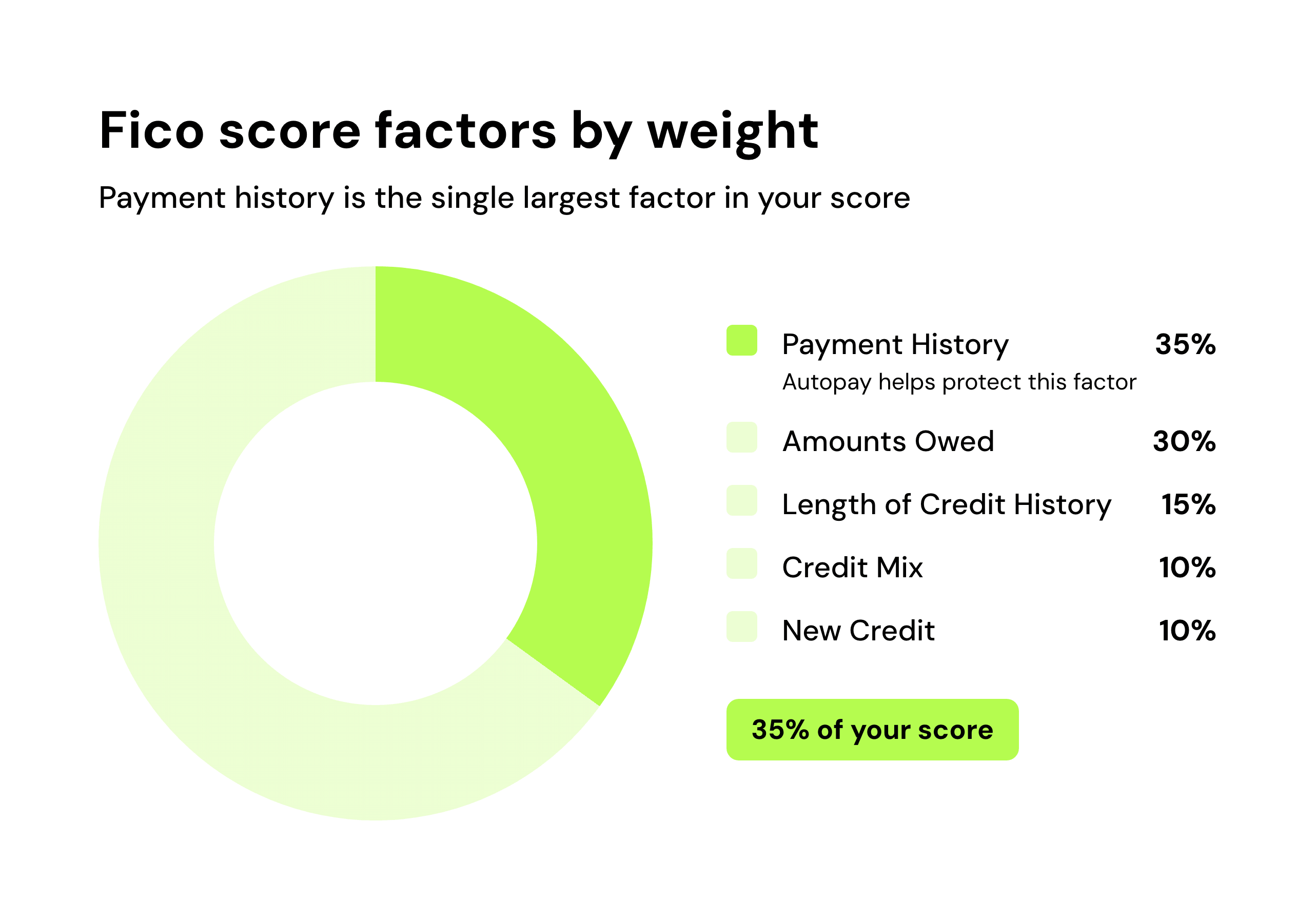
When an automatic withdrawal successfully pays a credit card bill or loan payment on time, that on-time payment gets reported as positive payment history, which is the single most important factor in your credit score at 35%.
This means autopay, when set up correctly, is one of the most reliable ways to build a consistent payment history without relying on memory.
The credit risk hidden in automatic withdrawals
Here's where automatic withdrawals can quietly become a credit problem.
If your bank account doesn't have enough funds to cover an automatic withdrawal when it's due, the payment can fail. A failed payment on a credit account, be it a credit card or loan, can result in a late payment being reported to the bureaus.
Late payments can stay on your credit report for up to seven years and can cause a significant drop in your score, even if the missed payment was accidental.
This is why monitoring your account balance alongside your autopay schedule is so important. Setting up low-balance alerts through your bank is a no-brainer safeguard against this kind of accidental damage.
How autopay can protect and build your credit
Setting up automatic withdrawals for your credit accounts is generally one of the smartest moves you can make for your credit profile.
Payment history makes up 35% of your FICO score, and every on-time payment contributes positively to that factor. Automating those payments removes human error from the equation entirely.
Just make sure you're setting autopay for the full statement balance on your credit cards, not just the minimum payment. Paying only the minimum keeps your utilization high and lets interest accumulate, which can work against your credit over time.
Direct deposit, automatic withdrawals, and credit-building tools
One area where direct deposit has a more direct relationship with credit is through credit-building apps and financial products.
Lots of credit-building platforms, including some that report payments to the bureaus, require a linked bank account with regular deposit activity to verify income or enable autopay for monthly plan payments.
Kikoff, for example, uses on-time monthly payments to report positive payment history to all three major credit bureaus. Setting up automatic withdrawals to cover your Kikoff plan payment each month means you're building credit consistently without ever having to think about it.
What actually does show up on your credit report
Since neither direct deposits nor automatic withdrawals appear on your credit report directly, it helps to know what does.
Your credit report includes activity from credit accounts: payment history on loans and credit cards, balances and utilization on revolving accounts, the age of your accounts, new credit inquiries, and the types of credit you carry.
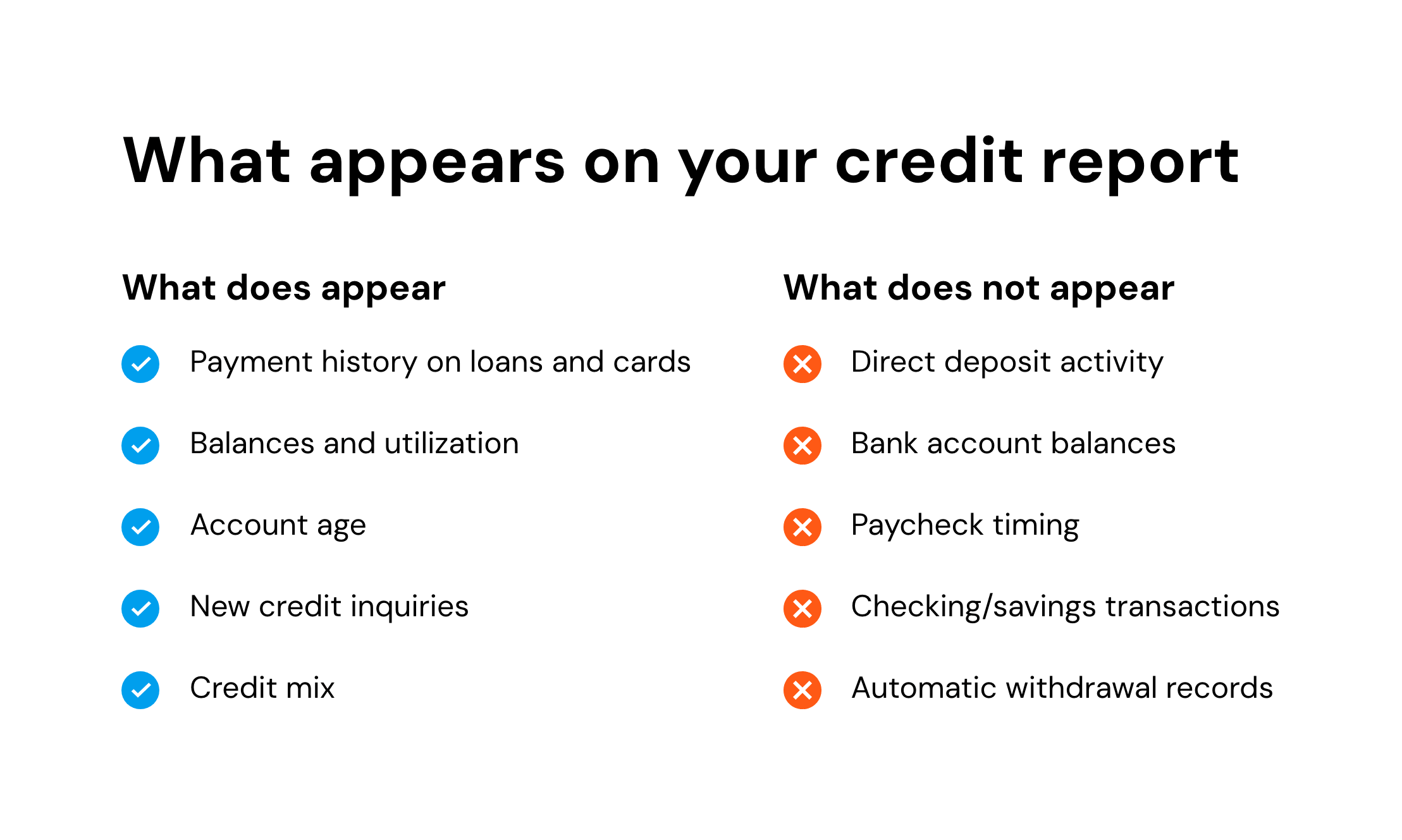
None of that includes your bank transaction history, paycheck timing, or how often money moves in and out of your checking account.
Conclusion
Direct deposits and automatic withdrawals don't show up on your credit report, but they play a real supporting role in your credit health.
Direct deposit keeps your cash flow predictable, and automatic withdrawals make it easy to pay credit accounts on time every month. When a payment fails because of insufficient funds, though, the credit consequences can be serious.
The smartest approach is to automate your credit payments, keep a buffer in your account, and pair those habits with a credit-building tool that's reporting your activity to the bureaus. Start building a positive payment history with Kikoff and let autopay do the rest.
Frequently Asked Questions
About the editor

Disclaimer: The information provided in this blog post is meant for informational purposes only and does not constitute financial advice.