



When you're carrying multiple debts, the order in which you pay them off matters more than most people realize.
Two of the most widely used debt repayment strategies are the debt snowball and the debt avalanche. Both will get you out of debt, but they take different approaches and produce different outcomes along the way. In this post, we'll break down exactly how each method works, compare them side by side, and help you figure out which one fits your situation.
Let's jump in.
Debt repayment strategies: snowball vs. avalanche
The core difference between the two methods is what you prioritize first: the smallest balance or the highest interest rate. That single distinction shapes your entire repayment experience.
The debt snowball method
The debt snowball method is a debt repayment strategy where you pay off your debts from smallest balance to largest, regardless of interest rate.
Here's how it works in practice. You make the minimum payment on every debt you carry, then direct any extra money toward the account with the smallest balance. Once that debt is paid off, you roll the amount you were paying on it into your payment on the next smallest balance, and so on. The "snowball" name comes from this compounding momentum, where each paid-off debt frees up more cash to attack the next one.
The main appeal is psychological. Every individual who has ever felt overwhelmed by a long list of debts knows how discouraging it can be, and the snowball method generates quick wins early that keep motivation high. Paying off a small debt completely, even if it's not the most mathematically efficient move, paints a picture of real progress and makes the process feel manageable.
Here's a breakdown of a simple snowball example:
- Debt A: $500 balance, 18% APR
- Debt B: $3,000 balance, 12% APR
- Debt C: $8,000 balance, 22% APR
Using the snowball method, you'd attack Debt A first, then Debt B, then Debt C, regardless of the interest rates attached to each.
The debt avalanche method
The debt avalanche method is effectively a debt repayment strategy where you pay off your debts from highest interest rate to lowest, regardless of balance size.
The mechanics are the same as the snowball: make minimum payments on everything, then direct extra funds toward one priority debt. The difference is that priority is the debt costing you the most in interest, not the one with the smallest balance. Once the highest-rate debt is gone, you roll those payments into the next highest rate, and continue down the list.
The avalanche method is the mathematically optimal approach. By eliminating your most expensive debt first, you reduce the total interest you pay over time, which means more of your money goes toward principal rather than interest charges.
Here's a breakdown of the same debts approached with the avalanche method:
- Debt C: $8,000 balance, 22% APR (first priority)
- Debt A: $500 balance, 18% APR (second priority)
- Debt B: $3,000 balance, 12% APR (third priority)
The order flips entirely from the snowball because the focus is on rate, not balance.
Snowball vs. avalanche: a side-by-side comparison
Both methods share the same basic structure but produce different results depending on your debt profile and personality.
Which saves more money?
The avalanche method almost always saves more money in total interest paid.
Because you're eliminating the highest-rate debts first, interest accrues more slowly on your remaining balances. Over a multi-year repayment timeline, this difference can be significant, sometimes hundreds or even thousands of dollars depending on the size and rates of the debts involved. This said, the actual savings depend on how different your interest rates are from each other. If all your debts carry similar rates, the gap between the two methods narrows considerably.
Which gets you debt-free faster?
In most scenarios, the avalanche method also results in a shorter total repayment timeline.
Less interest paid means more of each payment chips away at principal, which accelerates the payoff. The difference in total time to debt freedom is usually modest, often just a few months, but it compounds meaningfully on larger debt loads.
Which is easier to stick with?
This is where the snowball method generally has the edge.
Research in behavioral economics has consistently shown that people are motivated by visible progress and small wins, even when those wins aren't the most efficient choice. Paying off a debt completely, even a small one, creates a sense of momentum that lots of people find super valuable for staying on track. The avalanche method, by contrast, can require months or years of payments before a single debt is fully eliminated, which can make the process feel thankless even when the math is working in your favor.
For every individual who has tried and abandoned a debt repayment plan before, the snowball's motivational structure is worth considering seriously.
What if the balances and rates are mixed?
Real debt portfolios are rarely clean. You might have a small debt with a high rate, or a large debt with a low rate, and the "right" method can get less obvious.
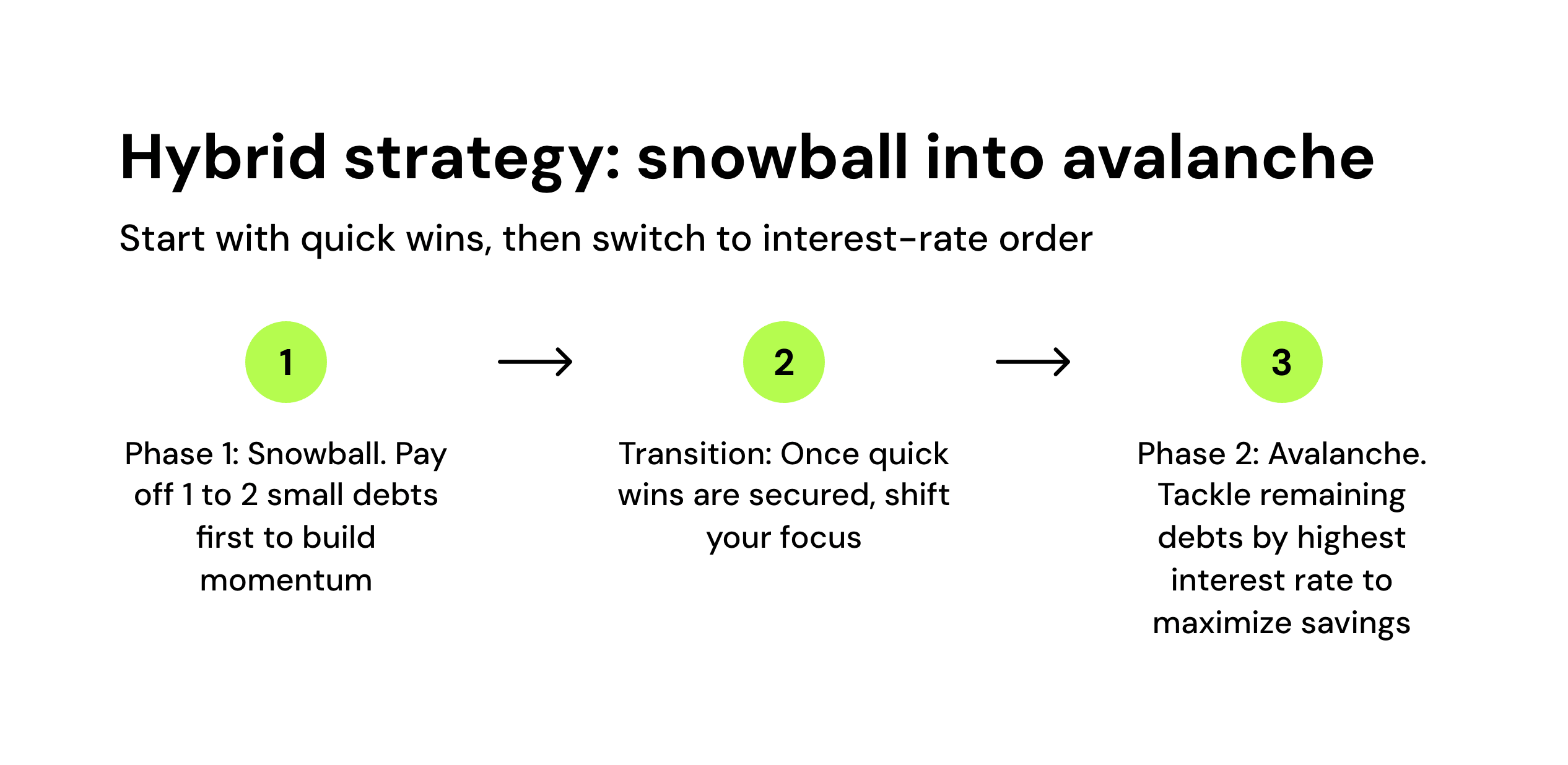
In cases where your smallest balance also carries your highest interest rate, the two methods agree: pay it off first. When they conflict, the choice usually comes down to whether you prioritize math or motivation. Some people find a hybrid approach useful, where they knock out one or two small debts to build confidence, then switch to the avalanche method once they've built momentum.
How to choose the right strategy for you
There's no universally correct answer between the two methods. The best debt repayment strategy is the one you'll actually follow through on.
Choose the snowball if...
The snowball method is generally the better fit if you're carrying lots of smaller debts, feel overwhelmed or discouraged by your debt situation, or know from experience that you need early wins to stay motivated.
It's also a smart starting point if you're new to structured debt repayment and want a simpler framework that doesn't require calculating interest rates across multiple accounts. The psychological benefit of checking a debt off your list entirely is real, and for many people it's the single most important factor in whether they stay consistent.
Choose the avalanche if...
The avalanche method is usually the better fit if you're primarily motivated by efficiency, your debts carry meaningfully different interest rates, or you have a longer repayment timeline where the interest savings will really add up.
It's also a no-brainer if your smallest balance happens to carry the highest rate, since both methods would point you in the same direction anyway. If you're comfortable tracking the math and don't need quick wins to stay on course, the avalanche is basically the more financially optimal path by default.
Consider a hybrid approach
Some people do best by combining elements of both strategies.
A common approach is to use the snowball to eliminate one or two small debts quickly, then switch to the avalanche for the remaining balances. This gives you the motivational boost of early payoffs without fully sacrificing the interest savings of the avalanche method. There's nothing wrong with adapting the framework to what actually keeps you moving.
Other factors to keep in mind
Choosing a repayment method is just one part of a successful debt payoff plan. A few other considerations can make a meaningful difference.
Making more than the minimum
Both methods only work as designed if you're directing extra money toward your priority debt, not just paying minimums across the board.
Paying only the minimum on high-interest debt means a large portion of each payment goes to interest rather than principal, and the payoff timeline stretches out dramatically. Even a modest extra payment each month, be it $25, $50, or $100, accelerates the process significantly and reduces total interest paid.
Avoiding new debt during repayment
Adding new debt while paying off existing balances is one of the most common ways repayment plans go sideways.
Every new balance added to the list resets some of the progress you've made and can shift your repayment timeline considerably. If possible, pause new credit card spending during an active repayment push, or limit it to amounts you can pay off in full each month to avoid carrying a new balance.
Considering balance transfers or consolidation
If you're carrying high-interest credit card debt, a balance transfer to a card with a 0% introductory APR period or a debt consolidation loan at a lower rate can reduce the interest you're paying, which makes either repayment method more effective.
Luckily, these tools are generally more accessible once you have some positive credit history established. Just make sure you understand the terms, including any balance transfer fees and what rate kicks in after the promotional period ends, before making the move.
How debt repayment affects your credit
Paying down debt has a direct positive effect on your credit utilization rate, which is calculated as your total revolving balances divided by your total revolving credit limits.
Credit utilization makes up roughly 30% of your credit score, so reducing your balances is one of the fastest ways to see movement in your credit profile. As you work through either repayment method, you'll likely notice your credit score responding, especially as balances on revolving accounts like credit cards drop below the 30% utilization threshold.
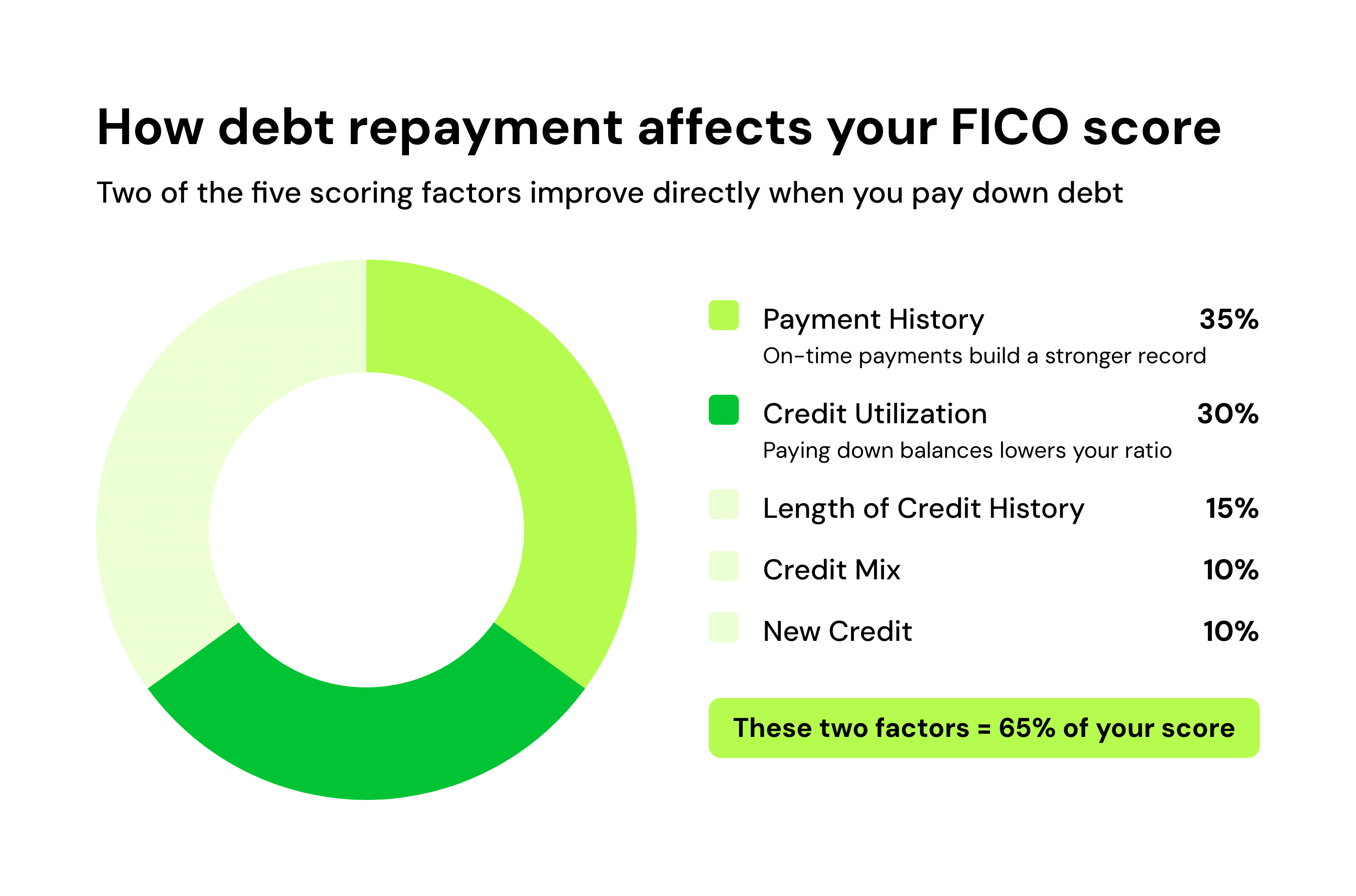
Building strong payment history alongside debt repayment is equally important. Every on-time payment gets reported to the credit bureaus and adds to the payment history factor, which makes up 35% of your score. Apps like Kikoff are designed to help you build that positive payment history consistently, which is especially useful if you're rebuilding credit at the same time you're paying down debt.
Conclusion
The debt snowball and debt avalanche are both proven strategies for paying off debt, and the difference between them comes down to what matters more to you: maximum efficiency or maximum motivation.
If you need early wins to stay on track, start with the snowball. If you want to minimize total interest paid and have the discipline to stay the course on larger debts first, the avalanche is likely your better path. Either way, the most important thing is picking one and committing to it.
As your debt comes down and your credit profile strengthens, Kikoff can help you build positive payment history alongside your repayment progress, with no hard credit check required to get started.
Frequently Asked Questions
About the editor

Disclaimer: The information provided in this blog post is meant for informational purposes only and does not constitute financial advice.