.jpg)



Your card payment is due, and covering it would leave you short on rent. A friend offers to make the payment and let you pay them back later. Card issuers can accept a payment from someone other than the cardholder, as long as that person has your account details. But the debt stays in your name, so making sure the payment arrives on time is still on you.
Can someone else pay your bill? Usually, yes
It isn’t standard practice, but it is possible, so check with your card issuer first.
The person paying will need:
- Your card issuer’s name
- Your account number
- Your amount due or minimum payment
Read more >> What Happens if You Don't Pay Off Your Credit Card?
How they can send payment
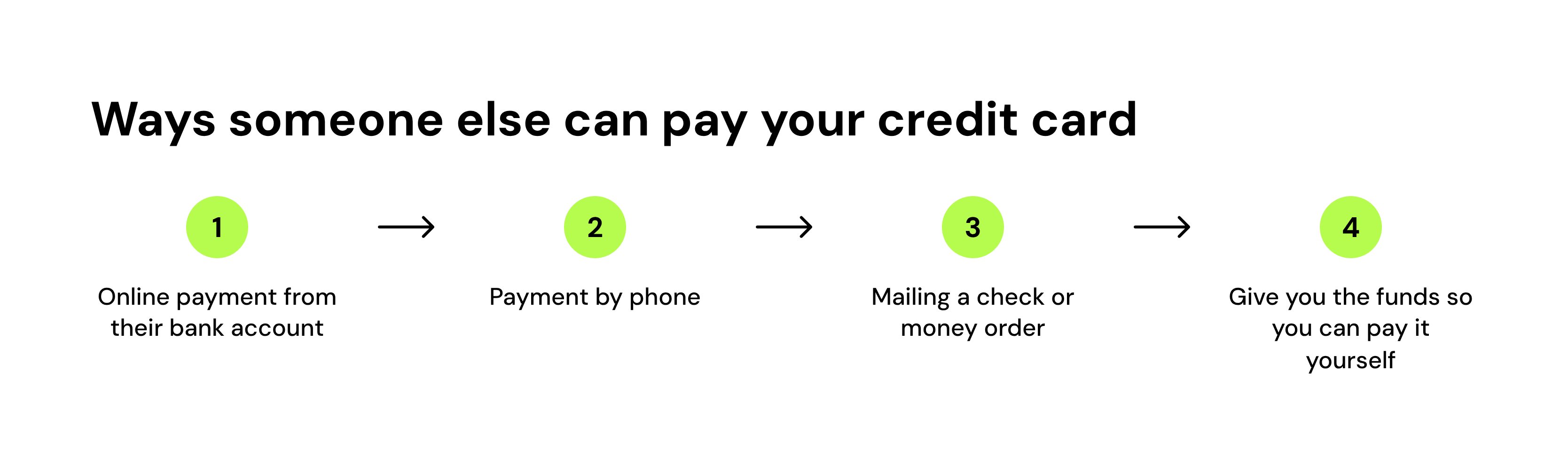
Online payment from their bank account
There are two main ways someone else can pay your card statement with a bank account — both online:
- Log in to their bank account and add the credit card issuer as a payee.
- Log in to your card account and add their banking information.
The second option means sharing your login, which gives that person full access to your account. If you go that route, change your password after.
Payment by phone
To pay by phone, that person will need to know your account number and the amount due.
For security, your issuer may ask the person paying to confirm the last four digits of your Social Security number, or a password or security answer you’ve previously set up.
Mailing a check or money order
Many issuers still accept mailed checks or money orders to a payment address on your statement. To avoid a late payment, ask the person paying your bill to send it well ahead of the statement due date.
Giving you the funds to pay it yourself
For a third party, paying online, paying by phone, and mailing a payment all come with their own obstacles. Depending on the circumstances, it may be easier for them to give you the money to pay the bill yourself. There are a few ways they can do this:
- Sending money via Zelle, PayPal, Venmo, or a similar app
- Transferring money directly from their bank account to yours
- Writing you a check that you then deposit into your bank account
If the person isn’t sure how to get the funds to you, talk them through the available options and decide on one that works for both of you.
Read more >> When Is the Best Time to Pay Your Credit Card Bill?
What happens if they don’t pay
Even if someone agrees to pay your bill, you’re the one ultimately on the hook for it.
To avoid a late payment, check your card issuer’s app or online account to confirm the payment posted on or before the due date. If it hasn’t, make the payment yourself, if you can.
If neither of you can cover it, call the number on the back of your card before the due date and ask what options the issuer offers. The National Foundation for Credit Counseling (NFCC) can connect you to free or low-cost counseling at 800-388-2227, if you need help.
Read more >> Which Debt Should I Pay Off First?
If mailing a check, send it 7 to 10 days early. Issuers credit the payment when it arrives, not when it was mailed. Put your full account number on the memo line, or it may sit in exception processing. And check your card account a few days before the due date, not after, so there's still time to pay another way if it hasn't posted. An online payment from their bank account is faster and easier to verify.
Bottom line
Someone else can usually pay your credit card bill, but the account and the payment record stay yours, so confirm the payment posts before the due date.
Your card payment shows up on your credit report. Your rent payment, often your biggest bill, usually doesn't. Once rent is back on track, Kikoff Rent Reporting adds your on-time rent payments to your Equifax and TransUnion reports. It’s included in plans starting at $5 a month.
Frequently Asked Questions
Disclaimer: The information provided in this blog post is meant for informational purposes only and does not constitute financial advice.