


.jpg)
.jpg)



Bankruptcy is generally a last resort, but it may offer a way forward when your debts have become unmanageable. It can also make borrowing harder when you need a car to get to work or take care of daily responsibilities. Can you get a car loan after bankruptcy? Yes, but approval, cost, and any restrictions on new debt depend on your situation.
Can you get a car loan after bankruptcy?
An auto loan is secured by the vehicle. If you stop making payments, the lender may repossess the car. That collateral may help you qualify, but it does not assure approval or reasonable terms.
Lenders also look at your credit history, income, existing debts, down payment, and the amount you want to borrow when setting auto-loan terms, according to the Consumer Financial Protection Bureau (CFPB). A bankruptcy may affect the offers you receive even after your case ends because it can remain on your credit report for years. Loan offers vary from person to person.
How bankruptcy affects your ability to get an auto loan
The two common types of consumer bankruptcy work differently. Chapter 7 may discharge eligible debts after a relatively short case. Chapter 13 involves a repayment plan that usually lasts three to five years. Your stage in the process matters when financing a car.
Chapter 7 bankruptcy
Chapter 7 can discharge many unsecured debts, such as credit-card balances. A discharge means you are no longer personally required to pay those debts. It does not erase every obligation, and a trustee may sell nonexempt property to pay creditors. Exemptions determine what property you can protect and depend partly on state law, as the U.S. Courts explain.
After your discharge, you can ask lenders about a car loan. Whether you qualify, how much you can borrow, and what it costs will depend on your application and each lender’s standards. Finishing the case does not immediately restore your old borrowing options.
If you need a car soon, find out what you can afford rather than assuming you must wait a fixed number of months. If you have time, save a down payment and build positive payment history before shopping again. Waiting does not assure a lower rate.
Chapter 13 bankruptcy
Chapter 13 is sometimes called a wage earner’s plan. It lets people with regular income repay some or all of their debts through a plan that typically lasts three to five years. It can allow you to keep property while making the required payments. After you complete the plan and meet the other requirements, eligible remaining debts may be discharged.
Getting a car loan while the plan is active can be more complicated. You may need your trustee’s or the court’s approval before taking on new debt, and the procedure varies by bankruptcy court. For example, New Mexico’s local rule permits trustee approval for some new consumer debt without a court order, while other requests may require a motion to the court.
Suppose your car breaks down and you need a replacement to get to work. Tell your bankruptcy attorney or trustee what happened, what the replacement would cost, and how the payment would fit your plan. That need may be evaluated differently from an optional upgrade, but the decision depends on your case. Speak with your attorney or trustee before signing.
After your Chapter 13 case is complete, you can shop without that active-plan approval process. Lenders will still review your financial situation under their own rules.
How to get a car loan after bankruptcy
The first offer may not be the best one. These steps can help you evaluate approval and cost:
- Set a realistic budget. Add insurance, fuel, registration, maintenance, and repairs to the proposed loan payment. A lender may approve more than you can comfortably afford.
- Check your credit reports. Confirm that discharged debts and other accounts are reported accurately. You can request reports from each nationwide credit bureau through AnnualCreditReport.com. You can dispute errors, but accurate bankruptcy information generally remains.
- Compare lenders. Ask banks, credit unions, and dealerships about available financing. If you are still in Chapter 13, first confirm what your case requires before applying for or accepting new debt. A preapproval gives you terms to compare with dealer financing.
- Consider a larger down payment or less expensive car. Borrowing less can reduce your payment and total interest. The CFPB notes that a larger down payment may also affect the rate a lender offers. Keep cash available for other essential expenses rather than using all your savings on the car.
- Think carefully about a cosigner. A trusted person with stronger credit may help you qualify or receive different terms. But the CFPB explains that your cosigner is responsible for the loan if you cannot pay, and missed payments can hurt both of your credit histories.
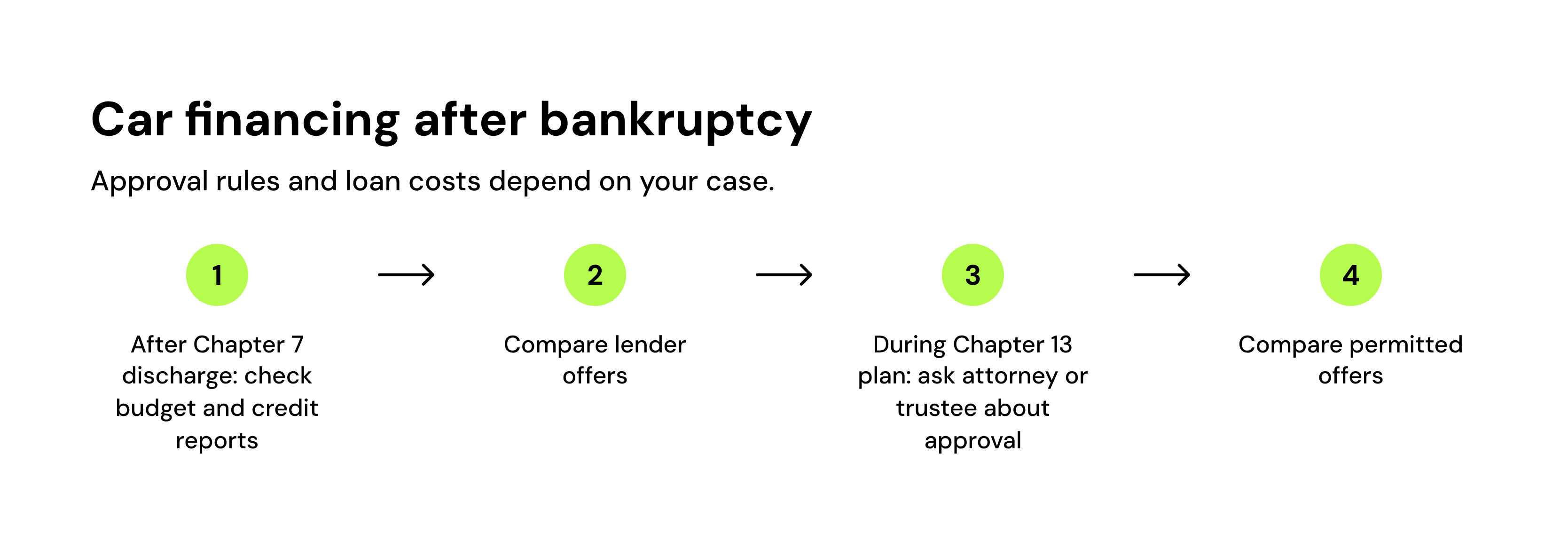
Compare each offer’s annual percentage rate (APR), term, amount financed, fees, monthly payment, and total cost. A long term may lower the monthly payment while increasing total interest, as the CFPB’s comparison guide explains.
Be cautious with buy here, pay here dealerships. The CFPB says their rates tend to be higher than other lenders’ rates, and some report late payments without reporting on-time payments. If you consider one, ask for the full loan terms and for written confirmation of whether it reports positive payment history. Compare that offer with other financing before you sign.
Read more >> How to Get an Auto Loan With Bad Credit
How to build credit after bankruptcy
Seeing a bankruptcy on your report can be discouraging, but you can start adding positive information. Begin by paying existing obligations on time and checking your reports for errors.
If you do not have an existing credit account, consider a secured credit card or another account that reports your payment activity to the major credit bureaus. A secured card usually requires a deposit. Check its fees, use it only for purchases you can afford, and pay the statement balance in full to avoid interest. The CFPB lists these as practical ways to establish a positive credit record.
You could ask someone you trust about becoming an authorized user on their credit card. Unlike a cosigner, an authorized user generally is not responsible for repayment, according to the CFPB. The account may appear on your report, but that depends on the issuer’s reporting and does not assure a better auto-loan offer.
If eligible, Kikoff’s Credit Account offers another way to add reported account activity. There is no credit check to sign up, and account activity is reported to Equifax, Experian, and TransUnion. Review the current terms and make sure any payment fits your budget. Positive reporting can help you establish credit history, but it does not assure a particular score or car-loan rate.
Read more >> How to Build Credit After Bankruptcy
Bottom line
Getting a car loan after bankruptcy is possible. What varies is the cost, the lender’s requirements, and, during an active Chapter 13 plan, the process for taking on new debt. If your car is essential, ask your attorney or trustee about any required approval, then shop for a payment you can sustain.
A larger down payment, a cosigner, or a more affordable vehicle may give you more options. If you can wait, use that time to save, build positive payment history, and compare offers again.
Frequently Asked Questions
Article Sources
Disclaimer: The information provided in this blog post is meant for informational purposes only and does not constitute financial advice.