


.jpg)
.jpg)


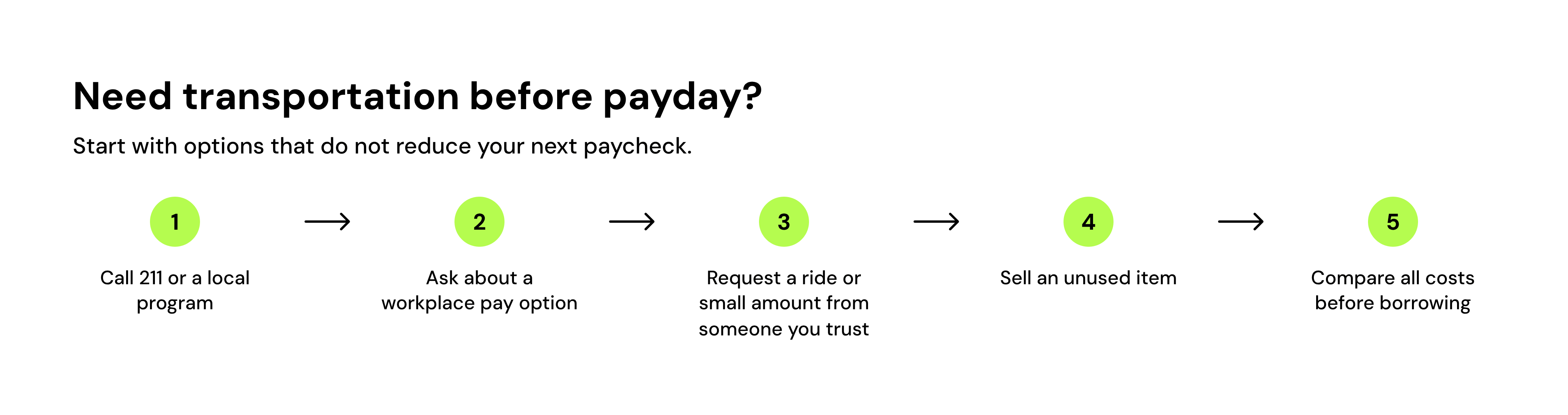
If you need gas today, start with options that do not create a new repayment obligation. Call 211 and ask about local transportation help, gas vouchers, bus passes, or volunteer-driver programs. If that does not solve the problem, consider workplace options or help from someone you trust before turning to short-term credit.
The best choice depends on how quickly you need transportation, what is available where you live, and whether you can afford any repayment from your next paycheck.
5 ways to get emergency gas money or transportation help
1. Call 211 and local assistance programs
Call 211 or search for your local 211 and ask specifically about transportation assistance. Depending on your area, local charities, community action agencies, workforce programs, or religious organizations may offer gas vouchers, fuel cards, bus passes, or rides. Help is not available everywhere, so ask what is open now and what documents you need.
If you have children and are experiencing financial hardship, check with your local Temporary Assistance for Needy Families office. TANF is state-run, so eligibility and available assistance vary by state.
2. Ask your employer about an advance or earned wage access
Your employer may offer a payroll advance or an earned wage access program that lets you receive part of the pay you have already earned. Ask HR or your payroll department whether an option is available and whether your employer covers the cost.
Before accepting, confirm:
- How much you will receive
- Any transfer, subscription, or optional tip charges
- When and how repayment occurs
- How much will be left in your next paycheck
These details matter even when the charge looks small. In a study of employer-partnered products, the Consumer Financial Protection Bureau found that expedited transfers generated most of the fee revenue and repeat use was common.
3. Ask someone you trust for a small, specific amount
If you only need enough fuel for work, school, or an appointment, ask a friend or family member for that exact amount. They may be able to send a gas-station gift card or meet you at the pump instead of lending cash.
Be clear about whether the help is a gift or a loan. If you plan to repay it, agree on an amount and date you can realistically meet.
4. Sell an item you no longer need
Selling unused electronics, tools, clothing, or household items can raise cash without creating debt. A local resale shop may pay immediately, while an online marketplace may take longer.
Meet buyers in a well-lit public place, avoid sharing unnecessary personal information, and do not accept checks or overpayments from strangers. Consider selling before pawning. A pawn loan uses your property as collateral, and you can lose the item if you cannot repay the principal, interest, and fees on time.
5. Find another way to cover the essential trip
If the goal is getting to work or an appointment, you may not need to buy gas. Ask about a coworker carpool, employer shuttle, reduced-fare transit, or a ride from someone you trust. Compare the total cost with the amount of fuel you would need.
If you have Medicaid and need transportation to a covered medical service, contact your health plan or state Medicaid office. Medicaid programs must assure necessary transportation to and from covered providers, although scheduling procedures vary.
Read more >> How to Get Emergency Money
What counts as a gas emergency?
A gas shortage becomes urgent when it prevents you from meeting an essential need, such as:
- Getting to work or a job interview
- Taking a child to school or child care
- Reaching a medical appointment
- Getting home safely
Focus first on the trip that protects your health, safety, or income. If several trips are coming up, calculate the smallest amount of fuel you need until your next deposit instead of automatically filling the tank.
Be careful when borrowing for gas
Cash advance apps, payday loans, and pawn loans can turn a small fuel shortage into a larger budget problem. Review every charge, the repayment date, and the withdrawal method before accepting money.
Payday loans are especially expensive. The CFPB says a common charge is $15 for every $100 borrowed, which is almost a 400% annual percentage rate for a two-week loan.
A quick advance reduces the money available from a future paycheck. Before borrowing, write down the full repayment amount and make sure you can still cover rent, food, utilities, and transportation when payment is due.
If repayment would leave you short again, look for a ride or local assistance instead. If repeated short-term borrowing is straining your budget, the National Foundation for Credit Counseling can connect you with a certified nonprofit credit counselor.
Read more >> How to Get Your Paycheck Early
How to avoid running out of gas money again
Once the immediate problem is handled, a simple fuel plan can make the next pay period easier:
- Track fuel spending for a month to find a realistic weekly amount.
- Move a small amount into a separate fuel category each payday.
- Combine errands and remove unnecessary trips where practical.
- Check tire pressure and follow your vehicle manufacturer’s maintenance schedule.
- Keep a backup list of coworkers, transit routes, and local assistance contacts.
If your fuel budget is consistently short, look at the full gap between income and essential expenses. Cutting one optional purchase may help, but an ongoing shortfall may require a broader change, such as adjusting bill due dates, applying for benefits, or seeking additional income.
Read more >> How to Save Money Fast on a Low Income
Bottom line
If you need gas today, start by calling 211, checking local programs, and asking about a ride or workplace option. Treat cash advances and other short-term borrowing as a last resort after you understand the full cost and effect on your next paycheck.
Kikoff is not a source of emergency gas money. Once the immediate need is covered, building positive payment history may help you create more financial options over time. Kikoff’s free Credit Account reports on-time payments to all three major credit bureaus, with no hard credit check to sign up.
Frequently Asked Questions
Article Sources
Disclaimer: The information provided in this blog post is meant for informational purposes only and does not constitute financial advice.