
When you cosign on your child’s car loan, you aren’t a backup. You owe the full balance if they don’t pay, and the lender can come to you without trying your kid first.
That’s a big commitment on any car. New cars average $50,562, according to Kelley Blue Book.
Before you sign, here’s what you’re agreeing to, and two ways to help that keep your name off the loan.
What happens when you cosign a car loan for your child?
When you cosign a loan, you agree to pay for the full amount of the loan if the primary borrower cannot. This means that if the primary borrower defaults, the lender can come after you for payment, in many states without first trying to collect from your child.
If someone’s income or credit score isn’t high enough to qualify for a car loan, they may ask someone to cosign. The lender will review both people’s incomes and credit scores before making a decision.
Cosigning is as legally binding as taking out a loan for yourself. You can’t simply remove yourself from the loan if you change your mind later.
Cosigning for your child may help them secure a better interest rate or qualify for a loan that they otherwise wouldn’t.
Read more >> How to Remove Yourself as a Cosigner on a Loan
Your credit is on the line
If every payment arrives on time, the loan can sit on your report without hurting you. But life happens. Your child could get sick or lose a job and fall behind despite their best intentions.
Missed payments hit your credit report too
Because the loan appears on both of your credit reports, a late payment can show up on both.
You're responsible for the full balance if they stop paying
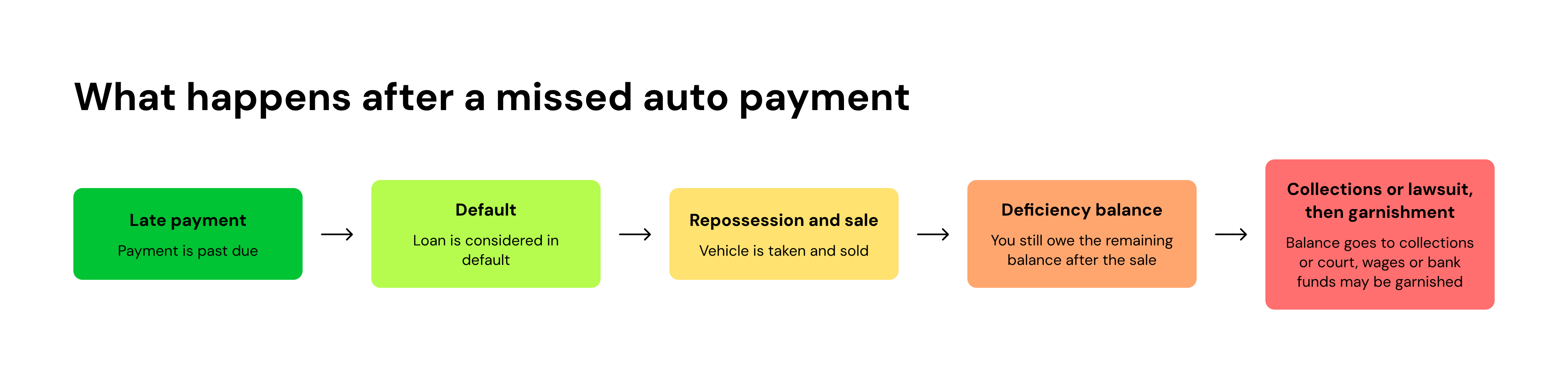
The credit damage from a missed payment can be significant enough on its own, but it gets worse if your child stops paying altogether. When a primary borrower stops paying back the loan, the lender can start pursuing you.
You might start getting regular calls and letters from the lender. Once the loan is in default, which your contract defines and can mean a single missed payment, the lender can repossess the car. In most states, it can do this without notice or a court order.
After a repossession, the lender usually sells the car. If the sale doesn’t cover what’s owed plus fees, the difference is called a deficiency balance, and you’re responsible for it. When that happens, the remaining balance could be sent to collections, where it causes more credit damage.
From there, the lender may file a debt lawsuit against you. If they win the lawsuit, they could garnish your wages or take money from your bank account, within limits set by federal and state law.
Facing a lawsuit or wage garnishment? Get help before your court date. Start with the free options:
• Legal aid. Free legal help if you qualify. Find an office near you at LawHelp.org.
• Nonprofit credit counseling. The National Foundation for Credit Counseling (NFCC) offers free or low-cost counseling and can help you work out a plan with the lender. Call 800-388-2227.
• A licensed attorney. Garnishment rules vary by state, so an attorney can tell you which protections apply where you live. Your state bar’s lawyer referral service can connect you with one.
It counts as your debt when you apply for credit
A cosigned loan shows up on your credit report as your debt. When you apply for a mortgage or another loan, lenders count that payment toward your debt-to-income (DTI) ratio, which is the share of your monthly income that goes to debt payments. A higher DTI can mean a higher rate or a smaller loan.
It can strain your relationship
As a cosigner, you’re responsible for payments you can’t see. If money gets tight for your child, the loan can become one more thing between you. Two steps help: agree up front on what happens if a payment is going to be late, and ask the lender in writing to tell you if one is missed. Some lenders will also send you copies of the monthly statements.
Read more >> How Many Payments Can You Miss Before the Car Is Repossessed?
Alternatives to cosigning a car loan for your child
If you’re looking to help your child buy a car but want to avoid the liabilities that come with cosigning, you have other options:
Help them build credit first
If your child’s credit is the reason they need a cosigner, the longer-term fix is credit in their own name, built before they apply.
Start with their free credit reports, available weekly at AnnualCreditReport.com, so you both know where they stand. If you add them as an authorized user on your card, ask the issuer first whether it reports authorized users to the credit bureaus. Your child generally isn’t responsible for the debt, but you are responsible for every charge they make.
Make a larger down payment instead
A larger down payment can help your child qualify for better terms. If you want to help with money directly, you can put it toward their down payment.
Your name won’t be on the loan, so you won’t have to worry about credit damage if your child stops making payments. The tradeoff is that the money is a gift. If the car is repossessed, you won’t get it back.
Read more >> How to Save Up for a Car
Bottom line
Cosign only if you could cover the whole loan yourself. If you couldn’t, a bigger down payment helps without putting your name on the debt.
Either way, your child’s own credit decides the rate they’re offered, and they can start building it months before they shop. Kikoff’s Credit Account reports on-time payments to Equifax, Experian, and TransUnion, with no credit check to sign up. Plans start at $5 a month.
Frequently Asked Questions
Article Sources
Disclaimer: The information provided in this blog post is meant for informational purposes only and does not constitute financial advice.