






A lower interest rate on a personal loan can save you hundreds or even thousands of dollars over the life of the loan. Lenders set rates based on your financial profile, so it’s important to pay attention to how your money life might look to someone deciding whether to let you borrow from them.
Comparing lender offers can help you get a lower rate on a personal loan, but don’t forget to build a stronger credit profile, lower your debt-to-income ratio and consider loan terms that reduce the lender’s risk.
How to get a lower interest rate on a personal loan
Personal loan interest rates aren’t random. Lenders evaluate how likely you are to repay the loan and price it accordingly. The less risk you present, the more likely you are to qualify for a lower rate. These seven strategies can help:
1. Improve your credit score before applying
Your credit score is one of the biggest factors affecting your interest rate. If you have time before applying for a loan, consider strengthening your credit profile by1:
- Making your payments on time
- Paying down credit card balances
- Keeping old credit accounts open when appropriate
- Avoiding multiple new credit applications in a short period
- Adding a positive payment history to your credit profile with Kikoff
Even waiting a few months before applying could make a difference if you’re actively building positive payment history and lowering your credit utilization.
2. Compare lender APRs
Each lender uses its own underwriting model, which means the same borrower could receive different loan offers. Rather than accepting the first offer you receive, shop around.
Consider getting prequalifed with three to five lenders, including banks, credit unions, and online lenders, to compare annual percentage rate (APR). APR is good comparison because it includes total loan costs2, allowing you to compare loans side by side. Prequalification usually involves a soft credit inquiry which won’t impact your credit score.
3. Choose a shorter loan term
Shorter repayment terms often come with lower interest rates because the lender is taking on less long-term risk. For example, a three-year loan might have a lower rate than a five-year loan.
While a shorter loan term can reduce your total interest costs, though, it usually means higher monthly payments. Make sure the payment comfortably fits your budget before choosing a shorter repayment period.
4. Add a co-signer
If your credit history or income makes it difficult to qualify for the best rates, adding a qualified co-signer might help. A co-signer with strong credit and a stable income can reduce the lender’s risk, which can lead to a lower interest rate.
However, co-signing is a serious commitment. If you miss payments, your co-signer becomes responsible for the debt, and late payments can affect both of your credit histories3.
5. Get a secured loan
Some lenders offer secured personal loans backed by collateral, such as a savings account or vehicle. Collateral reduces lender risk because they have an item of value they can seize to potentially recuperate some of their losses if you default on the loan.
You might get a lower interest rate on a secured loan than an unsecured loan. However, if you don’t make payments, the lender can take your collateral, so you’re risking something that you can’t afford to lose.
6. Reduce your debt-to-income ratio
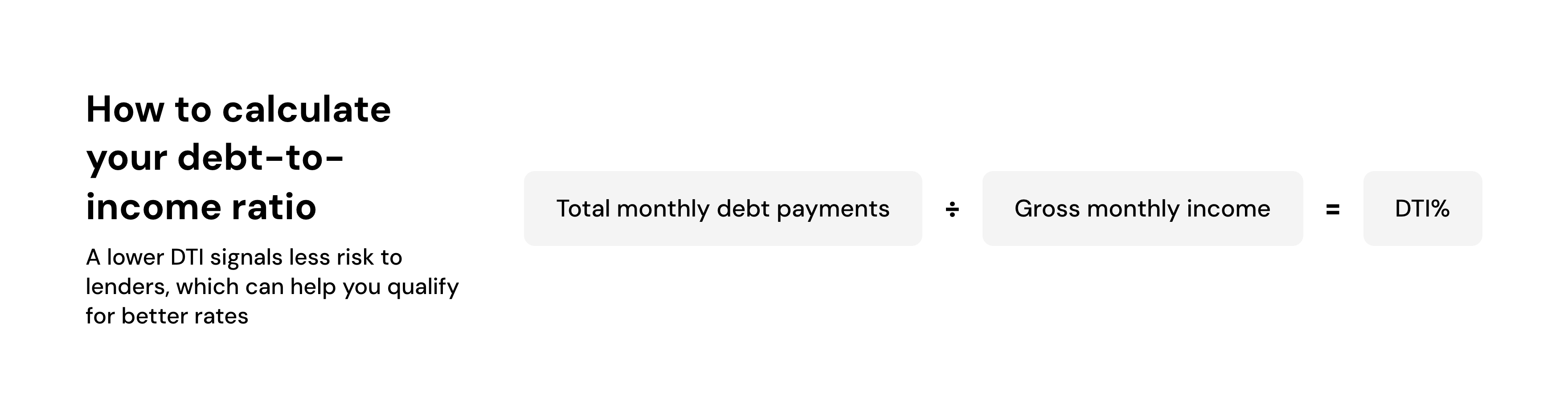
Your debt-to-income (DTI) ratio compares your monthly debt payments with your monthly gross income4. A lower DTI signals that you have more room in your budget to manage new loan payments. Before applying for a personal loan, consider taking the following actions:
- Pay down existing debt
- Pay off small balances completely
- Increase your income through a side gig, increased hours, or a raise
Even modest improvements to your DTI might help strengthen your loan application and result in a lower interest rate.
7. Use autopay for a rate discount
Many lenders offer between 0.25 and 0.50 percentage points if you enroll in automatic payments from a checking account. The savings might seem small, but they can reduce your borrowing costs over time while helping you avoid missed payments.
Be sure to keep enough money in your account each month so automatic payments aren’t returned for insufficient funds.
What determines your personal loan interest rate?
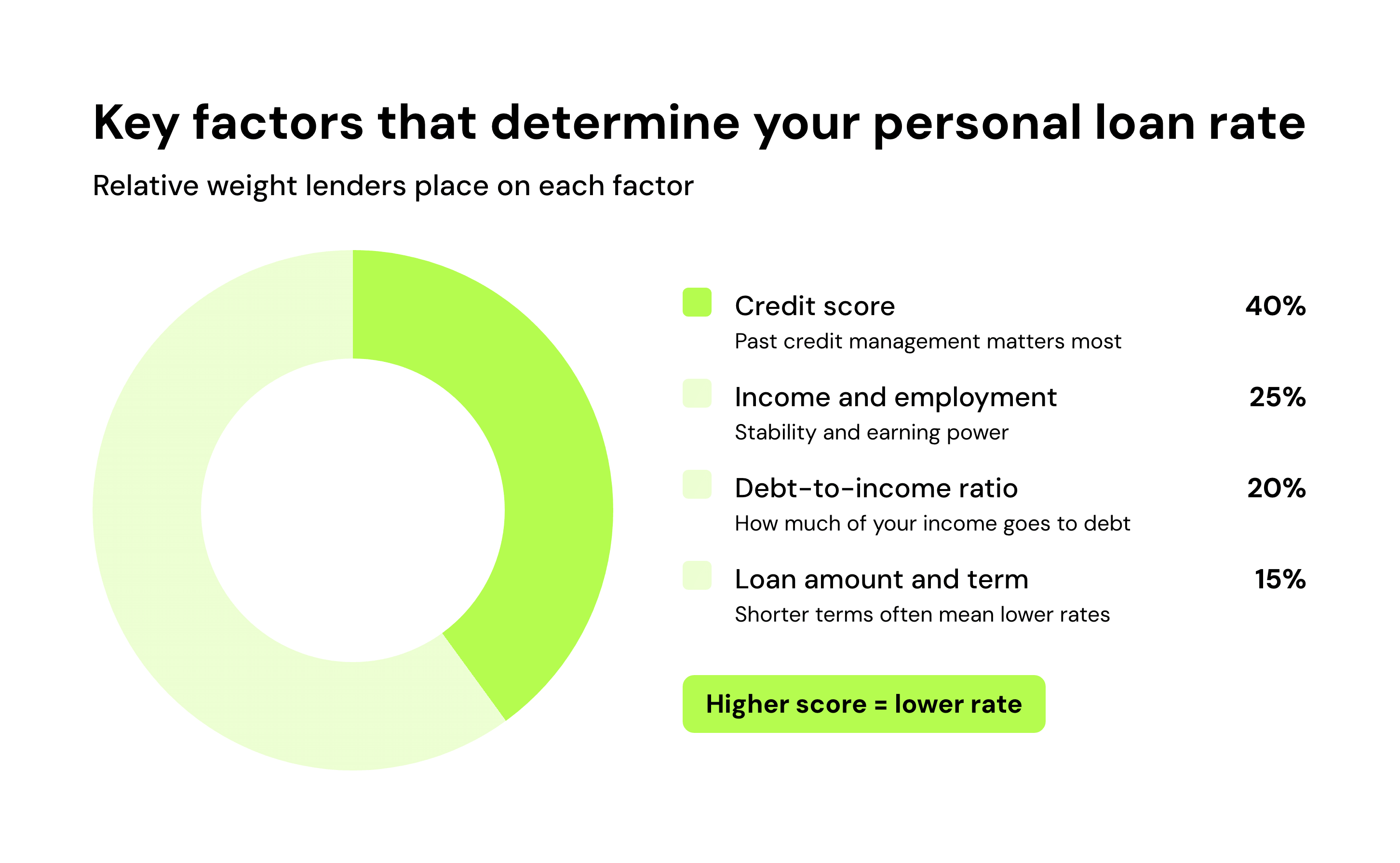
Lenders look at several factors when deciding what interest rate to offer you5.
Credit score
Your credit score gives lenders a snapshot of how you’ve managed credit in the past. Borrowers with higher scores generally qualify for lower interest rates, while those with lower scores might pay higher interest costs.
Qualifying for a loan with limited or fair credit is possible, but you need to prepared to absorb the cost of higher interest rates.
Income and employment
Lenders want to know that you have enough income to make your payments. Steady employment, consistent income, and a reliable history can strengthen your personal loan application. Self-employment income, retirement income, and other sources of regular earnings might also be considered.
Debt-to-income ratio
Debt-to-income ratio helps lenders determine weather you’re already carrying a significant amount of debt relative to your income. With a lower ratio, you can show a lender that you have the ability to make payments comfortably within your budget.
Loan amount and term
Higher loan amounts might result in a slightly higher interest rate because the lender is providing more funds at the risk of a loss. Consider how much you need to meet your goals before filling out your prequalification form or applying for a loan.
Your repayment term also matters. Depending on the lender’s underwriting guidelines, you might be consider less of a risk, and receive a lower interest rate, if you’re willing to repay your loan over a shorter period.
Can you negotiate a lower rate on an existing personal loan?
If you’ve consistently made on-time payments and your financial situation has improved, it’s worth contacting your lender to ask whether lower-rate options are available.
Some lenders won’t renegotiate an existing loan, but they might offer:
- Interest rate reductions for qualifying customers
- Loan modifications
- Refinancing options
If your current lender can’t help, you might be able to refinance your personal loan with another lender offering a lower rate. Before refinancing, compare fees with the amount you expect to save in interest. You want your interest savings to outweigh origination or administration fees associated with a refinanced loan.
How to build credit to qualify for better rates
Building a stronger credit profile takes time, but it can help you qualify for better loan offers in the future. Consider the following actions to create good habits:
- Pay every bill on time. Payment history is the most important factor impacting your credit score. Positive history can help you get the best rates.
- Keep credit card balances low. Try to pay your balance off each month, or at least limit your balance to 30% of your available credit.
- Avoid unnecessary credit applications. Each official credit application results in a hard credit inquiry which can temporarily lower your score. Be judicious about when you apply for credit.
- Monitor your credit report for errors. Fix mistakes that might be dragging your score down and identify fraudulent accounts that impact your credit profile.
- Maintain older accounts when appropriate. A longer history can lead to a lower rate. If it makes sense, keep older accounts open.
If you’re just getting started or have limited credit history, tools like Kikoff, that report on-time payments, might help you build positive payment history over time.
The bottom line
Getting a lower personal loan interest rate starts before you submit an application. Strengthening your credit profile, comparing multiple lenders, reducing existing debt and choosing the right loan terms can all improve your changes of receiving a competitive offer.
Frequently Asked Questions
About the editor

Article Sources
Disclaimer: The information provided in this blog post is meant for informational purposes only and does not constitute financial advice.