.jpg)
.jpg)



Talking with a credit counselor does not directly affect your credit score. A counseling session is not reported as a credit account or inquiry, and seeking advice does not become a negative mark on your credit report.
A credit counselor may recommend a debt management plan (DMP), however. Enrolling in a DMP does not automatically lower your score, but actions associated with the plan, such as closing credit cards or changing how you make payments, may affect your credit.
Does credit counseling hurt your credit score?
No. Speaking with a credit counselor does not directly affect your credit score.
According to the Consumer Financial Protection Bureau, credit counseling organizations can help you review your finances, create a budget and evaluate ways to manage your debt. A counselor may review your credit report, but this generally involves a soft inquiry that does not affect your score.
During an initial session, the counselor will typically review your:
- Income
- Living expenses
- Debts and minimum payments
- Interest rates and fees
- Financial goals
The counselor may recommend changes you can make independently or propose a DMP. A reputable counselor should review your complete financial situation before recommending any particular program.
How a debt management plan works
A debt management plan is a structured repayment arrangement for eligible debts, usually unsecured debts such as credit cards and medical bills. It is not a new loan, and it does not erase the amount you owe.
Under a DMP, you generally make one payment to the credit counseling organization each month. The organization then distributes the money to participating creditors according to the agreed payment schedule.
Creditors may agree to lower interest rates, waive certain fees or reduce required monthly payments. They are not required to participate, so confirm that each creditor has accepted the plan before you send payments to the counseling organization.
A DMP may also involve setup or monthly fees. Ask for a complete written explanation of the costs and confirm that the proposed payment fits your budget.
According to the Federal Trade Commission, a DMP can take 48 months or longer to complete. You may also be required to stop using or applying for credit while enrolled.
How a debt management plan can affect your credit
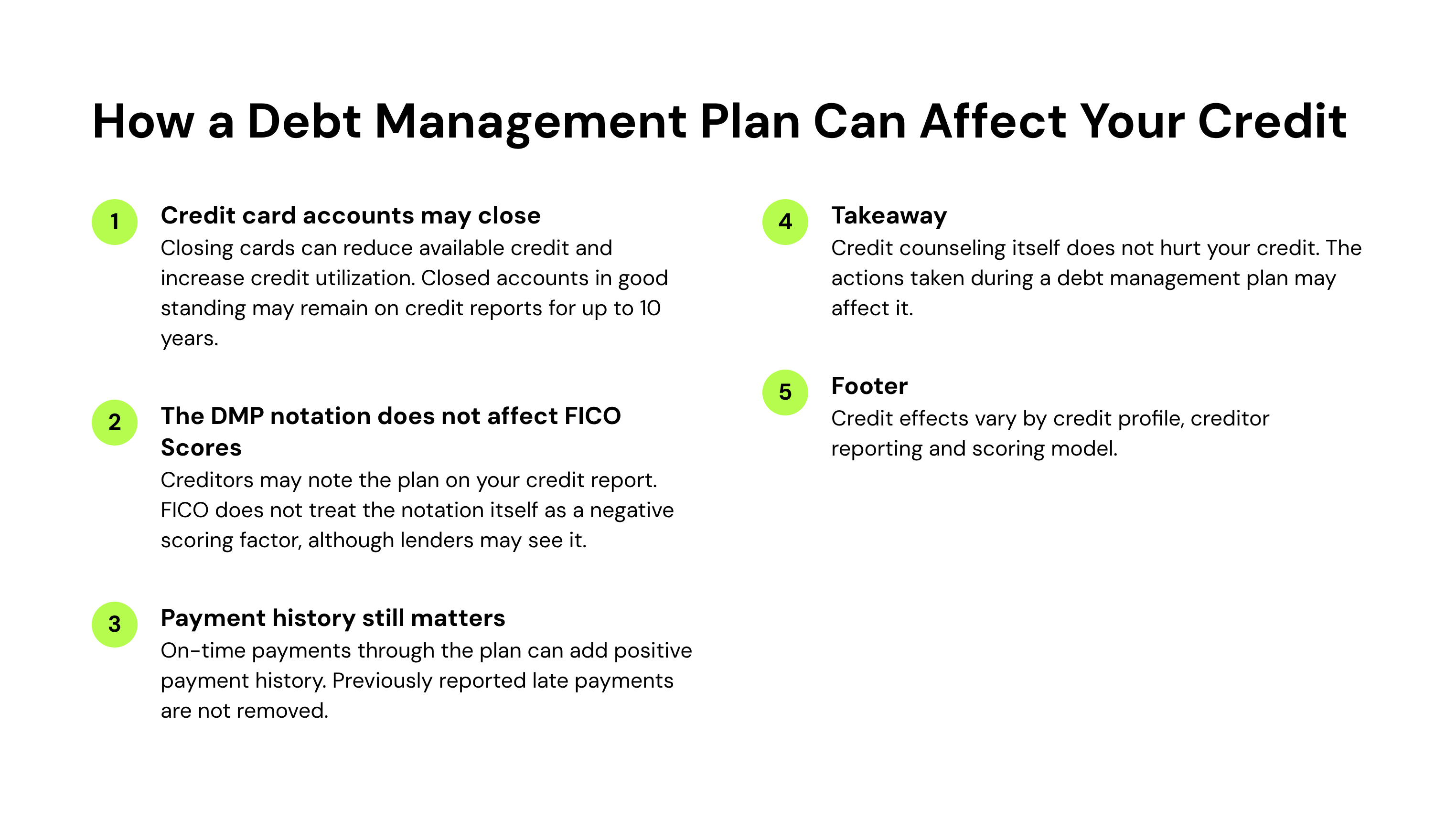
A DMP does not directly count against a FICO Score. However, the way your accounts and payments are handled during the plan may affect information used to calculate your score.
Closed accounts and credit utilization
A credit counseling organization or participating creditor may require you to close credit cards included in the plan. Closing a card reduces the amount of available revolving credit you can use, which may increase your credit utilization.
For example, suppose you owe $4,000 across cards with combined credit limits of $10,000. Your overall utilization is 40%. If a card with a $5,000 limit is closed while your balances remain the same, the reduction in available credit could increase your reported utilization, depending on how the accounts are reported and evaluated.
Closing an account does not immediately erase its age or payment history. A closed account in good standing may remain on your credit reports for up to 10 years, continuing to contribute to your credit history during that time.
As you pay down balances through the DMP, your utilization may decline. The effect on your score depends on your overall credit profile and the scoring model being used.
DMP notations
A creditor may add a notation to your credit report indicating that an account is being managed through a credit counseling program.
According to FICO, that notation is not treated as a negative factor when calculating FICO Scores. Other lenders may still see it when reviewing your credit report and may consider it when evaluating a new application.
Payment history
A DMP can make payments easier to manage by replacing several due dates with one payment to the counseling organization. The organization is then responsible for forwarding the appropriate amounts to your creditors.
On-time payments made through the plan can help you establish positive payment history. However, enrolling in a DMP does not remove late payments or other accurate negative information previously reported by your creditors.
Continue reviewing statements from your creditors after joining a DMP. Confirm that the counseling organization is sending payments on time and that your accounts are being reported accurately.
Contact both the counselor and creditor immediately if a payment is missing or incorrect.
When a debt management plan may help
A DMP may be worth considering if you are struggling with multiple unsecured debts but can afford a consistent monthly payment under a modified plan.
It may help you:
- Combine eligible payments into one monthly deposit
- Receive lower interest rates or waived fees when creditors agree
- Create a structured schedule for repaying enrolled debts
- Reduce the risk of additional late payments
- Get help communicating with participating creditors
A DMP does not work for every situation. Mortgages, auto loans and other debts secured by collateral generally cannot be included, and a plan will not help if its required payment is still beyond your budget.
If you cannot afford basic living expenses and the proposed DMP payment, ask the counselor about other options. If bankruptcy might be under consideration, speak with a qualified bankruptcy attorney about the consequences and protections that apply to your circumstances.
How to choose a credit counseling organization
Nonprofit status alone does not guarantee that an organization is legitimate or budget-friendly. Before enrolling, ask:
- Are your counselors certified by an independent organization?
- What setup, monthly or other fees will I pay?
- What happens if I cannot afford the fees?
- Which creditors have agreed to participate?
- How much will I pay each month?
- How long is the plan expected to last?
- Will I need to close or stop using my credit cards?
- How will you protect my personal and financial information?
- What happens if I miss a DMP payment?
Get all fees, services and promises in writing. Avoid organizations that guarantee results, demand payment before explaining their services or push a DMP before reviewing your finances.
The National Foundation for Credit Counseling and the Financial Counseling Association of America can connect you with nonprofit credit counseling organizations. You can also check an organization’s complaint history and licensing requirements through your state attorney general or consumer protection agency.
Credit counseling vs. debt settlement, credit repair and credit building
These services address different financial problems:
- Credit counseling provides budgeting, debt-management and financial-education guidance. A counselor may recommend a DMP through which you repay enrolled debts over time.
- Debt settlement attempts to resolve debt for less than the full amount owed. Programs may encourage you to stop paying creditors while saving for a settlement, which can lead to late payments, additional fees, collection activity or lawsuits. Creditors are not required to accept a settlement.
- Credit repair generally involves disputing information on your credit reports. You can dispute inaccurate information yourself for free, but accurate and timely negative information cannot legally be removed simply because it hurts your credit.
- Credit building focuses on adding positive information and developing responsible credit habits. It does not erase existing debt or replace a repayment plan.
The CFPB explains the differences between these services in more detail.
Bottom line
Credit counseling itself does not hurt your credit score. A debt management plan may indirectly affect your score if accounts are closed or balances remain high, but it may also help you establish a consistent payment routine and pay down eligible debts.
Choose a reputable counselor, review all fees and terms, and make sure the payment is sustainable before enrolling. Your ability to cover essential expenses and complete the plan matters more than a possible short-term score change.
Credit building should not take priority over your DMP or essential expenses. Once your repayment plan is stable, Kikoff’s Credit Account can help you add positive payment history by reporting your on-time payments to all three major credit bureaus, with no hard credit check to sign up. If you are enrolled in a DMP, check with your counselor and review your plan before opening or using new credit.
Frequently Asked Questions
Article Sources
Disclaimer: The information provided in this blog post is meant for informational purposes only and does not constitute financial advice.