.jpg)
.jpg)



Closing a bank account is a normal part of managing your finances. You might switch banks to find lower fees or better interest rates. If you’re planning to make a change, you may wonder, “Does closing a bank account affect your credit score?”
Closing a checking or savings account generally doesn’t directly affect your credit score because deposit accounts typically don’t appear on traditional credit reports. However, an unpaid negative balance could be sent to collections, and a missed automatic payment on a credit account could eventually be reported as late.
Does closing a bank account hurt your credit?
Generally, no. Your credit score isn’t based on the age of your checking and savings accounts or who you bank with. The three major credit bureaus track information related to the money you borrow, which involves products like:
- Credit cards
- Auto loans
- Mortgages
- Student loans
- Personal loans
Checking and savings account activity generally doesn’t appear on traditional credit reports, so voluntarily closing an account in good standing normally won’t affect your credit score.
Bank account history can appear in specialty consumer reports from companies such as ChexSystems and Early Warning Services. Banks may review these reports when you apply for a new account. An involuntary closure or unpaid negative balance could make opening another bank account harder even if it never appears on a traditional credit report.
When closing a bank account can indirectly affect your credit
Closing the account itself isn’t what affects your credit. Related unpaid debts or missed payments can matter if they are reported to the credit bureaus. Let's take a look at some of the issues that can arise.
Unpaid fees or negative balances are sent to collections
One of the biggest risks involves leaving an account with unpaid fees or a negative balance. For example, an automatic payment could be processed after you’ve stopped using the account, causing an overdraft. Some banks also charge monthly maintenance fees.
If you leave an unpaid negative balance, the bank may send it to a debt collector. The collector may report the debt to the nationwide credit bureaus, and a reported collection could hurt your credit score. Pay any negative balance and confirm that the account closes in good standing.
You forgot to adjust the automatic payment settings
Automatic payments can help you pay bills on time. If they remain linked to a closed account, however, the payments may be returned. Missing a due date can trigger fees, but it doesn’t necessarily appear on your credit report immediately. If a credit account becomes at least 30 days late and the lender reports it, the late payment could hurt your score.
A deposit or payment goes to the closed account
A direct deposit sent to a closed account may be returned, delaying access to your money. A payment drawn from the old account may also be returned. Neither event directly affects your credit, but unresolved payments could lead to fees, a reported late payment, or collections.
How to close a bank account without affecting your credit
Sometimes, people need to close a bank account. If you find yourself needing to part ways with a bank or credit union, you can protect your credit with a few simple steps.
Pay off any outstanding balances or fees
If the account is in the green, you can withdraw or transfer your money and close it out. The process really is that simple. But if you owe the bank fees or need to make up for a recent overdraft, take care of those obligations before you close the account. It will be much easier to make those payments with an open account.
Move automatic payments and direct deposits first
Make a list of any direct deposits or automatic payments linked to the account you want to close. Move them to a valid account so that you don’t miss any paychecks or bill payments.
Confirm the account is closed in good standing
After closing the account, check with the bank to confirm that the process is complete. Ask whether any pending transactions or fees remain, and request written confirmation that the account closed with a zero balance. Some institutions charge a fee when an account is closed soon after opening, so check your account agreement.
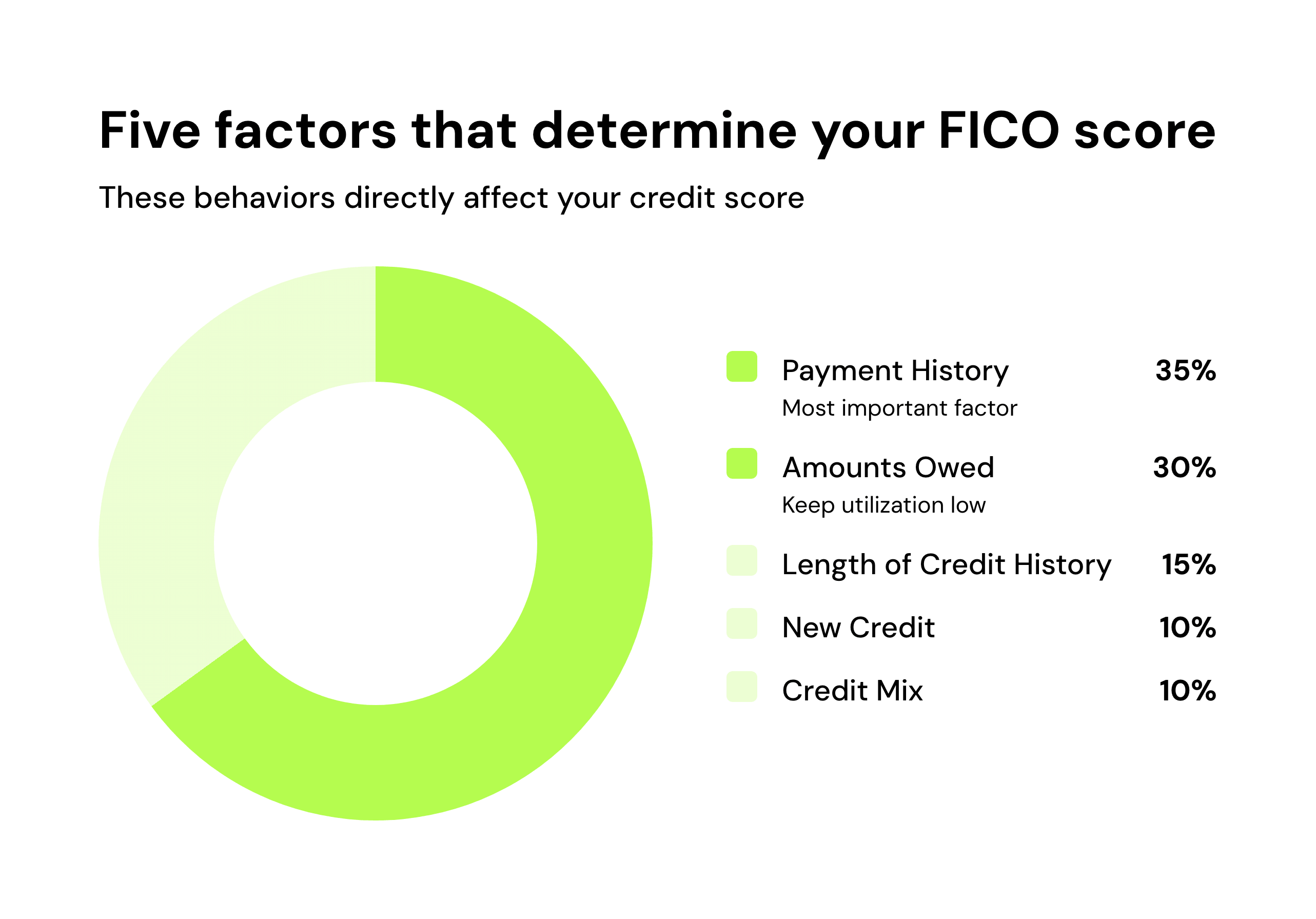
What affects your credit score?
Closing a bank account in good standing usually won’t affect your credit score. FICO groups the information used to calculate scores into five broad categories:
- Payment history
- Amounts owed, including revolving credit utilization
- Length of credit history
- New credit
- Credit mix
Reviewing your credit reports for errors doesn’t directly change your score, but it can help ensure that your scores are based on accurate information. A stronger credit profile may help you qualify for more favorable financing terms.
Bottom line: Does closing a bank account affect your credit score?
Closing a checking or savings account in good standing generally won’t affect your credit score. Before closing one, move your direct deposits and automatic payments, clear pending transactions and negative balances, and get confirmation that the account is fully closed.
Building credit starts with positive payment history. Kikoff’s Credit Account reports your on-time payments to all three credit bureaus, with no hard credit check to sign up. Get started with Kikoff.
Frequently Asked Questions
Article Sources
Disclaimer: The information provided in this blog post is meant for informational purposes only and does not constitute financial advice.