






You just found the dream apartment you can afford, but you’re a little short of the landlord’s credit and income requirements. In many cases, a cosigner or guarantor can close that gap. They agree to cover the rent if you can’t. The two roles carry different obligations, though, and on many leases the person who signs can owe the full rent, not a share. Know which role the landlord is asking for before you ask someone close to you.
Cosigner vs. guarantor: What’s the difference?
Landlords use both words, and not always the same way. Here’s how the roles usually work:
Read how the lease describes the person signing with you. If they’re listed as a tenant, they may have the right to live there and can owe the full rent. If you’d rather live alone and just need someone as backup, a guarantor is usually the better choice.
Read more >> Can You Rent an Apartment With Bad Credit?
Before anyone signs, ask the landlord:
“Is this person listed as a tenant or as a guarantor?”
“Does their responsibility end when this lease ends, or does it carry over if I renew?”
“Will you let them know if a payment is late?”
Share the answers with the person signing so they know what they’re agreeing to.
When do you need a cosigner to rent?
The requirements for getting a lease can vary based on the rental market and the individual landlord. Here are some of the most common scenarios where you may need a cosigner.
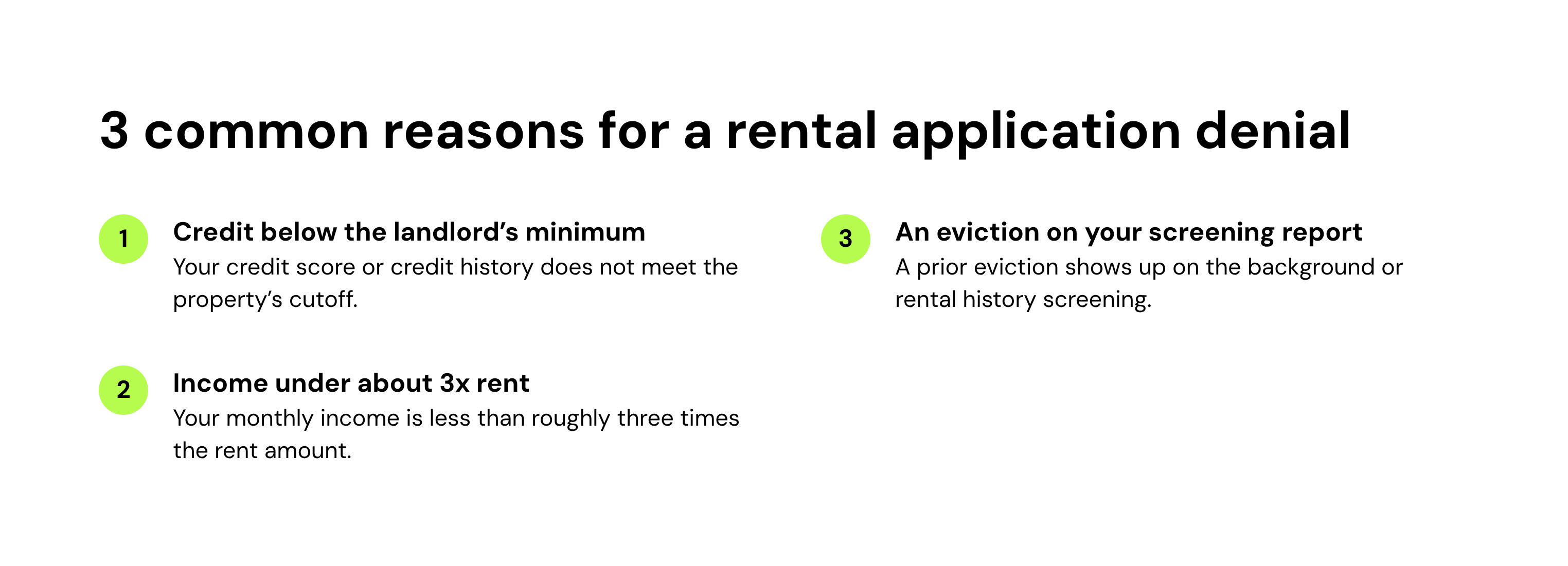
Low or no credit history
The lower your credit score, the riskier you’ll be in a landlord’s eyes.
There’s no universal minimum score needed to rent an apartment. According to Experian, however, many landlords prefer a score above 600, and you may have better odds in the 600 to 650 range. Many include credit score requirements on rental listings.
If you’ve paid rent on time for years, that history may not help you here. Most landlords don’t regularly report rent payments to the credit bureaus, so unless you use a rent reporting app like Kikoff, it often isn’t on your credit report at all.
Income below the landlord's threshold
Landlords often set minimum income, commonly about three to four times the monthly rent, and may ask for a cosigner or guarantor if you earn less. For a $1,000 apartment, that’s $3,000 to $4,000 a month before taxes.
If you’re close, ask whether the landlord counts other income, such as a second job or benefits.
A past eviction or negative rental history
A past eviction can make landlords hesitant, even when it happened during a job loss or a medical emergency. According to the CFPB, an eviction court case can stay on your tenant screening report for up to seven years.
You can dispute anything on the report that’s wrong or outdated for free. Some states also let you seal eviction records. Your local legal aid office can tell you whether that applies where you live.
Read more >> How Long Does an Eviction Stay on Your Record?
How to find a cosigner for an apartment
If someone close to you has steady income and solid credit, start there. Tell them up front that if you fall behind, they’ll be held financially responsible. If they know someone else who’s looking for an apartment, you might be able to get both a cosigner and a roommate. Alternatively, you could ask a more established family member to be your guarantor.
If no one in your life can sign, a third-party guarantor company can act as one for a fee. Guarantors are similar to cosigners, but they typically agree to cover unpaid rent without living in the apartment.
Third-party guarantors can be expensive, charging 40% to just over a full month’s rent for a one-year lease. On $2,000 rent, that’s $800 to $2,000. You’d pay it on top of your security deposit and first month’s rent, and you don’t get it back.
Read more >> What Cosigning a Lease Can Do to Your Credit
Alternatives to using a cosigner
If you can’t find a cosigner, one of these may be enough to get a landlord to say yes.
Offer a larger security deposit
Where it’s allowed, a larger deposit lowers the landlord’s risk. Some states limit deposits, though. New York, for example, caps the deposit at one month’s rent.
Show proof of savings
A healthy savings balance, or other assets, can show a landlord you can cover the rent even if your income or credit is a little short.
Find a landlord who doesn’t check credit
Most property management companies run credit checks, but some smaller complexes and independent landlords might waive them.
Read more >> How to Rent an Apartment Without a Credit Check
Bottom line
A cosigner or guarantor can get you approved when your credit or income falls short. But they’re lending you their record for one lease. When you apply for your next place, a landlord pulls your file again, and the rent you pay now usually doesn’t appear on it unless something reports it.
Kikoff’s Rent Reporting sends your on-time rent payments to Equifax and TransUnion, and it’s included in every plan. Plans start at $5 a month.
Frequently Asked Questions
Article Sources
Disclaimer: The information provided in this blog post is meant for informational purposes only and does not constitute financial advice.